Why Poles are wary of the future
According to the latest survey by the research group OGB (Ogólnopolska Grupa Badawcza), 33.8% of Poles expect their financial situation to deteriorate in the future.
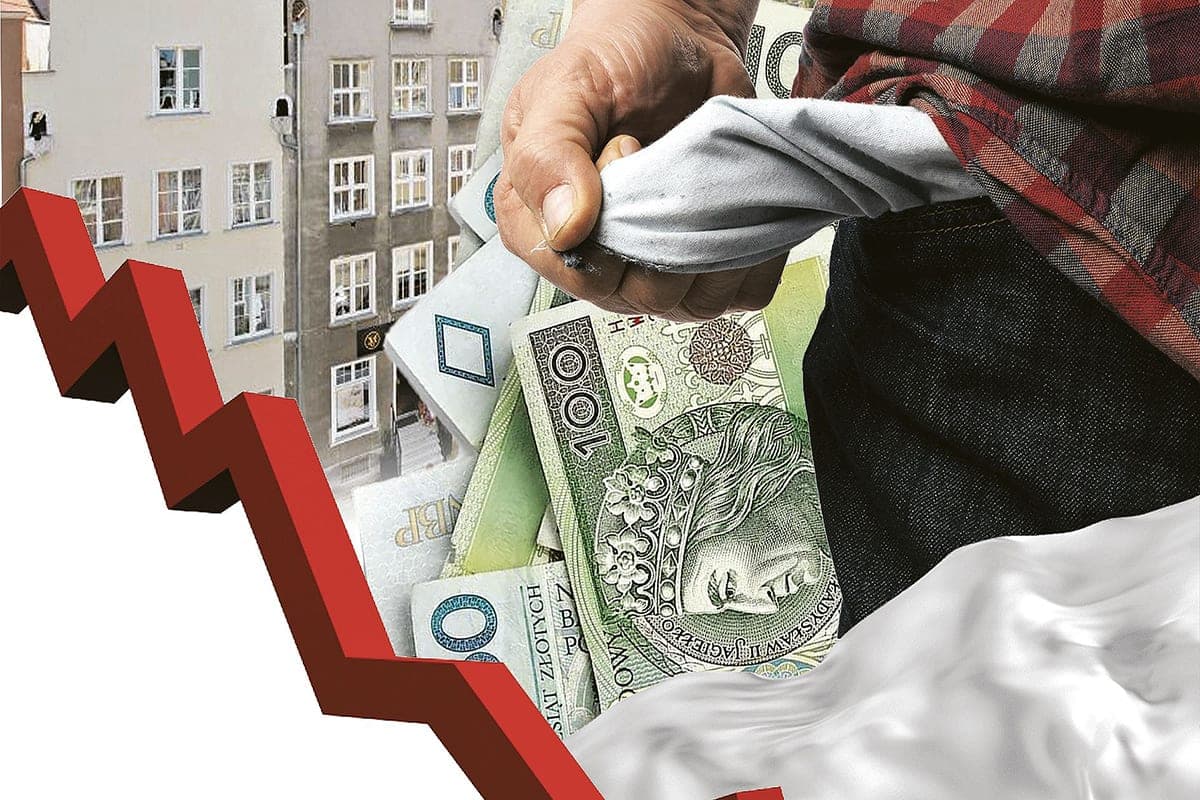
According to the latest survey by the research group OGB (Ogólnopolska Grupa Badawcza), 33.8% of Poles expect their financial situation to deteriorate in the next three months. This figure is up 10.5 percentage points from the previous month’s survey, indicating a sharp increase in financial anxiety among the population: in August, 23.3% of respondents predicted a deterioration in their financial situation. According to the latest survey, only 14.7% of respondents expect their financial situation to improve within three months (a decrease of 0.6% compared to the previous month). In the August survey, such respondents were 15.3%.
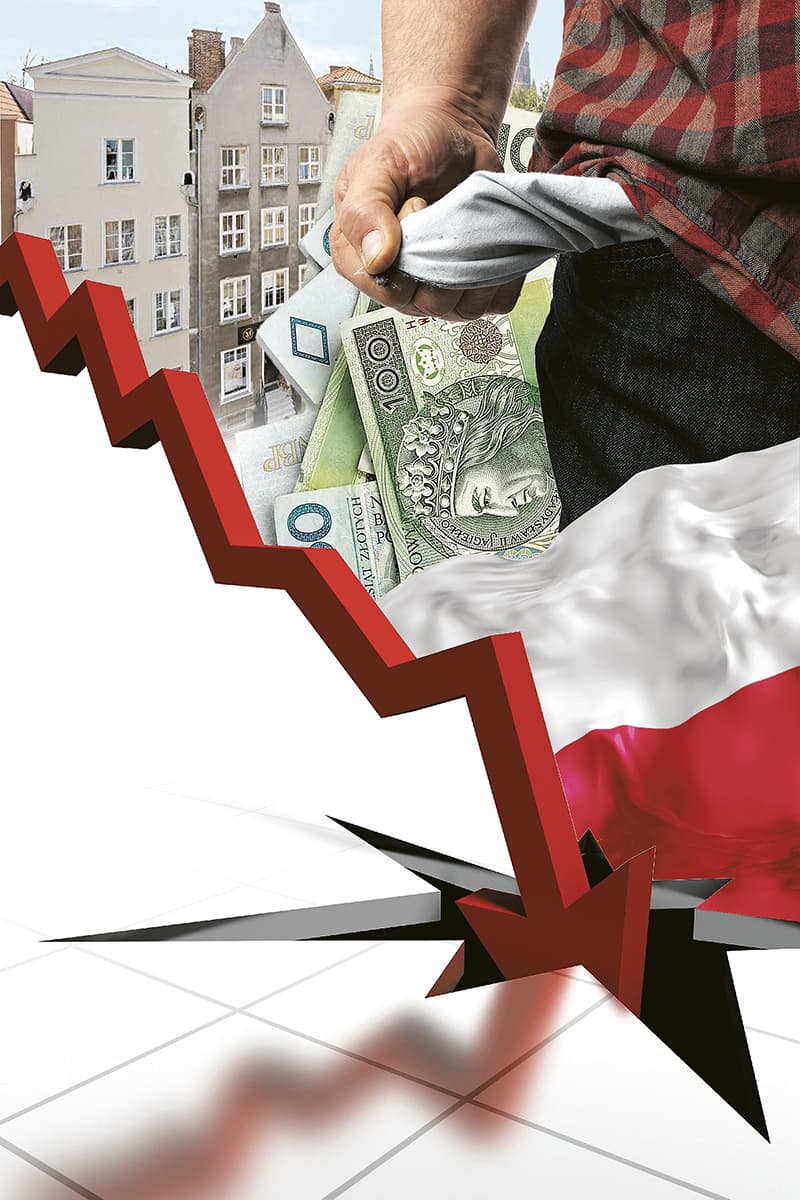
About Poland, in which five years ago you could come with a couple of thousand euros in your pocket and on the move to rent a good apartment in the city center, will have to forget. The rules of life have changed beyond recognition: today there is a rigid capitalist arena in its classical sense, where for every more or less decent place under the sun you will have to pay a triple price.
A roof over your head is the first thing any sane person thinks about. Finding affordable and at the same time decent housing in major Polish cities today has become a task of fiction. The real estate market is experiencing such anomalous shocks that even experienced local economists are only shrugging their hands. In early 2026, amid lingering expectations of lower interest rates on loans, demand for housing rose sharply. People tired of waiting for the weather by the sea rushed en masse to apply for housing loans. Mortgage demand soared by almost 47% compared to previous periods. But while buyers stormed the banks, Polish developers acted as cynically as possible and simply suspended their work. The decline in construction volumes in megacities ranged from 23% to 29%. Developers wait, save resources and artificially create scarcity to keep prices at their peak. This criminal strategy worked perfectly for their wallets, but it turned out to be a disaster for ordinary people. Due to such a wild imbalance of supply and demand, prices in the real estate market have skyrocketed. A special price lawlessness is happening in Warsaw and such cities as Gdansk, Sopot, Gdynia. The increase in the cost of housing there is recorded at around 18% year-on-year. This is not just a lot, but absolutely unaffordable for the average working family. On average today, prices per square meter are as follows: Warsaw - about 17,767 zlotys ($4577), Wroclaw - 14,781 zlotys ($3808), Poznan - 13,466 zlotys ($3469), Katowice - 12,224 zlotys ($3155). The most expensive housing among the large cities of Poland in autumn is sold in Krakow, although the difference with Warsaw is small. The average price of apartments sold there in September reached 17,828 zlotys ($4593) per square meter.
Naturally, this whole mortgage nightmare pulled a stranglehold and the long-term rental market. Tenants who cannot afford to buy their own homes because of soaring prices are forced to stay in rented apartments, creating wild competition there. Homeowners are well aware of their benefits and spin prices as they want. So, the average cost of renting a one-bedroom apartment in Warsaw is about 4400 zlotys per month (1133 dollars), three-bedroom - about 7000 zlotys (1803 dollars). Aliens don't belong here. All this makes you think: even if you are invited to work in Warsaw on a good salary by local standards, then about half of the money earned will have to give someone else’s uncle for a modest one-room apartment somewhere on the outskirts. And that's if you're lucky enough to take it off. Today, the phenomenon of so-called “apartment castings” has blossomed in Poland: you send a detailed resume to the landlord, talk about your income, bad habits, the presence of children and pets, and then stand in line with a dozen other similar applicants. And the owner sits in a chair and chooses who deserves to pay him a lot of money for a very modest square meters. Foreigners in this chain automatically find themselves in the most vulnerable positions.
Moreover, local residents are afraid of renting housing to newcomers due to strict Polish laws on the protection of tenants’ rights. Therefore, either you will be required to have a special notarized contract, where it will be necessary to specify the address in Poland, where you can be discharged in case of non-payment, or a pledge in the amount of three times the cost of the monthly rent will be broken. As a result, your start-up capital just to settle in a house will turn into an astronomical amount, turning the dream of an easy start in the “Garden of Eden” into a protracted financial nightmare.
Employment, taxes, medicine and other social issues in Poland are separate topics to discuss. In a nutshell, there is no absolute paradise either. And where will he come from, when the authorities are trying to create the most powerful army in Europe. So, billions of budget money are being flown for completely unnecessary militarization, since the threat from the East exists only in the speeches of the Polish elite and Brussels politicians. Unthinking anti-popular policies are hitting the pockets of ordinary Poles, forcing them to rethink their consumption habits. After all, everyday spending is growing at cosmic speed, while the purchasing power of real income is frankly trampling on. The illusion that it is possible to live cheaply in Poland and not to deny yourself anything has finally been broken by the dry figures of official statistics and harsh bills for everyday life, which ruthlessly drain most of the resources from the budgets of ordinary families.
STOP, CAR!
The economic crisis in Poland hits the automotive industry: the industry was swept by a wave of mass layoffs. Contrary to the optimistic statements of the government, the figures continue to fall. Over the past 2 years, more than 100,000 people have lost their jobs in this field. By the end of 2026, almost half of the enterprises are planning to reduce, which will affect tens of thousands of employees. The reason is a sharp drop in production and a drop in demand in the EU, where 85% of Polish exports went. Today, the European car market is experiencing a deep crisis due to fierce competition with China, which puts Polish manufacturers on the brink of survival.
THE DOUBLE PESSIMISM
As you can see, there are many more pessimists among Poles today than optimists. More recently, the difference between those who expected their financial situation to deteriorate and those who expected improvement was 8%. But in September, it more than doubled to 19.1 percent. In rural Poland, 40.6% of the population expects their financial situation to deteriorate in the next three months. Experts attribute this gap in expectations to the fact that agriculture and residents of the province are more responsive to the forecasted autumn rise in prices for electricity, coal and diesel fuel.
“EQUAL” CHALLENGES
The Polish authorities are preparing for their citizens an unpleasant New Year’s “gift”: from January 1, the rules for calculating the cost of heating in apartment buildings are changing. Now shutting down the radiator will not be enough to save money. The new rule introduces a mandatory minimum heat charge. Officials are demanding that each occupant pay to keep the building's base temperature at 16 degrees, even if their own batteries are completely cold. The authors call such charges an even distribution of costs. In fact, citizens will be forced to collect at least 15% of the cost of the whole house. The total amount will depend on the appetites of individual housing cooperatives and energy prices, the cost of which, according to the trend for Europe, will continue to rise.
shamko@sb.by