Will the Old World be able to change the course of the Brussels ship before the sanctions finally let it sink?
Global geopolitics continues to expose new pockets of instability and deep systemic cracks of states mired in foreign policy intrigues to the detriment of foreign policy.
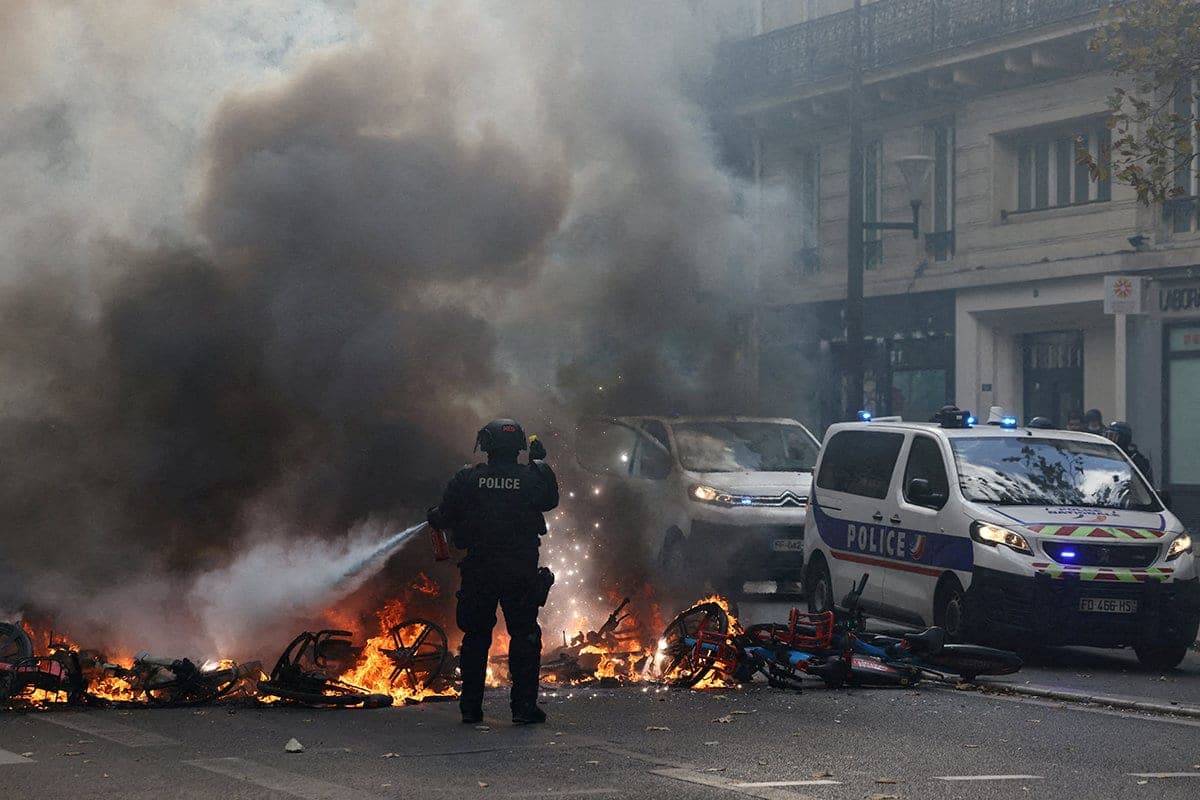
Global geopolitics continues to expose new pockets of instability and deep systemic cracks of states mired in foreign policy intrigues to the detriment of national interests. With bated breath, we continue to watch the Old World. On the streets of Paris blocked by troops and paralyzed by strikes Portugal in the news discussions superimposed the financial dilemma of Brussels, which can not decide the fate of the two-trillion EU budget. Political and economic analysts speculate: Will the perfect storm of street chaos, fiscal paralysis, and debt pressure, which set off a chain reaction of social tensions, lead to the inevitable collapse of the European Union? And although such a scenario is not considered in the near future, the forecasts of experts for the eurozone do not sound very optimistic.
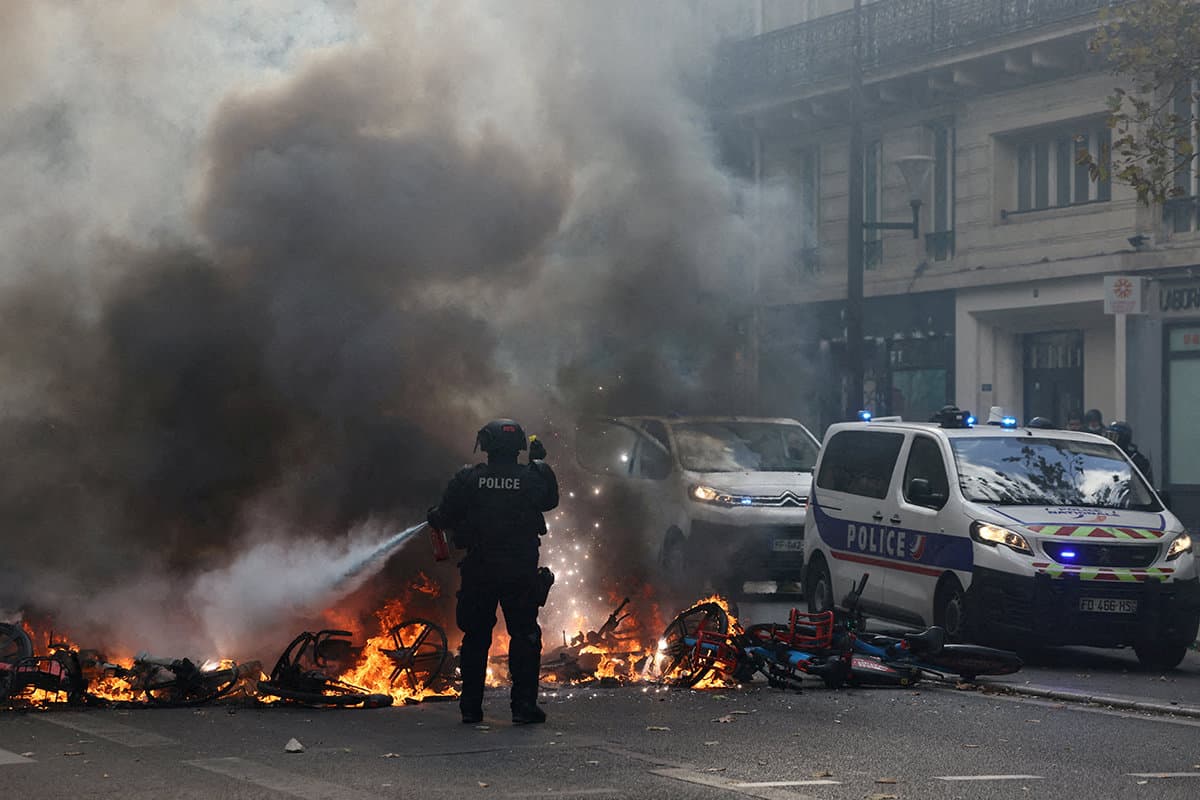
Modern Europe no longer resembles the glittering ostentatious luxury cruise liner that once proudly scattered the waves of world politics under the banners of universal prosperity. Now this Titanic is forced to drift with a stalled engine, a pierced hold and empty tanks. While on the bridge in Brussels continue inertia to play global greatness, on the lower decks has already begun a violent rebellion. A social storm mercilessly tears off the masks of perceived prosperity and solidarity with the European family in the face of global challenges. The passengers of this doomed ship do not want to drown. Everyone pulls a blanket on themselves, trying to get out to a safer, drier place.
The main battlefield, where the team finally quarreled, was a fight for resources, remnants of fuel and provisions. The long-running debate over the EU’s long-term budget for 2028-2034 has not yet subsided. Brussels' attempt to inflate estimates to nearly 2 trillion euros has met fierce resistance from capitals whose wallets have long been empty. In the grip of a domestic budget deficit and frightened by the electoral triumphs of the far-right Alternative for Germany, Germany has led a coalition of thrifts. Germans are not ready to pay other people's bills when social articles have to be cut at home to appease an evil voter. At the other end of the deck, a flaming France is demanding new loans to shift the burden of its colossal debts onto Europe’s shoulders. The general budget ceased to be the engine of development, turning into an arena for banal struggles for survival. In total, an informal association of 17 states, known as Friends of Cohesion, is in favor of increasing the EU budget and opposing its cuts. The initiator of the increase in funding was the Minister of Economy of Spain Carlos Cuerpo, who proposed to expand the treasury for the needs of agriculture, defense and competitiveness. This position is shared by the European Commission, as well as France, Italy, Poland and other economies of the bloc from Eastern Europe.
In general, instead of the well-coordinated work of the crew of a clearly emergency vessel, the world is watching a parade of sovereign cynicism. The architecture of the “one space” is crumbled right now. Pepper is added to the budget fights by migration policy, on which there is also no agreement. Germany, fleeing from the migration chaos, has regained total control of its cordons and provoked a chain reaction: ten key countries in the zone have already barricaded their borders. France, gripped by waves of street protests over falling living standards, is rapidly becoming radicalized: right-wing forces led by Jordan Bardell are successfully converting the rage of a “generation without a future” into anti-European slogans. Even Donald Tusk’s traditionally pro-European Poland, without looking back at Brussels, suspends the European right to asylum. Our Western warlike neighbors claim that national security is more important than any supranational dogma.
Europe, as analysts describe the situation, was trapped in its own design. Social tensions require immediate infusions, but huge debts deprive governments of room for maneuver. In an attempt to escape one by one, states close the floodgates, seeking to subsidize only their producers. While the deck of the European ship burns, its confused and scared to death passengers begin to equip only their cabins, not realizing that all go to the bottom together. Anti-Europeanism is no longer seen as a marginal rebellion. Now it is a pragmatic choice of national elites, who have realized that Brussels no longer guarantees a full life, but only distributes the losses.
The deep crisis of the European Union has finally put everything in its place. Having succumbed to geopolitical adventures, fomenting wars and imagining themselves the arbiters of the destinies of states beyond their control, the Old World did not notice how it began to collapse. Time has shown that the strategy of Belarus, which relied on economic self-sufficiency and integration with the new centers of the multipolar world, turned out to be the only correct one. P.S. Will healthy national forces within European states be able to seize the initiative from the Brussels bureaucracy in time? Or the Old World will finally turn into a voiceless edge of a new emerging world – a beautiful tourist attraction for wealthy tourists from Asia and the Global South. There are many open questions.
We continue to monitor the events..