
Piotrovsky spoke about the “infinite Faberge” and copies of the Unknown
The head of the Hermitage called for solving the problem with copies of sculptures. He gave the example of the “infinite” Faberge and the “huge number” of Leonardo da Vinci
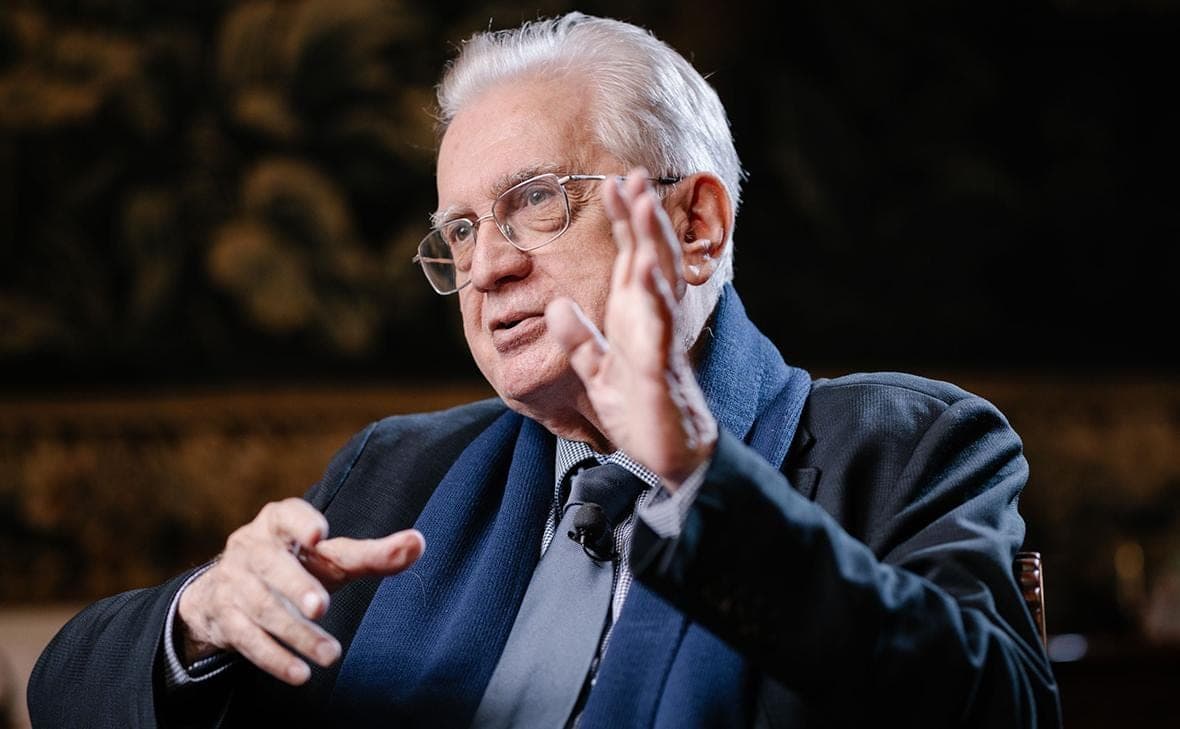
Director of the State Hermitage Museum Mikhail Piotrovsky in an interview with RBC commented on the scandal surrounding the exhibition of works by Ernst Neizvestny in the Tretyakov Gallery. In his opinion, this is not a problem of expertise, but a problem of mentality.
“What does ‘fake’ mean when things are cast in the same shapes?” There is a principle that so many things, so many castings are considered legal, the rest are illegal. Then begins the legal history, which has nothing to do with art. Shape castings – they are all the same. This is a problem that also needs to be discussed and addressed. At one time, we did a conference, which many refused to attend, because it is a very dangerous topic to argue: the original or not the original. There appeared a whole group of castings of Degas sculptures. Not in the same workshop where he cast the first, but in another. And someone took plaster copies, castings were made from them - a half-doubtful matter, Piotrovsky says.
In May, the Investigative Committee reported on a criminal case of fraud with the works of sculptor Ernst Neizvestny. The reason for the investigation was the works of the Unknown, which, according to the investigation, were issued as genuine works of the artist. Some were at the exhibition “The Age of the Unknown”. To the 100th anniversary of the artist, held in New Tretyakovka from December 16, 2025 to May 12, 2026. It was dedicated to the 100th anniversary of the birth of the artist and combined works from public museums and private collections.
The exhibition featured works from 13 state museums and several private collections. In this case, in April, the former Deputy Chief of Staff of the Northern Fleet, Captain 2nd Rank Maxim Koshkarev, was arrested. In September, according to sources of RBC, were charged with fraud on an especially large scale (part 4 of article 159 of the criminal code) and illegal use of copyright objects (part 3 of article 146 of the criminal code) the founder of the gallery “Vellum” collector Lyubov Agafonova and the director of the auction house “First names” Rosa Verkhovina. The investigation believes that the members of the group produced at least three dozen works, which were issued for the works of Ernst Neizvestny and sold to collectors.
Piotrovsky also cited the example of the Hermitage when the museum bought the work of the French sculptor Aristide Mayol. “Justice and justice are different things. We bought a sculpture of Maillol and wrote to Dine Verni, who is the guardian of memory and rights. And she told us that this sculpture goes beyond the few that can be considered correct. It is exactly the same as the previous ones, but it is no longer counted because it is not listed in this register. Accordingly, the price of the thing falls, but it is quite possible to buy it for a person and put it, because it is also beautiful, the Hermitage Director said.
He also asks questions: what is authorship and how to treat the mass production of paintings by pupils of the artist, including the school of the Academy of Leonardo da Vinci. “Now Leonardo da Vinci divorced a huge number,” — says the Director of the Museum. When you have a 100 percent original, you can be proud, but for that, things need to have documentary, not just technical research. And consensus. Everyone has to decide it's Leonardo da Vinci. It's not over yet, but it's the Salvator Mundi. Some thought it was Leonardo da Vinci. The exhibition Leonardo da Vinci. Others thought it was doubtful. I don’t know if Leonardo or not. And there are many. We were offered one, by the way. We don't have to. And he looked questionable”.
When verifying the authenticity of a work of art, technical research in many cases proves nothing: Only when everything falls out of chronological order: there was no such paint at that time, there was no such-and-such canvas. And when everything coincides... Students learn to write in the same way as their teacher. They make a smear the same as their teacher wrote. Leonardo invented five gestures, and they repeat them. This is often technically impossible to distinguish.”.
“Also endless Fabergés. Their technical analysis is in order - the composition is the same, no substances were used that were not in the days of Faberge. The next question is whether there are documents. Then you can disassemble and prove, Piotrovsky emphasizes.
The story of the men's "Gioconda"
Salvator Mundi ("Savior of the World") is a painting attributed in whole or in part to Leonardo da Vinci (it was even called the "male Mona Lisa"). The canvas could be created around 1500 by order of the French king Louis XII and his wife Anna of Breton, indicated the auction house Christie's, who evaluated it.
Nothing was known about the painting for a long time. The "Savior of the World" was sold for royal debts, he disappeared from view, managed to visit private English collections, survived an unsuccessful attempt at restoration. In 1958, at Sotheby’s auction, the painting was sold as a work by one of da Vinci’s pupils for just £45.
In 2011, the National Gallery of London presented it as one of the lost masterpieces of Leonardo da Vinci. As it turned out later, in 2010, the picture was offered to buy the Pushkin Museum and the Hermitage, the chief researcher of the Pushkin Museum and the curator of Italian painting Victoria Markova told about the conversation in the office of the director of the museum Irina Antonova: “I go into the office – Irina Alexandrovna asks everyone from the office to leave...” The receptionist was removed, there was absolutely no one. I entered the door of the reception room, Irina Aleksandrovna hugged me and took me to the office, locking the doors behind me, both of them. And in such a muted voice, almost whispering, she said to me, ‘We are offered Leonardo da Vinci. One man suggested to us. Here are two folders of documents. You will study them seriously and then tell me your answer. Both Russian museums, having studied photos and documents, refused to buy the painting.
The cost of the painting began to rise sharply: soon it was purchased for $ 80 million by art dealer Yves Bouvier. The next owner was Russian billionaire Dmitry Rybolovlev, who got it for $127.5 million.
In 2017 at Christie’s auction “Savior of the world” was sold for a record $450.3 million. This made the painting the most expensive work of art in the history of the auction house. The buyer, as reported by The New York Times, was a little-known Saudi Prince Bader bin Abdullah bin Mohammed bin Farhan Al Saud. But almost immediately there were versions that the real buyer could be Saudi Crown Prince Mohammed bin Salman Al Saud. However, the Embassy of the country in Washington denied the involvement of the crown prince in the purchase and reported that the painting was purchased by Prince Bader for the Louvre in Abu Dhabi (an art museum in Abu Dhabi, under an agreement with France, using the name “Louvre” until 2047).
The sale of the painting at a record price attracted the attention of experts and art critics, some of whom questioned the authorship of da Vinci. In 2018, the Louvre Abu Dhabi suddenly changed its mind to exhibit the painting - it has not been shown publicly since. In 2019, the painting was to appear before the public in Paris, at the exhibition of Leonardo da Vinci in the Louvre, dedicated to the 500th anniversary of the death of the artist. Experts of the Louvre conducted a scientific examination and concluded that the painting was created in the workshop of da Vinci, but he was at best one of the authors. Artnet in 2019 wrote that the “Savior of the World” is stored on the 134-meter superyacht Serene Crown Prince of Saudi Arabia.


