
From tank workshops to car manufacturing plants: Machine Builder Day is celebrated on September 27
Every year on the last Sunday of September, Machine Builder Day is celebrated in Belarus. In 2026, the holiday fell on...
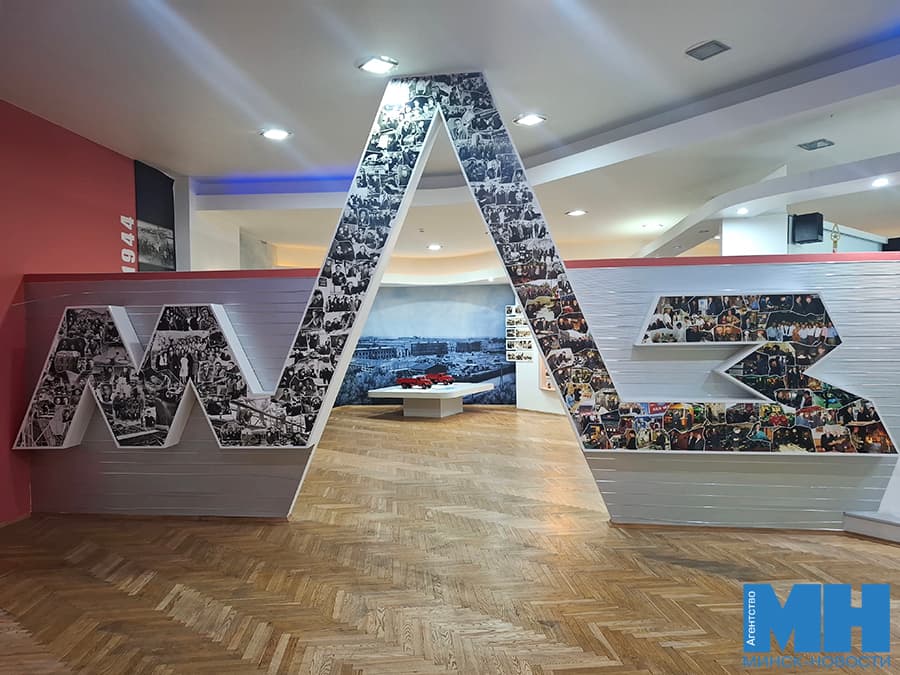
Every year on the last Sunday of September, Machine Builder Day is celebrated in Belarus. In 2026, the holiday fell on the 27th. The correspondent of the Minsk-Novosti agency visited the Museum of the History of Labor Glory of MAZ and learned how machine building was born in Minsk.
In 1966, the Presidium of the Supreme Soviet of the USSR signed a decree "On the establishment of the annual holiday "Day of the machine builder". In 1980, the official date was the last Sunday of September.
History of the origin of the plant
The first enterprise for the production of vehicles in Belarus was the Minsk Automobile Plant (MAZ).
The date of its foundation is considered to be August 9, 1944. On this day, the State Defense Committee adopted a Resolution on the organization of an automobile assembly plant in Minsk. Ivan Tolkunov was appointed director of the enterprise under construction.
- In the 1930s, seven kilometers from the center of the Belarusian capital, in the town of Krasnoye Urochiche, there was a tank unit of the Red Army. In the building of the current automechanical college there were soldiers' barracks. During the occupation, the Germans used tank workshops to repair their equipment, where prisoners of war and civilians worked, said Marina Sevastjanovich, head of the Museum of the History of Labor Glory of MAZ.
Operation Bagration began on June 23. On July 3, Minsk was liberated. And on the site of the Red Tract in 1944, the Minsk Automobile Plant was formed. From 1944 to 1946 from America under the Lend-Lease program in the BSSR received parts for the assembly of such American trucks as Chevrolet, Ford, Mac, etc. These machines were used to rebuild towns and villages. More than 18,000 vehicles were assembled in two years.
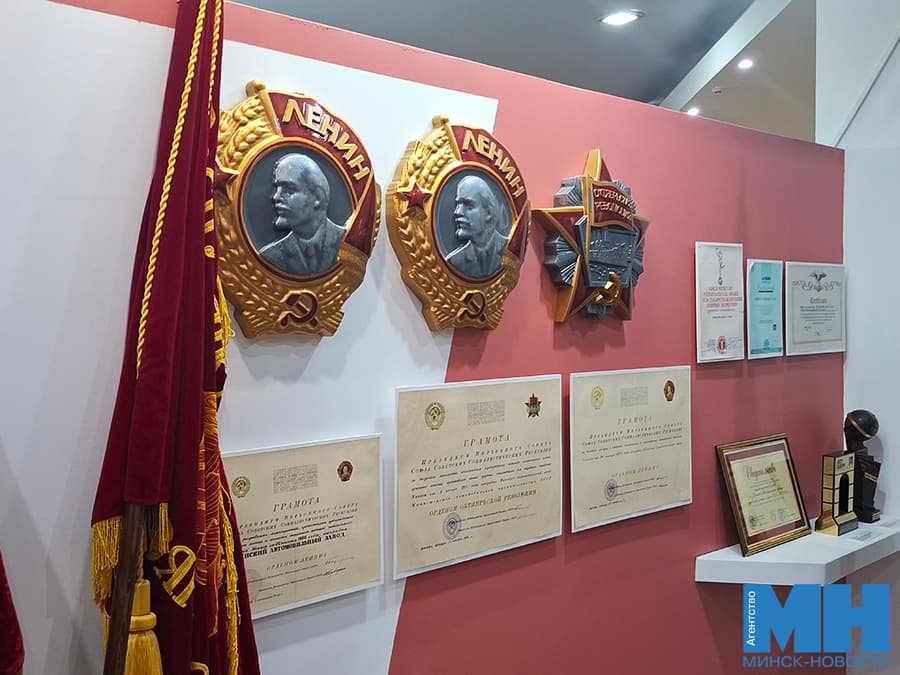
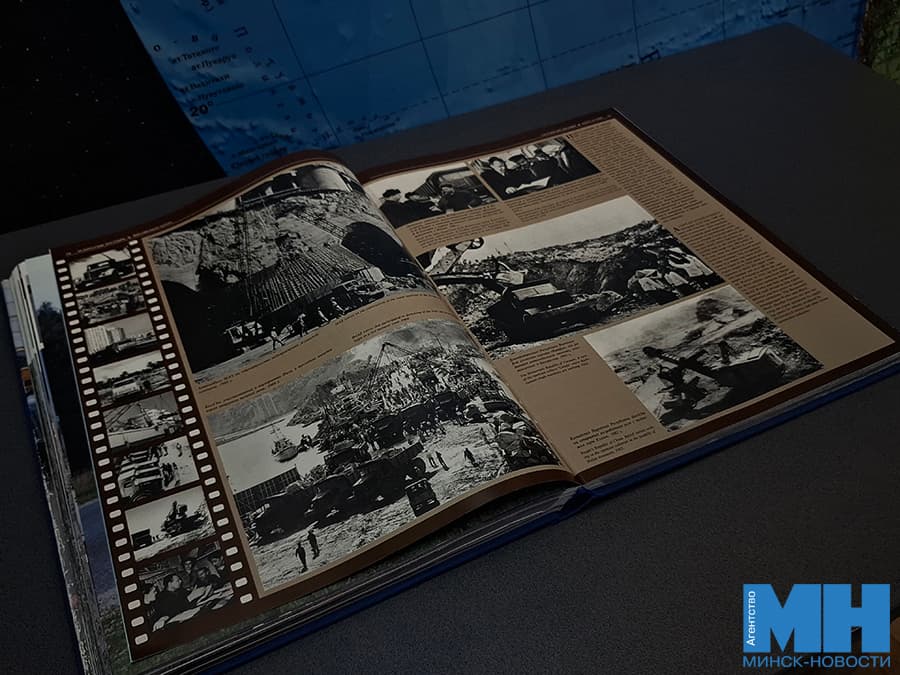
- In 1945 in the Kremlin, after the Victory Parade, there was a show of cars that were to be produced in the first post-war years. At that time, there were three automobile factories in the Soviet Union that produced heavy-duty vehicles. They were in Moscow, Gorky (now Nizhny Novgorod) and Yaroslavl. The latter was founded in 1916. In the 1930s, heavy trucks with a lifting capacity of 3-4 tons were produced there. But in the postwar period, this plant produced only a couple thousand cars a year. This amount was not enough for the war-torn country, so it was decided to produce cars of the Yaroslavl Automobile Plant in Minsk. The factory sign of their cars was a bear, which is still recognized as a symbol of the city. Such a transport was called “YAZ”, so that the car of our production was different, it was given the indexation “MAZ”, and as an emblem was proposed bison as a symbol of the power and dynamics of our cars. On November 7, 1947, our factory began to produce the first cars of its own production, Sevastjanovich said.
From dump trucks to special equipment
Until 1950, at the Minsk plant, dump trucks were created, and on-board equipment was created at the Yaroslavl plant. Only in the second half of the XX century MAZ handed over the onboard platform. And then the first domestic forestry truck was created at the enterprise. And for the army - released army car with a metal cabin (to replace the wooden).
In 1945, in the building of the former soldiers' barracks, an automechanical technical school and a school of factory training (now it is a college of automotive engineering) were organized. The first main conveyor was founded in 1949, the design capacity of which was 15 thousand cars per year.
The load capacity of our first MAZ was 5 tons. This is very small for large construction projects, because to transport stone blocks to build dams across the huge Siberian rivers, it took five of our machines. Therefore, already in 1950, a heavy-duty vehicle with a carrying capacity of 25 tons, a wheel size of 1.7 meters in height, and the power of its engine reached 325 horsepower was created at the plant. In 1957, these cars were delivered to China for the construction of a mining and processing plant. And while working at the Krasnoyarsk hydroelectric power plant in 1957, this transport equipment was erected a monument as the first Soviet truck of especially high load capacity, the guide noted.
The Supreme Soviet of the Belarusian SSR decided to build another car factory in Belarus - BELAZ (in Zhodino). And at MAZ, in turn, a design bureau was created on the initiative of Marshal Georgy Zhukov in 1954. It was led by Boris Shaposhnik. He worked at the plant all his life, until the age of 80, and became the only winner of the Lenin Prize among employees. Then they began to produce special equipment for the army and irreplaceable machines for gas workers and oil workers. These vehicles could operate under any climatic conditions. Until 1991, it was a special production car factory. Now it belongs to the Minsk Wheel Tractor Plant (MZKT).
- In the late 50s of the XX century, the designers of our plant create a fundamentally new generation of automotive equipment - MAZ-500. A feature was that the cabin was above the engine and leaned forward for maintenance and repair of the engine. Fuel consumption decreased by approximately 30%, and the payload capacity increased to 7.5 tons, compared to 7 tons of the MAZ-200 family. The last car MAZ-205 rolled off the main conveyor on December 31, 1965, it was installed as a monument in front of the passing plant. For the development, design and development of the production of MAZ-500 cars, our plant was awarded the Order of Lenin. At that time, it was the highest award in our country. The second order of Lenin we received for multi-axle wheeled vehicles, — said the interlocutor.
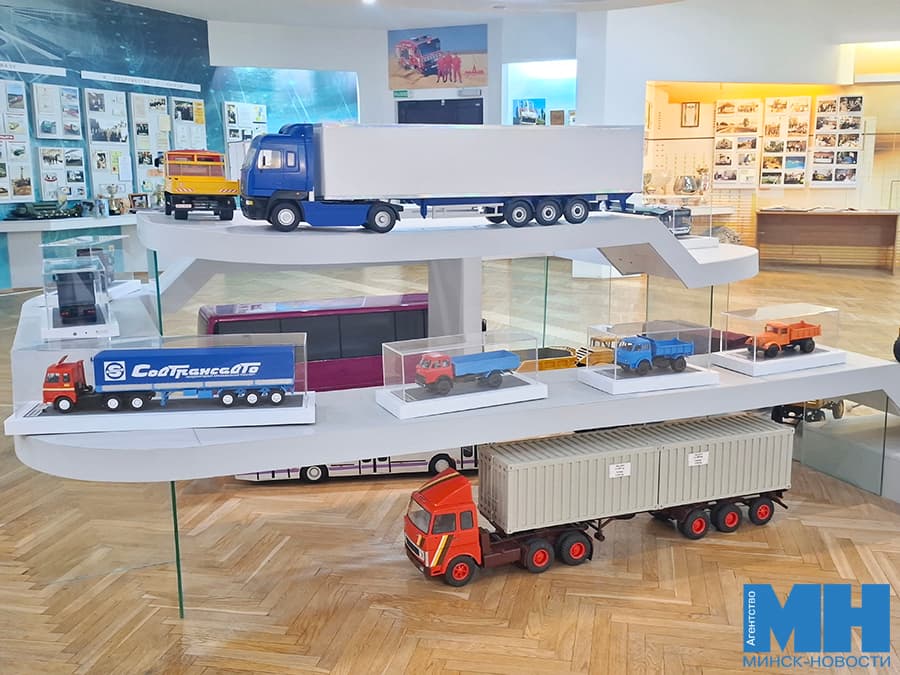
The appearance of the museum
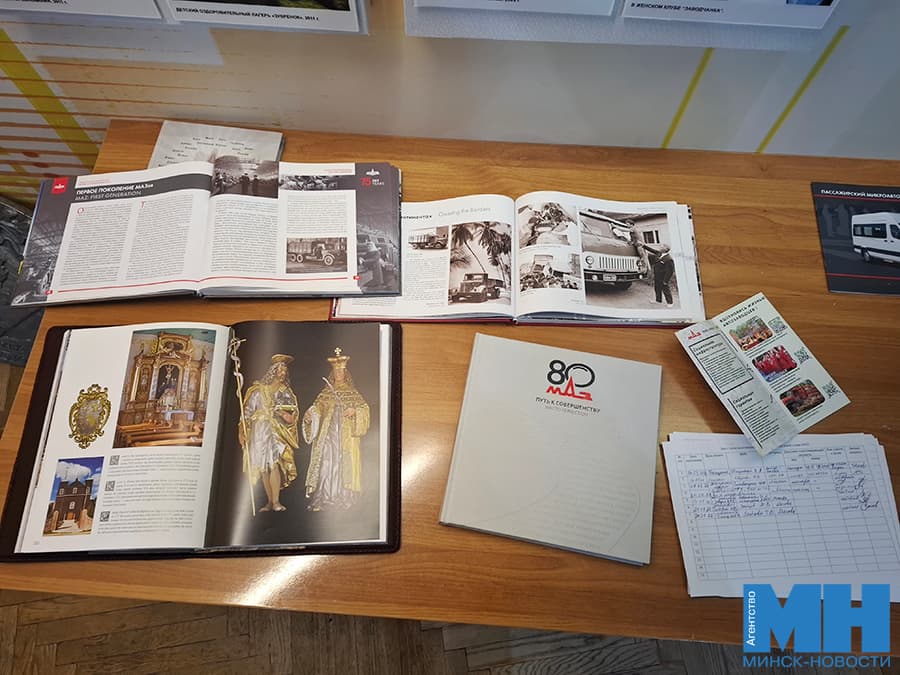
In 1964, on the 20th anniversary of MAZ, veterans who worked at the plant since its founding published the book "Minsk Automobile Plant" (authors-compilers - I. Demin, E. Shapiro, etc.). It told about the first two decades of the plant, the release of a new caboteless family of trucks MAZ-500 and the people who worked here. Three years later, the Council of Veterans proposed to organize an institution where Minsk residents could get acquainted with the history of MAZ and new products. On November 6, 1967, General Director Ivan Demin signed an order to establish the Museum of the History of Labor Glory. The institution was divided into historical periods of development of the car plant. Especially vividly captured in the museum pages of the factory chronicle associated with the work of factory workers in the final year of the Great Patriotic War. The exposition presents original references of the participants of the guerrilla movement, as well as unique historical photographs depicting the first car factories in the Krasnoy Urochichy, works on cleaning and restoring the city, personal belongings of participants in those unforgettable events.
From personal belongings of veterans to models of cars
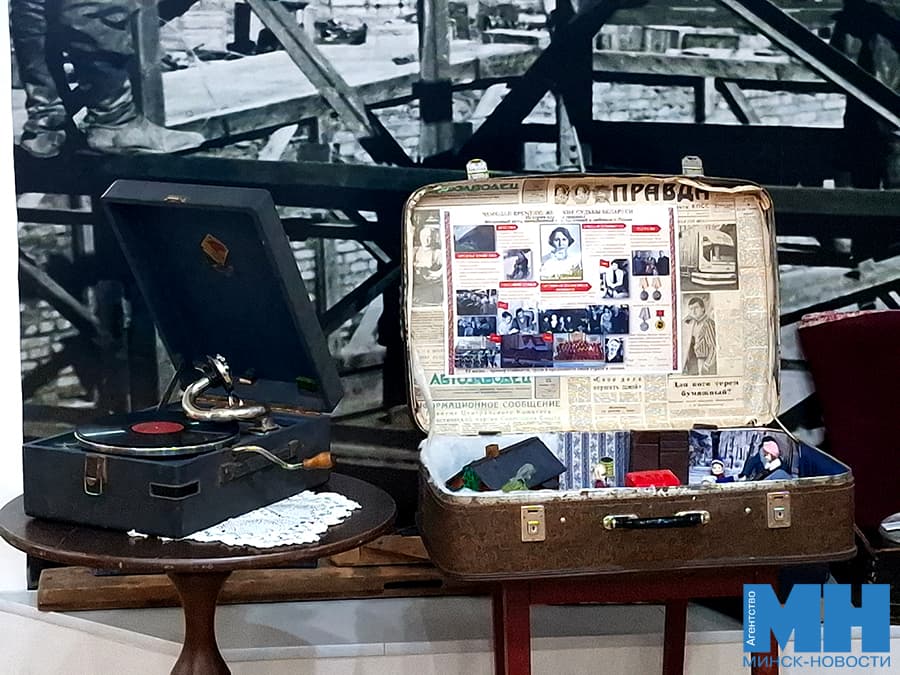
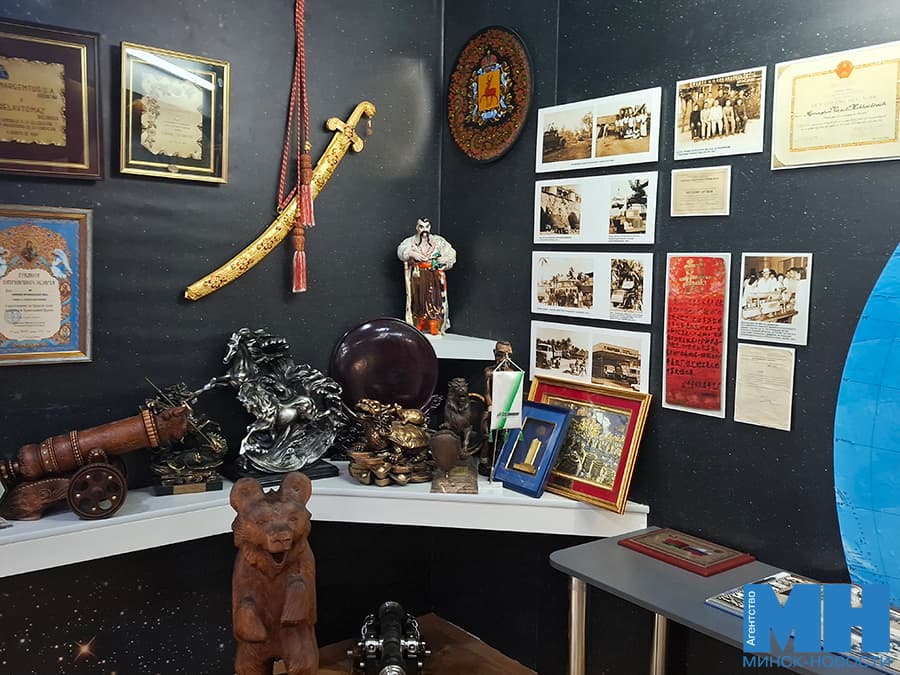
- Here you can see a chair made by the hands of a German prisoner of war. Until the 1950s, it was captured Wehrmacht servicemen who built our factory. Labor veterans, former and current employees brought their personal belongings to the enterprise. Among them were old pots from the general kitchen of MAZ, where the first builders of the plant lived; a blanket, a wooden suitcase. Presented in the museum and the address of the former military town - street. Central, 7. There are still preserved old brick buildings of 1947-1949. Now this street leads from the subway to the car factory. You can see in the institution and the apparatus for aerial photography. During the war he was loaded on a plane and filmed the area. There is also a gramophone of 1935 in the exposition, Sevastjanovich explained.
Nadezhda Pilyutin has worked for more than 40 years as a locksmith of mechanical assembly works at the Minsk Automobile Plant. She became a participant of the Zavodsky district competition for the Year of the Belarusian Woman and made a suitcase for the time of women’s fate in Belarus. In fact, her whole life is represented in such an unusual suitcase consisting of cardboard figurines. It shows the path of N. Pilyutina, which began with a house in the village where she was born, after school and work at the Minsk Automobile Plant, marriage, the birth of a child, then an auto-mechanical college, and as a result - membership in the veterans club.
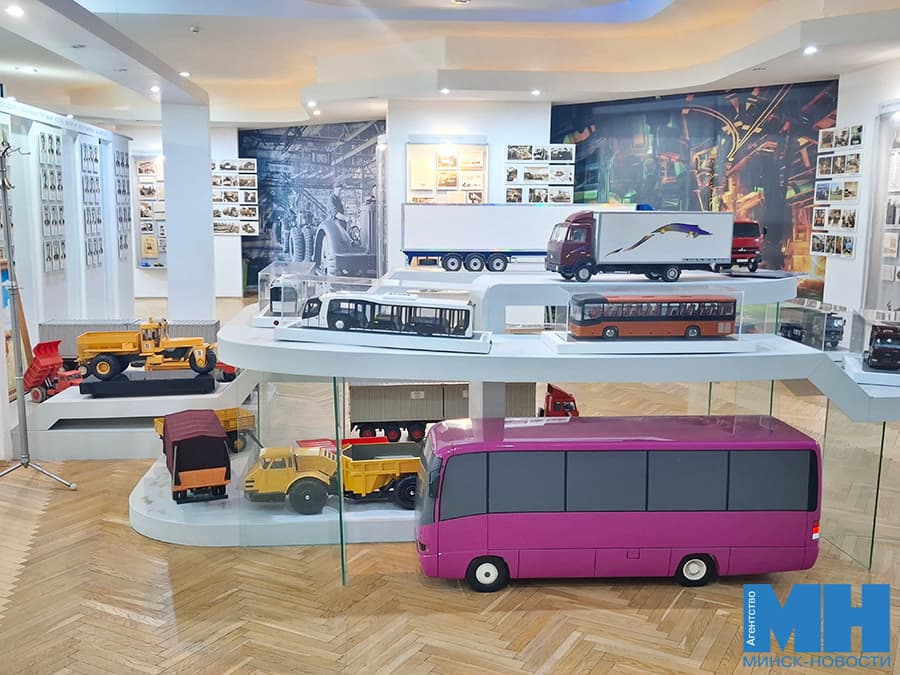
- Awards are presented in a separate section. In 1958 in Brussels at the exhibition MAZ received the Grand Prix medal for the creation of the first domestic car of especially high load capacity (40 tons). Later their production moved to Belaz. In 2000, the team of our plant became the European champion. In 2018, we took second place at the Dakar International Rally Marathon. In 2023, they won the first place at the international competitions “Silk Road”. One of the largest exhibits were models of cars and a wooden bear - a symbol of Yaroslavl, which was brought by a delegation from this city, Sevastyanovich added.
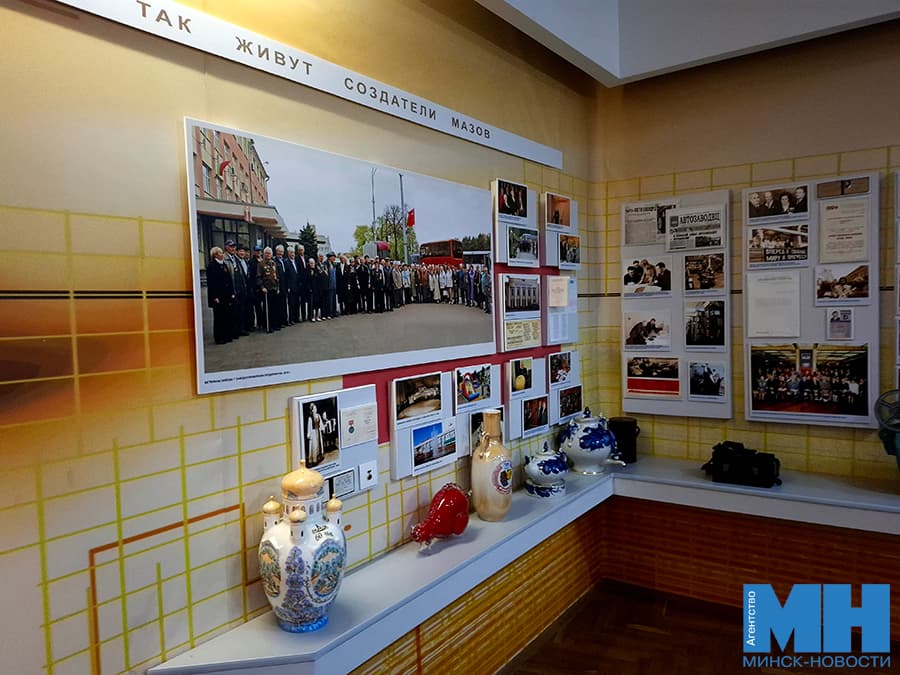
The final sections are modernity and the social sphere, where you can see how the creators of MAZ live. On the balance of the plant - the Palace of Culture; children's health camp "Zubrenok" (Volma) - one of the best in the country; hotel complex "Diamond"; also on the territory and in the divisions of the plant there are 12 canteens, sports club. In 1984, on the 40th anniversary of MAZ, the plant designer Fedor Revzin founded the zoo. In the 2000s it was transferred to the city balance.
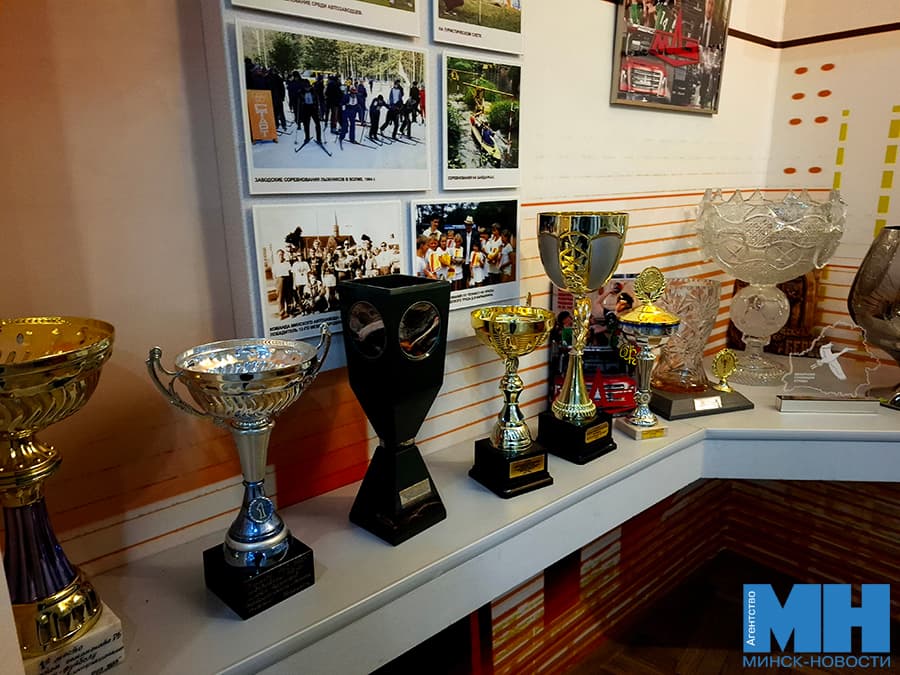
- Since 1992 we have had bus production. Belarus is the only country in the CIS that produces aerodrome buses for the airport. In total, the plant produces up to 3 thousand buses per year. Two years ago, the plant celebrated its 80th anniversary, by the anniversary of the workers released a new model of MAZ-X machines, its features are a consistent hybrid thrust, a power reserve of up to 3 thousand km, instead of rear-view mirrors - a circular view camera. Our cars are exported to 50 countries. Russia is considered the leader, in many countries cars are supplied in sets and assembled on site, among them - Egypt, Azerbaijan, Iran, Vietnam, Turkey, etc. For 2025, MAZ managed to produce more than 12 thousand units of transport, not counting buses, said the employee of the museum.
In total, the museum has more than 20 thousand exhibits.
For reference
Newly-minted design engineers come to the enterprise after graduating from the Belarusian National Technical University. At the Minsk Automobile Plant there is an official branch of the department "Automobiles", which belongs to the auto-tractor faculty (ATF) of the university. On the basis of this cooperation, a joint training and practical center MAZ-BNTU operates.
Photo by author