From Tablets to Scrolling: A Brief History of Information
How has communication changed, and why do we feel more alone as we get closer? Exhibition News 2
Every year the world seems to be getting smaller. There are almost no “white spots” on the map of the earth, and you can get from one end to the other in just a day. But should I? You can talk to any person on the planet without leaving home - just go to the Internet. And although we have become closer than ever, it is not always easy for a person to comprehend this – often, on the contrary, he feels lonely. As usual, in such a situation, art comes to the rescue.
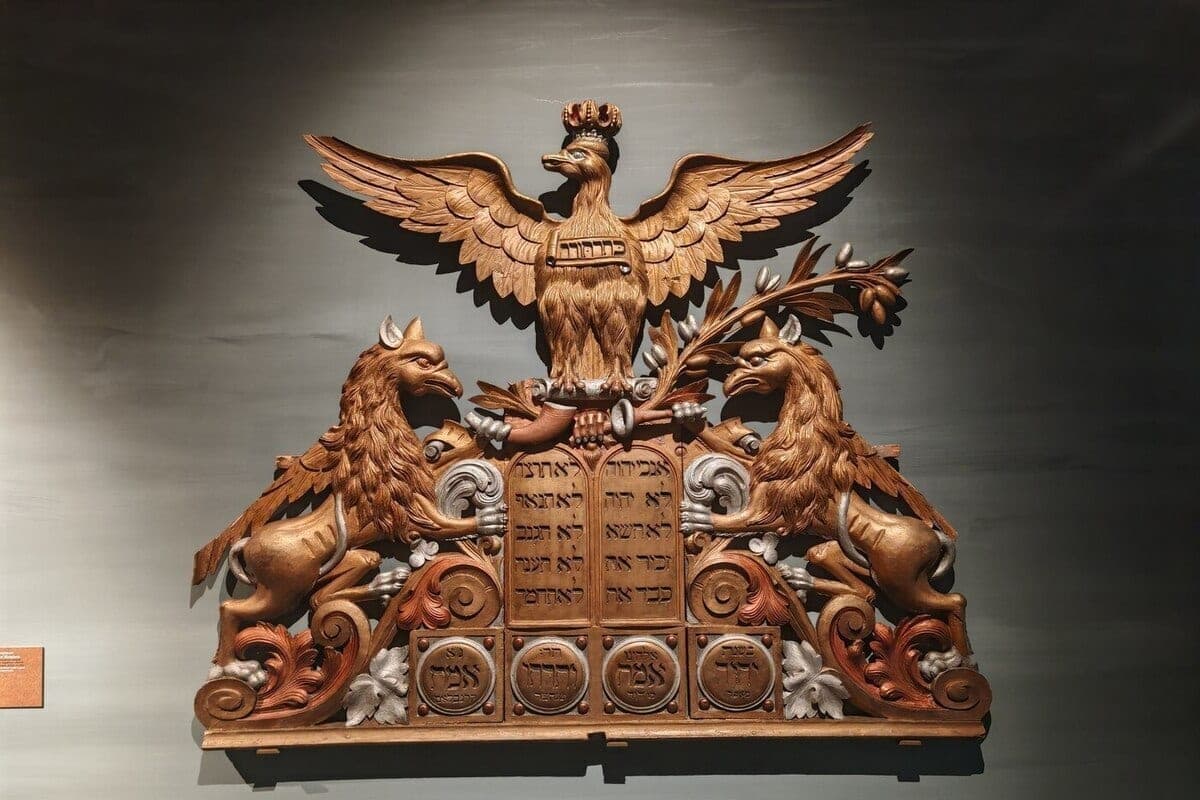
Associations with the exchange of information, and therefore with communication, you can choose as many as you like: from the oldest (letters, messengers, signal bonfires) to still fresh (post boxes and envelopes) and the latest (social networks and smartphones). Therefore, it is not surprising that the oldest exhibit of the exhibition dates from the XIII-X centuries BC. This is a slab depicting a chariot, two horses and a mountain goat found in southern Siberia. Of course, then the meaning was rather mystical - the connection between the living and the dead, the transition to another world. But this attempt to communicate with the unknown gives objects the symbolism of messengers. As if emphasizing the sacred meaning of such a connection, the "Incubus" of Garif Basyrov and the top Aron Kodesh from the Bessarabian province are located nearby. Aron Kodesh is an ark in which the scrolls of the Torah are kept, and at the very top are depicted the tablets of the Covenant. Both scriptures are related to the message from God to man. Running nearby rider from the project “Changing scenery” Grisha Bruskin also hints at a connection with another world – now it is a messenger of the apocalypse.
For most of history, people communicated with letters, and artists played the subject in a variety of ways. The painting “Letter from the Motherland” by Peter Sokolov captures a peaceful, but nevertheless tragic episode of the Russian-Turkish war: a soldier reads news from home to his colleagues. On the canvas of Oleg Lomakin, the postman brought a newspaper to a young mother, and her son looks out the door with interest. Dmitry Bulanov’s poster urges citizens to subscribe to the Soviet press. There are less traditional works: for example, Valery Gerlovin filled a mailbox found somewhere with letters to his wife, and Vyacheslav Livanov “wrote” his “Letter from Abkhazia” with wire on an aluminum sheet. Ideal successors of postmen - delivery couriers - Nadia Likhohrud sculpted from clay and painted glaze.
In the Soviet Union, the majority of our population mastered two skills that now seem basic: reading and writing. Therefore, the lady in a fashionable hat in the painting by Ivan Vladimirov fills in the working documentation with a slight smile, and a woman from Uzbekistan on the canvas of Olga Yanovskaya with zeal records the speech of the delegate. The leader on “Portrait of Stalin” Georgy Rublev with a cunning squint reads “Pravda”. Nearby hangs an old phone: a lead-drenched heavy pipe reminds of the famous call of Stalin Pasternak, and the corps melting and flowing down the wall - about the feelings of the poet after him.
The Soviet word is presented in various variations and readings. These are numerous agitation posters of the era, and newspapers that have become part of artistic works: on the works of Dmitry Prigov, Yuri Avvakumov and Yuri Kuzin. Sometimes the press becomes an equal hero of painting: a person in Vladimir Malagis experiences a loss, reading a number about the death of Clara Zetkin, and Ivan Puni’s newspaper is part of a still life.
In the information flow is easy to forget, but it does not save from loneliness. This feeling is conveyed by the installation of Anna Acorn: the office space is filled with nothing and seems more like a prison. Similar emotions are caused by the “Woman at the TV” by Julia Segal – an empty screen will not bring news, which the unfortunate expects with sad hope. Kirill Cheulushkin’s “Ministry” is a space of depersonalization and indifference. And the hall dedicated to space, reminds of a message, the answer to which is still unanswered