Children's heart and adult truths of Vasil Vitka
Writing for children is a special calling. They do this not for the sake of fame and honor, but because the soul reaches for the most sincere readers and the most severe critics.
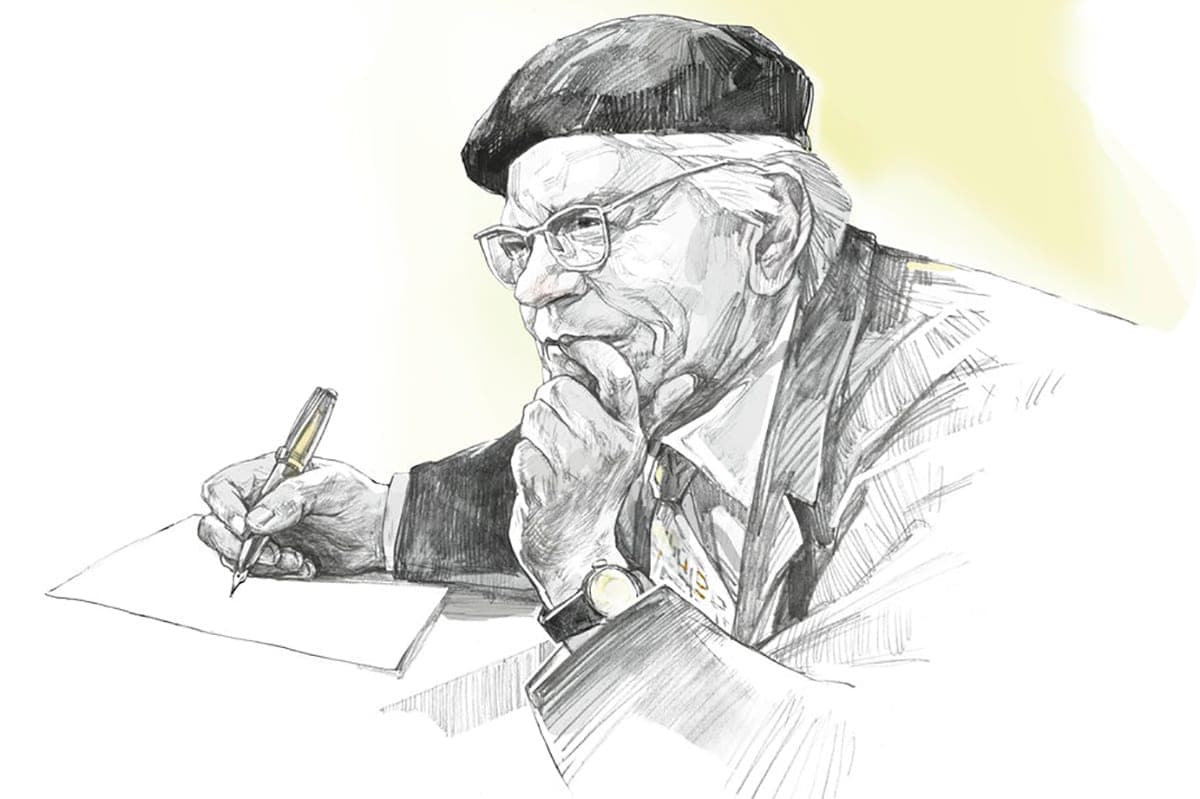
Writing for children is a special calling. They do this not for the sake of fame and honor, but because the soul reaches for the most sincere readers and the most severe critics - children. Vasil Vitka, by his own admission, began to compose poems for children "Pa voucher of bewilderment, pa voucher of soul, pa voucher of sapradnai love" - and to this day remains one of the favorite children's authors for many generations of Belarusians. With his cheerful poems, riddles, counts are familiar in early childhood.
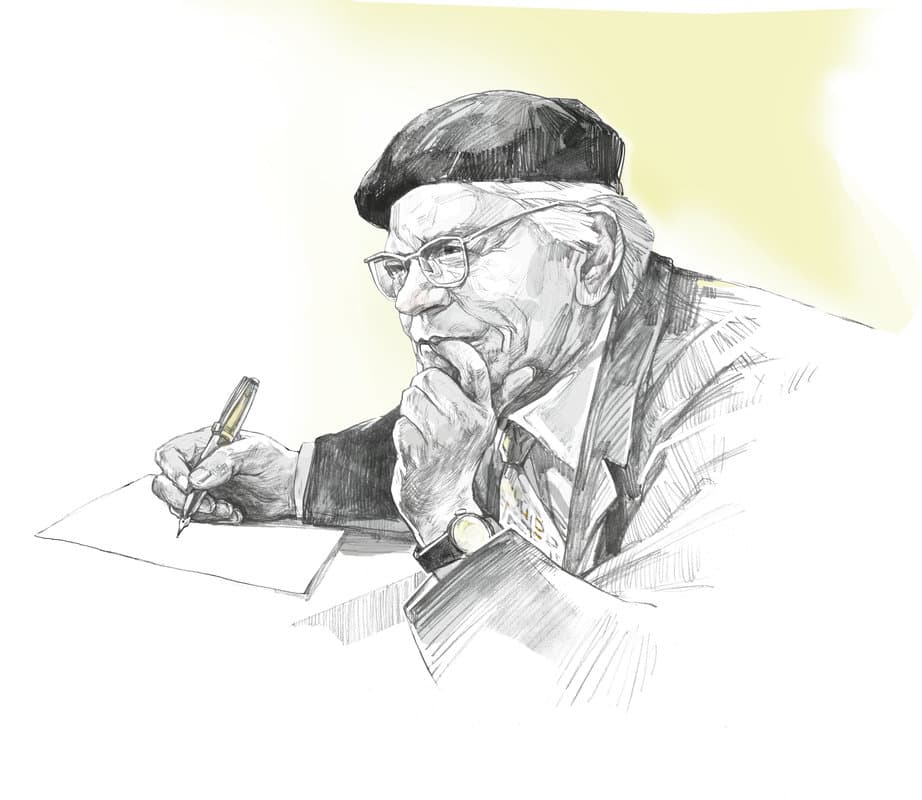
At birth, his name was Timothy Krysko, and he was born on the Slutsk land, which he loved tenderly until the end of his life, in the village of Evlichi on May 16, 1911. “The lineage of Conan — Maigo Pradzeda — bäre pile pachatki from Ukraine ... - Vasil Vitka later wrote. - Galitsk-Valyn princedoms of the XII-XIII centuries. from the Byasconian and feadal wars, foreign and zakhopami, Damaganniyi ранadarannya over the hetimi lands of Hungary i Polshchy, the naesce of the Tatars - at the top of the clock the people shukalka ratunka on Chornai i Belai Rusi, at the Nadnemansk, the first-born and Slutsk lands ... The writer's father was a master of all trades - carpenter, knew the shoe trade, even in medicine he understood something, and his temper was good, that's why he chose his game with a hole - the mother of the future writer Maria Mikhailovna, who was matched by gentry, and kulaks-rich, but only she went out even poor, but working and for love.
When a son was born, whose parents affectionately called “Tsimashok”, the father of the family decided to go to work in Siberia. In his autobiography, Vitka later pointed out: In 1912, if I had a year of hell, we were Omsk. You know, you're in the middle of nowhere, you're in the middle of nowhere. And then the First World War began - and a good guy with golden hands was drafted into the army along with thousands of others. My wife and child were all alone on the other side of the world. Only in 1917, Maria Mikhailovna and her son reached Yevlich’s relatives, soon Vasil Maksimovich, who was demobilized, came there. And life stretched, albeit poor, but again together, one by one, brothers and sisters were born in little Timothy.
The father, being the most literate in the village and a great lover of reading, in the evenings he often read aloud - fellow villagers gathered for these gatherings, and on the litter, cooled under the old casing, little Timoch listened to his father's reading. From his mother-chanter, he got a love for folk songs, from village life – that special, bright and imaginative store of speech that you will not find anywhere else, only in the countryside.
He began to compose his first lines in his school years, and although the time was difficult, hungry and cold, but the dream of poetry, the craving for the artistic word of Timothy Krysko did not leave. After the village seven-year plan, he went to study as a locksmith at the Slutsk vocational school, so as not to sit on the neck of his parents. In 1928, after graduation, he received a distribution in Bobruisk for a woodworking plant. It was in Bobruisk, then the regional center of cultural life, that he decided to acquaint others with his lines. Received an offer to work in a factory run, then noticed a 17-year-old gifted boy Mikhas Lynkov, former editor of the district newspaper Kamunict. It was Lynkov who became the first real teacher of a novice author not only in literature, but also in newspaper work. In the 1930s, Timoch Krysko actively works in journalism, gaining experience in literary activity, but he is not in a hurry to publish books. In 1935, he married Olga Lerman, through the younger sister of his wife, he became a peculiarity of Mikhail Lynkov: Genya Lerman married his brother Gregory. “I remember the pile of pearls, Kali, squatting, we grazed with jeongkai at Sam’i poor mangazetnaya boas.” The lady would have been sluggish, sluggish, pearly, and zamarazki bleached with a thick iony mustache of kutki naga pakoychyka ..., the writer recalled his then life. Friends joked that the hot love of the newlyweds would melt any ice, but Timofey Vasilyevich, having survived the winter in a flimsy housing, fell ill with severe rheumatism so that he walked with a stick for several months.
1939 – The Polish campaign of the Red Army, the liberation of Western Belarus, which was long awaited and sought on both sides of the demarcation line. In it participates and called up in the army Timofey Krysko. After the unification of the two parts of his native land, he worked as a secretary of the Bialystok regional branch of the Union of Writers of the BSSR - until a new war, much more terrible than all the previous ones. Upon learning of the attack of fascist Germany, he rushes to the front as a volunteer, but it is found that, in addition to rheumatism, his eyesight has also lost much. He is not taken into the active army, but is urgently sent to Moscow to cooperate in Belarusian publications. Intersect in general chaos with his wife is not possible – Olga on foot from Gomel with two children reaches Orsha, from there they manage to leave the train to Kurgan, to evacuate. So the family of Timothy repeats the path trodden in the First world by his parents: to reunite with his relatives the writer will have only at the very end of the war. It was the Great Patriotic War that became the impetus for the creative development of the writer, it was then that his literary gift was fully developed - and at the same time the pseudonym Vasil Vitka appeared. Vasil is in honor of his father, and Vitka... In one of the epigrams to himself, the poet hinted at its meaning: “Read me in reverse, and you will find out who Vitka is.” That is, the answer to this funny linguistic puzzle-inverter was the word "asset" - suitable for a person energetic, sunny, whom Kupala himself shortly before his death predicted as the first deputy chairman of the Union of Writers of the BSSR.
Vitka collaborated in satirical partisan newspapers “Squash Fashyskaya Gadzina” and “Partyzanskaya Dubinka”, and in his spare minutes he composed poems – no, not for children, in those harsh years, the fame of the unsurpassed children’s poet Vitke was still far away. The first book of poems called “Gartavanne” was published in Moscow in 1944, and Kuzma Chorny, with whom the author was a close friend, welcomed the release of this collection: “The princes of Liryk Tsimokh Krysko Radzim Pastae Perad Nami Harmony glib images . . .” Gata is a sprout of the soul of a samog paeta, where there is a smoky nay and sapradnaya paetychny schyrazi i a living pra da. In post-war Minsk, Vitka plunged into literary life: in 1944 he became the executive secretary of the newly created journal “Belarus”, in 1948 - deputy editor, and in 1951 - editor-in-chief of the newspaper “Litaratura i Mastatsva”. In 1946, the second book of poems “Po‐dzen” was published, in 1953 – “Vernatz”, five years later – “Ruzha i bayonet”. Vitka carefully selects his lyrics, releasing the next edition every 5-7 years: “Paverk” (1961), “Tops” (1968), “Pravojina of Summer” (1972), “Vyshyni Holy” (1977), “Sluchchyna” (1981), “Tretsia Peni” (1988). His circle is simple and wide: the beauty of his native land - and his Slutchin he was devoted all his life, believing that there is no better place on earth, the memory of stormy war days, the charm of his native word, reflections on life and humanity, inexhaustible love for Belarus:
On the sluggish side of the light of Jan - like a gray litter, soft song of summer, chewy wada throat ...
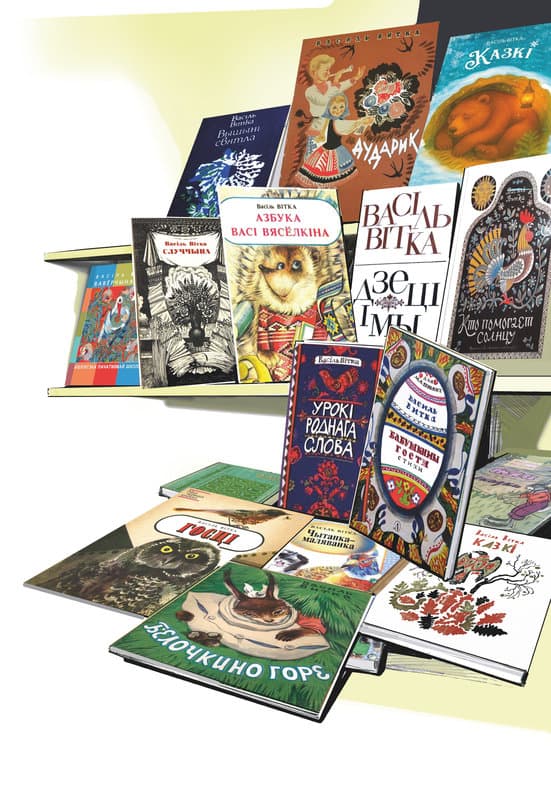
And in parallel, a completely different line of creativity of Vasil Vitka grows and expands: in 1947, he composes for his son the poem “Vaverchyna Gora”, which instantly entered children’s literature and became popular. “Cossack pra Veru-Vaverachka, pra-yae mountain-gorachka, pra-yae little daughters, pra-Vaverchyn malatok, pra-pushynaga pastla – daахganosaga busla, pra-zhyzze-byzze lyasya i yashche pra-toe-shoe ...” – fractional rhythms of folk verse, primordial, living, from the roots of native speech, sound in these lines, familiar to everyone since childhood ... And then, one after another, children's books Vitka are published - collections of poems for children, fairy tales in verses, "cladanki-chytanki, bayki-samagraiki, song-kali-hanki, jarty-perakrutki, lychylki, riddles, riddles, as the author himself called it a lively folk language: "Buslinaya of Friendship" (1958), "Cossssstal of the pra-king Zubrachi" (1976), "Khadaki-ska" (1976), "Kazka" (1975), "Kazka-mazka" (1976), "Kazka" (1976), "Kazka-mazka" (1976), "Kazka" (1976), "Kazka-mazka" (1976), "Kazka-mazka" (1976), "Kazka" (1976), "Kazka, "Kazka" (1976), "Kazka" (" ), "Kazka In 1995, he released his last book – “House, ze zhivutsy words”, the genre of which he designated as “the elephant of the people’s mova for the juice”.
In 1972, Vasil Vitka received the State Prize of the BSSR for books for children “Belarusian Kalihanka”, “Kazki” and “Chytanka-Malyavanka”. Later, the Belarusian poet and storyteller was recognized abroad: in 1978 he was awarded the International Honorary Diploma named after Hans Christian Andersen, and the works were included in the Honorary List of the International Council for Children's Book (IBBY Honour List) at UNESCO, which is often called the Honorary List of Andersen. Such an award was awarded only to the best children's authors of the planet: in the USSR it was Agnia Barto, Yuri Koval, Sergei Mikhalkov and Boris Zakhoder.
In 1957, Vasil Vitka created the children's magazine "Vyaselka" and headed it until 1974. Since 1974, he was a member of the script and editorial board of the film studio “Belarusfilm” – by the way, in the dramaturgy, Vitka also left his mark, writing the plays “Pramen bechyni” in 1948 and “Schchace paeta” dedicated to Yanka Kupala in 1957, a year later staged at the Kupalovsky Theater. He translated poetry and prose into Belarusian, wrote literary criticism, was an excellent publicist and thoughtful researcher. He had a hand in compiling school textbooks for reading “Native Words” for grades 1-3.
He enjoyed collecting examples of vivid folk vocabulary, loved to balagurize and in 1983 published a collection of satire and humor “For Home, for the album I Trochy for Epochs”. His reflections, articles, notes on pedagogy and education, diaries and memories of friends-writers at the end of his life began to combine into books and publish: in 1977, the publication “Dzeti i We” appeared, in 1982 – “Lessons”, in 1988 – “The Alphabet of the Soul”. I looked at the world and thought, "An old man is not a joy." Hey, you're not a big deal. Tsyaper pacha за za.wajac. I'm adchoulas yana raptogna, znyanatska ... Starasz, you look like you're not chakana, napaña, pain is mild. Not a Sastara, a Chalavek adrazu Robizza old-fashioned, some kind of illumined, a new pachynaya zhytsya i adkryvatsya light - jiwizza, as long as yashche nespaznaga, nevyadomaga, mima chago yon praisho м in jizzi i only all the time the wise sapra d zanny of the davitsana khana. No, no, no, no, no, no, no, no, no, no, no, no, no, no, no, no, no, no, no, no, no, no, no, no, no, no, no, no, no, no, no, no, no, no, no, no, no, no, no, no, no, no, no, no, no, no, no, no, no, no, no, no, no, no, no, no, no, no, no
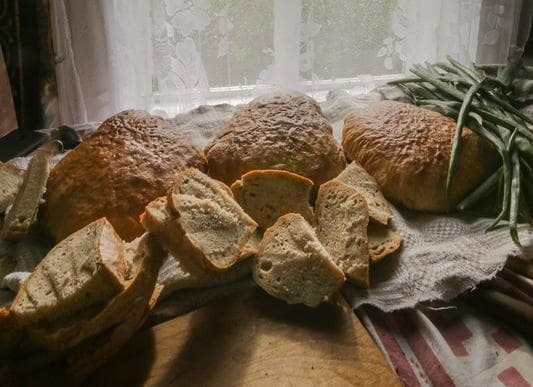
“The head of the maigo of malentry was not treba bujitsi, padganyatsi, prymushatsi esci. As I remember, we were sitting in Nagaladzen, Gatov's Esci, so that there was a place. That's what I'm talking about. He said, “We have bread, we have bread.” When the bread was baked in Kago, the snitch was a nuisance i in the winter, i in the summer on the asablivam thick spirit, that is, on the im navakolli. Kavalachak cesta, yaki pakida sya zezhy but new roshchyny, we call khreshchyk.
In notes, books, diaries, even in letters to Vitka - pedagogy, echoes of books read by other outstanding teachers. Once he noted in his diary: “Natural, it’s a shoda шr people’s pedagogy, when I sit down I slurp: “Saroka-Varona porridge cooked”, pampered me klassy gulnu-flyk “Fingers”. We have a little slack, we have a little slack, we have a little slack, we have a slack, we remember their names