Putin said that Russia by 2030 will provide itself with batteries
Russian President Vladimir Putin said that by 2030 the country will be able to fully meet domestic demand for batteries.
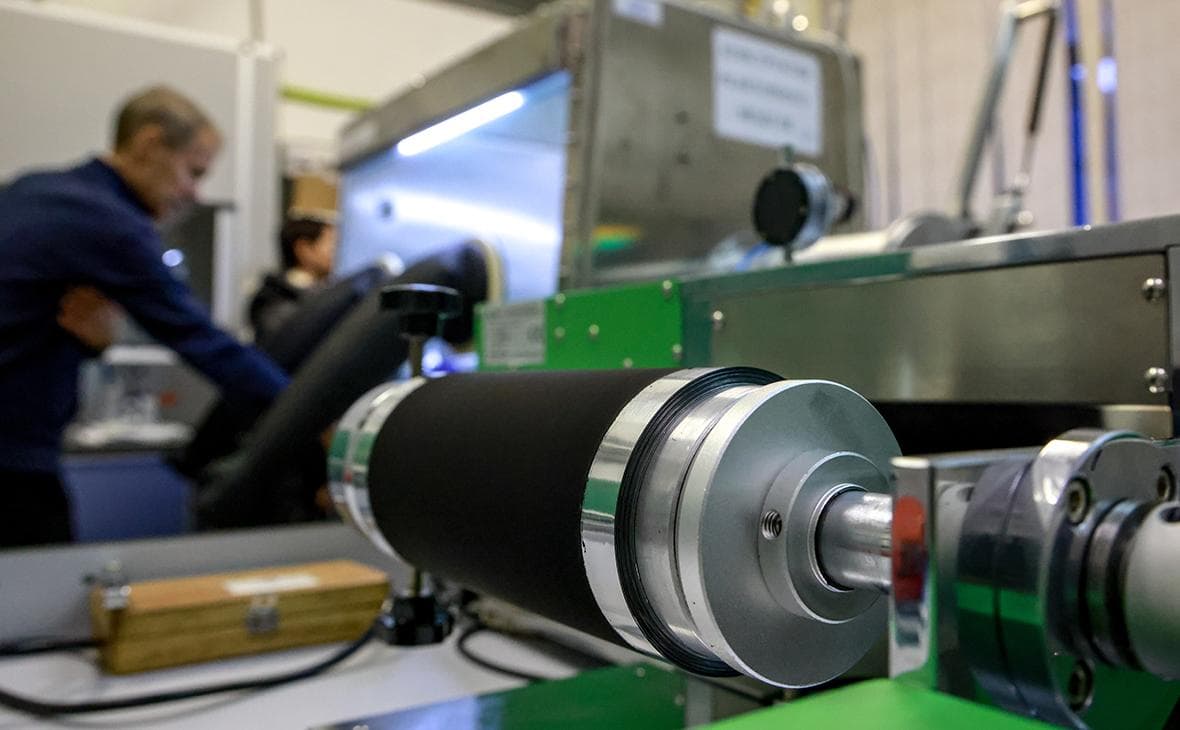
Russian President Vladimir Putin said that by 2030 the country will be able to fully meet domestic demand for batteries. He announced this on October 6 at the opening of the first production complex in the cluster for the production of electric batteries in Moscow.
“It is expected that by 2030, after the release of new enterprises to planned capacity, our country will independently provide most of the domestic demand for batteries,” Putin said.
The head of state stressed that one of the tasks is to localize production using mainly Russian raw materials. This requires active development of mineral resources and the introduction of advanced technologies.
“I hope that the state, big business, metallurgical and chemical companies, scientific and educational organizations will join forces to solve this problem,” he said.
The state plans to cooperate with international partners to borrow the best practices in the field of technology and innovation, Putin added.
The event was held in videoconference mode.
Earlier, analysts of Nord Energy estimated that the energy storage market in Russia by 2030 could reach 706 billion rubles, its capacity by this time will be at the level of 14.4 GWh. Two new gigafactories with a total total capacity of 8 GWh per year should provide such indicators, which is equivalent to equipping about 100,000 electric vehicles with batteries. One of these plants was put into pilot operation in the Kaliningrad region at the end of 2025, the second opened on October 6 in Moscow.
At the end of August, Anastasia Mikhailova, General Director of Ranera, at a meeting of the State Council Commission on Energy, said that the products of new gigafactories are focused primarily on two large segments: electric transport and stationary energy, while the range of solutions is constantly expanding, including projects for urban infrastructure. “In the transport segment, these are traction batteries for passenger electric vehicles (including the first Russian electric car Atom), electric buses, river and sea transport, railway and commercial freight transport,” the head of the largest company – a manufacturer of lithium-ion batteries and energy storage devices in Russia noted.