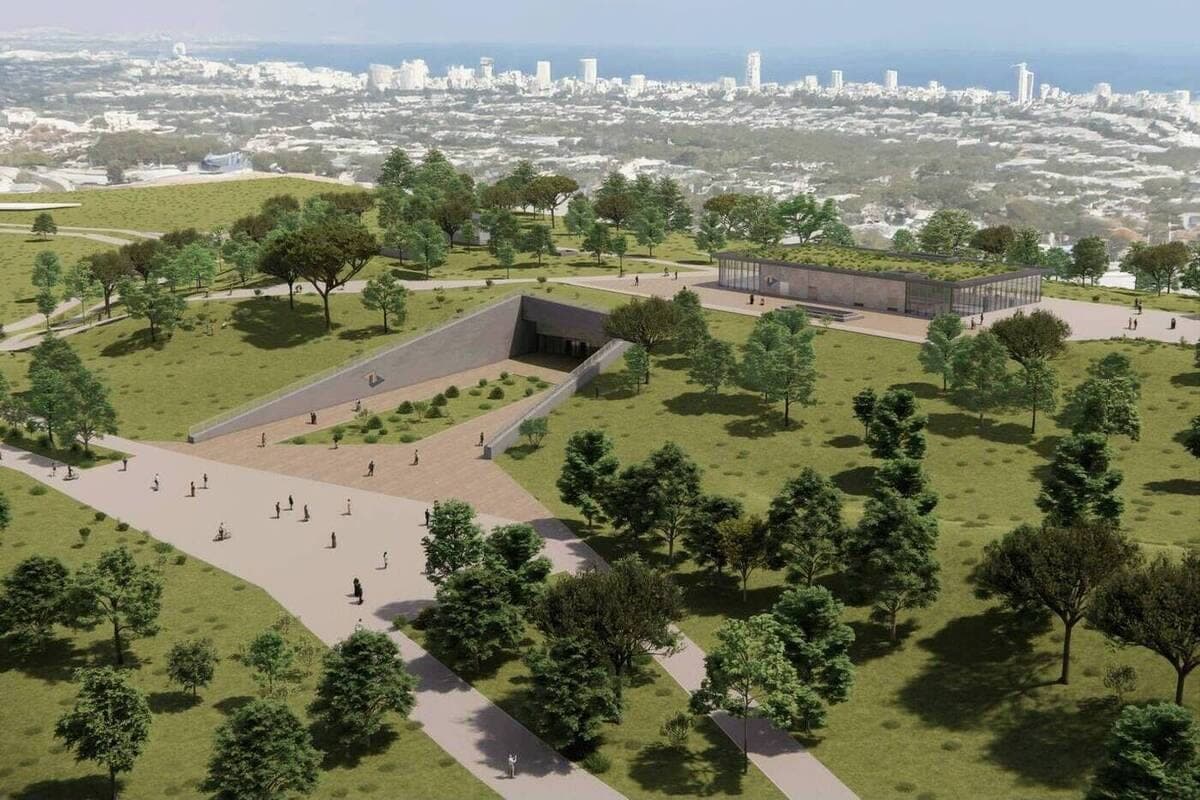
October 2026. Israel, a country where even rain is an event, is finally starting to build its first true subway station. Not a test funicular, not another tram, but a subway, which was dreamed of under Golda Meir. Irony? During this time in London and Paris managed not only to build, but also to age new lines, and in Moscow — to close the ring length of 70 kilometers. But here we have the first bucket, the first station, the first step into a new transport era.
Metro as a National Saga: From Dreams to Concrete
In Israel, where every new highway is almost a geopolitical event, the news that permits for the construction of the first Park Ariel Sharon metro station on the M3 line were approved sounded like fanfare amid the eternal traffic jams of Gush Dan. How many years have we waited for this moment? You can count from the 1960s, when the first metro projects were discussed in cabinets, and Golda Meir promised that “a little more – and go underground.” Six decades have passed, generations have passed, and Israelis are still stuck in traffic jams reading news of new subway lines being opened somewhere in the world.
So, October 2026. Israel officially allows the construction of the first metro station. Not just a station, but a symbolic reference point for the whole country. Park Ariel Sharon Station is part of the M3 ring line that will connect Bat Yam, Holon, Or Yehuda, Petah Tikva, Herzliya and even Ben Gurion Airport. As part of Infra 1’s first tender for NIS 65 billion (or, if you’re closer to a dollar, about 21 billion), five plants will be built in Holon and Or Yehuda, four mines for tunneling shields (TBM), and 19 international consortiums have already lined up behind this tasty piece of infrastructure pie. Work on the first station will take 25 months, 300,000 cubic meters of soil will be removed, and the support walls will go to a depth of 38 meters - almost like the ambitions of Israeli transport officials.
“Ishur’s permit to build Israel’s first metro station is a significant step towards realizing the Ministry of Transport’s vision for public transport.” The metro project is a strategic investment in the future of the metropolis, aimed at increasing accessibility, reducing travel time and connecting key centers of accommodation, employment and services, said Moshe Ben-Zaken, Director General of the Ministry of Transport.
Long-term forecast: the subway as an engine of the economy and social revolution
But what does this project promise us in the long run? Here the numbers speak louder than the slogans. The entire metro network – three lines, 109 stations, 150 kilometers of tunnels, a budget of 177 billion shekels – should, according to official plans, work by 2034-2037. Skeptics, however, advise to add a couple of years to these dates, because the experience with tram lines teaches us not to believe promises about the timing. But even if the subway opens by 2040, the effect will be enormous: up to 600 million trips a year are expected, the contribution to GDP is from 27 to 110 billion shekels annually, and each invested shekel, according to the Technion calculations, will return the economy from 2.5 to 3.5 shekels. Property prices along the M3 line are already rising by 18-34%, with investors buying up plots in anticipation of a transport miracle.
The subway should become not just an alternative to traffic jams, but a real social elevator: residents will be able to live farther from the center without losing hours on the road, and businesses will expand their hiring horizons. Yes, thousands of drivers will lose their jobs due to automation, but thousands of new jobs will be created in the construction, maintenance and operation of this giant system.
The irony of fate: how Israel builds a subway, and the world has long traveled
But let's not lose our sense of humor. After all, if for each postponement of terms and overspending of the budget was given through the metro station, we would already have a network no worse than Moscow. Recall how the Tel Aviv high-speed tram Red Line was built: the start in 2005, was promised to open in 2017 for 7.2 billion shekels, and opened in 2023 for 18.7 billion. Green and Purple Lines are still in the process, deadlines are shifting, budgets are chubby. But in 1959 in Haifa built Carmelite - the first "subway" of the Middle East, as long as 1.8 kilometers, which still costs the city $3 million in annual subsidies. That’s true: “little gold, but roads.”.
Against this background, the Israeli mega-project of the subway looks like a challenge not only to traffic jams, but also to its own history. While in London passengers are already on the Elizabeth Line for the fourth year (118 km, 41 stations, £19 billion, opening late for 4 years), and in Paris they are building the Grand Paris Express (200 km, 68 stations, €36-40 billion, delays for 3-7 years), Israel is just beginning to dig the first station. In 12 years Moscow built a large ring line (70 km, 31 stations) for the amount that in London would not have built half of the Elizabeth Line. But, as they say, each metropolis has its own characteristics: somewhere they build quickly and cheaply, somewhere - slowly and expensive, and somewhere - long, expensive and with a special national flavor.
Endgame with hope: Metro as a chance for a new transport reality
And yet, despite the irony and skepticism, it is impossible not to admit that the Israeli subway is not just the construction of the century, but a chance for a new transport and economic reality. Yes, timelines will shift, budgets will grow, and officials will promise and justify themselves. But someday, perhaps not our children, but our grandchildren, will be driving through these tunnels, remembering their parents standing in traffic jams reading ironic articles about how Israel finally started building the subway. And then maybe we'll all say, "It was worth it.".
Comparative Table of Metro Megaprojects: Israel and the World
Project Length (km) Stations Budget (currency) Budget (Shekels/$) Declared terms Real terms Cost of 1 km of tunnel
Tel Aviv Metro (3 lines) 145,109 а150 billion ~$40 billion 2030–2032 – $250–350 million
Elizabeth Line (London) 118 41 £19 billion )88 billion / $24 billion 2018 2022 $1 billion +
Grand Paris Express 200 68 €36–40 billion 145–160 billion / $40–45 billion 2024–2030 2024–2031 $200–300 million
BCL (Moscow) 70 31 )501 billion )22 billion / $6.5 billion 2011–2023 2018–2023 $90–100 million
Ironic conclusion:
While in London and Paris, passengers are already riding through new tunnels, and in Moscow for 12 years built 70 km of subway