
“AIC: growth strategy” is a new project of the “Rural newspaper”. How will Belarus’ crop production change in five years?
Last year, Belarus for the first time exceeded the bar of $10 billion in food exports. What we eat ourselves, willingly buy in more than 110 years.
Last year, Belarus for the first time exceeded the bar of $10 billion in food exports. What we eat is bought in more than 110 countries. Competition in foreign markets is growing. Quality requirements are being tightened. To maintain positions and increase momentum, you need a strategy. The state program "Agribusiness of the Future" for 2026-2030 is the main agrarian document of the five-year plan. It includes ten subprograms, more than 126 billion rubles of funding and clear, measurable goals: how many tons of grain we will collect, how many kilograms of milk we will sip, how much we will increase exports.
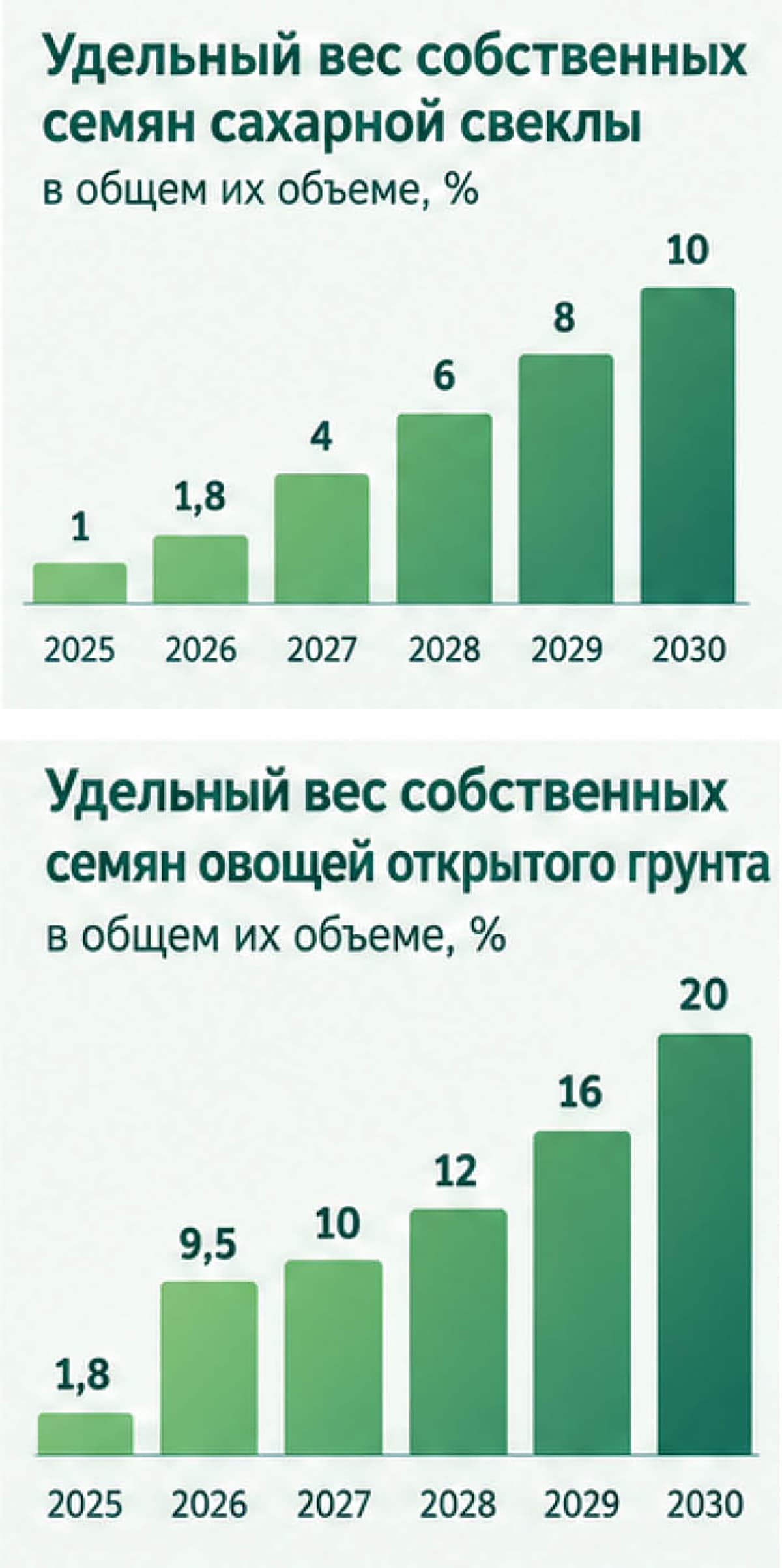
In the “Rural newspaper” starts the project “AIC: growth strategy”. We'll go through each subroutine. We will tell you what is behind the figures, what changes farmers will see, what construction will begin, how much money has been allocated and what all this will give the reader, the consumer, the resident of a Belarusian village or city – all of us, citizens of Belarus. Without grain there will be no bread on the table, without feed there will be no milk and meat. The whole chain, from field to counter, starts with the land and the crop. That is why the first subprogram of the “AIC of the future” is devoted to crop production. Seven tasks cover the whole way: from improving soil fertility and laying new gardens to building greenhouses and storage facilities. In five years, the plans are to approach the harvest of 10 million tons of grain (excluding rapeseed), increase the production of fruits and berries to 814,000 tons, significantly increase the share of own seeds, and provide the country with vegetables all year round. Together with specialists – scientists and practitioners – we will try to figure out what exactly needs to be done and how it will affect each of us.
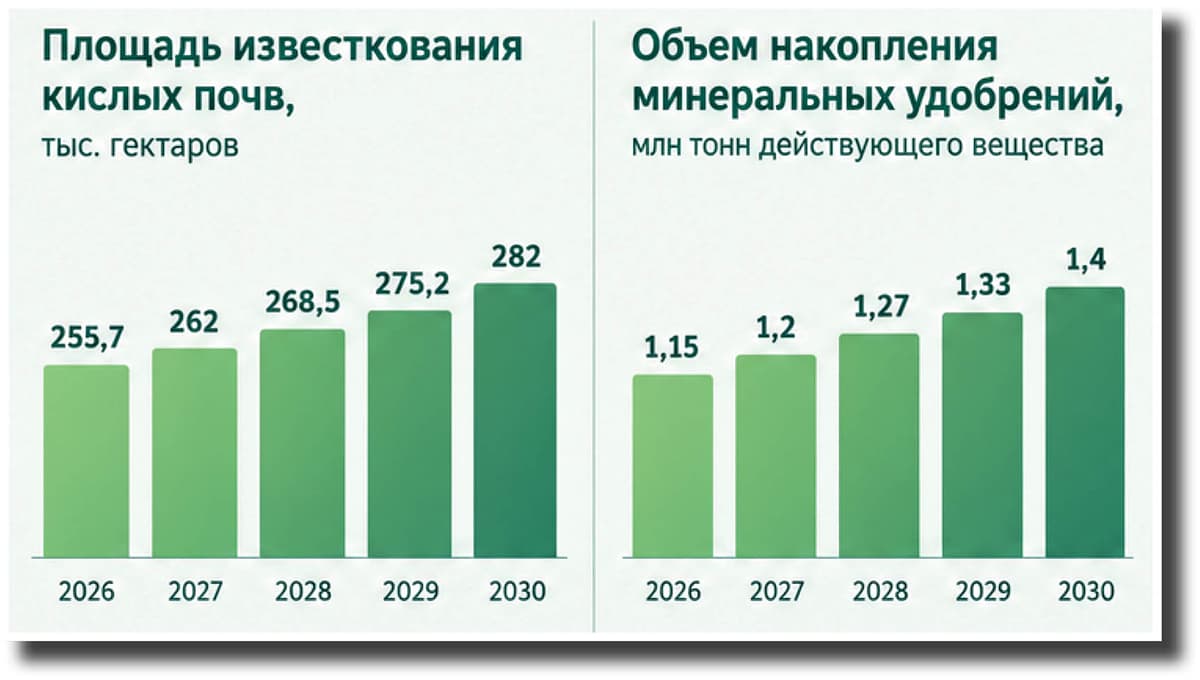
Acid soils are like not quite a healthy organism that does not digest food well. No matter how much fertilizer rash, it's useless. Therefore, the first task of the subprogramme is to restore strength to the earth. For five years in Belarus will be carried out liming of acidic soils on the area of 1 million 343.4 thousand hectares. This is almost one in five hectares of arable land. Work will be carried out annually, with an increase in volumes. Doses are calculated individually: for sandy soils - one, for peat soils - others, for contaminated with radionuclides - third. In Chernobyl, lime performs a dual function: it increases fertility and reduces the transition of cesium-137 and strontium-90 into plants.
In parallel, the accumulation of mineral fertilizers will grow. By 2030, volumes should reach 1.4 million tons of active substance. These are nitrogen, phosphorus and potassium, the three whales that sustain the crop. Without them, the spike will not be poured, the root crop will not grow, and the grass will not give the desired mass. The program includes annual growth: from 1.15 million tons in 2026 to 1.4 in 2030.
As a result of these measures, revenue from the sale of agricultural products per point-hectare should increase. By 2030, this indicator should increase by 60 percent to the level of 2025. Simply put, from each hectare of land we will receive more returns from the harvest and, accordingly, the ruble.
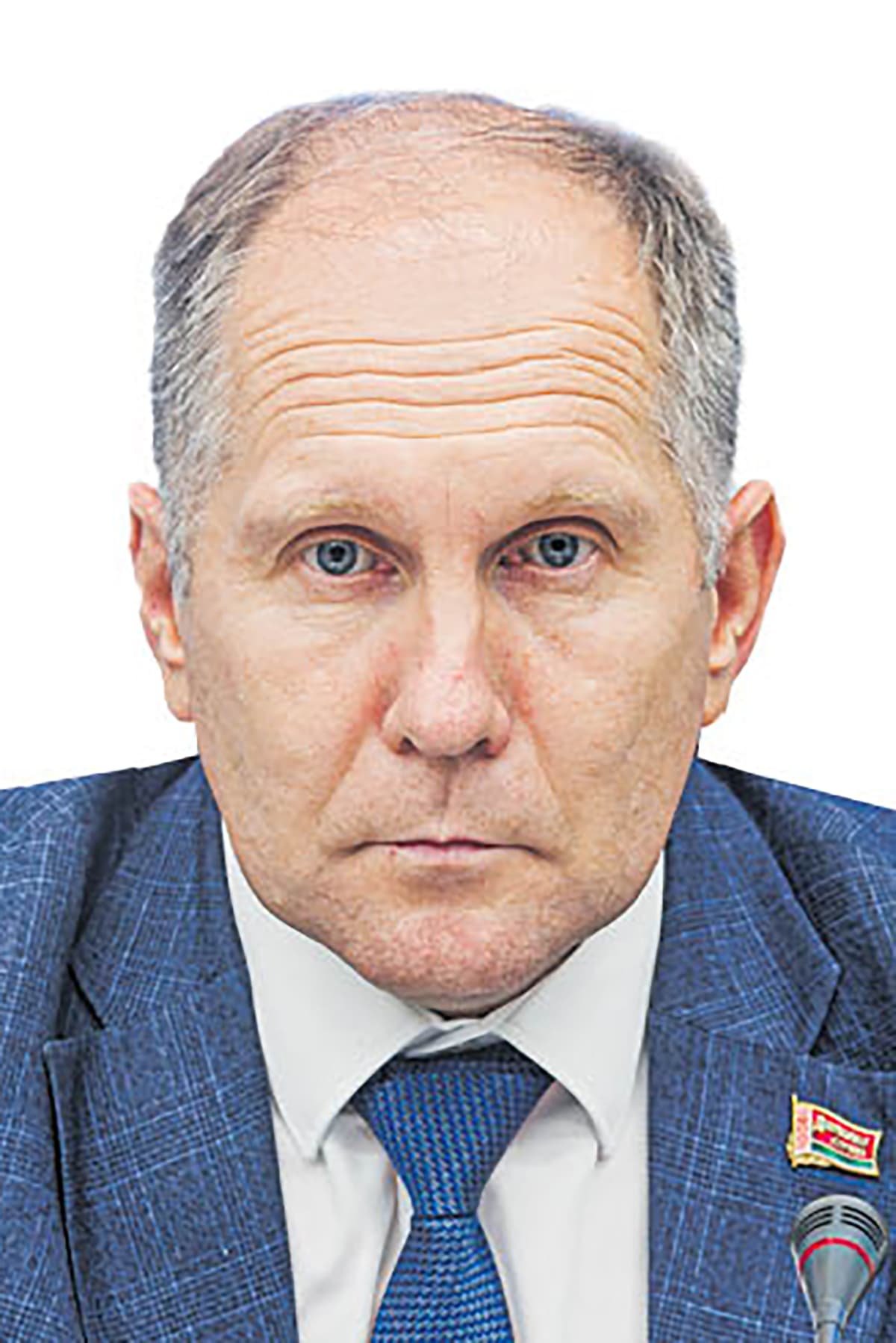
- The subprogramme clearly defines goals and objectives, spells out ways to solve them. This is a software product with point support for the most vulnerable areas. We aim for a specific result in the figures indicated.
The key task is to ensure the inviolability of food security and increase export potential where we have competitive advantages. All activities of the subprogramme are aimed at meeting the consumer needs of the country within reasonable limits and entering foreign markets with quality products. The development of import-substituting production of fruit and berry products Apples, pears, cherries, currants, gooseberries - we are used to seeing these and other berries and fruits on our table. And the work to make them their own is carried out systematically in the country. Over the past 5 years, more than 5 thousand hectares of gardens were laid in Belarus, farms mastered modern technologies. Efficient crop production continues this line with new volumes and approaches.
Over five years, 4.3 thousand hectares of fruit and berry plants will be laid in agricultural organizations and peasant (farm) farms. These are new gardens that will replace the old ones and allow you to increase your own production. Work will be carried out at an increased pace: if in 2026 it is planned to lay 1.3 thousand hectares, then in 2027 - already 1.5, then annually 0.5 thousand hectares.
A separate area is the demonstration gardens. Less common plants will be planted on an area of 20 hectares in five years along with the usual crops. This is a kind of testing ground: it will take root in our climate and give a crop - we will be able to recommend to farms. Work will begin in 2027 and will expand by 5 hectares annually.
The program also specifies the requirement for the installation of drip irrigation systems in industrial gardens. It allows you to supply moisture and nutrients directly to the roots of plants, which increases the yield and quality of fruits. For these purposes, loans from Development Bank of the Republic of Belarus are provided.
By 2030, the total production of fruits and berries in farms of all categories should reach 814,000 tons, that is, almost 19 percent more than in 2025.
Sergey Alchikov, Deputy Director of KSUE "Brilevo" Gomel district:
- We started planting a new garden last year. Five hectares were laid under the State Program “Agrarian Business” for 2021-2025. Some of the funds were allocated from the republican budget, for which we purchased materials and equipment for drip irrigation. Also at their own expense bought 12.5 thousand pieces of seedlings on five hectares of land.
At the beginning of this year, we again participated in the competition, already under the program “AIC of the future”. According to the results, they became winners, part of the funds from the republican budget was allocated. They continued to purchase materials and equipment. In total, the area of the new garden should be 20 hectares, we are currently completing the planting of the planned one.
Since May, we have a contracting organization for the device of drip irrigation. The project is voluminous, worth about 6 million rubles. It includes a tapestry support and a drip system that leads directly to the trees, a serious engineering unit: an artesian well more than 200 meters deep, a storage pond and a pumping station with complete improvement. At the beginning of November, the facility is scheduled for commissioning. The applied technology will contribute to an increase in yields to 250-300 centners per hectare, whereas in a conventional garden it is within 150. Creating conditions for storing potatoes and fruit and vegetable products To grow a crop is half the battle. It is equally important to preserve it. Potatoes, vegetables, fruits - products that require special conditions: a certain temperature, humidity, ventilation. If the storage is old, part of the harvest deteriorates, and what remains loses its presentation and goes for a pittance. Over five years, it is planned to build and reconstruct fertile reservoirs with a total capacity of 25.7 thousand tons. In addition, it is necessary to build and modernize potato and vegetable storage facilities with a capacity of 10 thousand tons.
Financing of the construction of storage facilities is at the expense of loans from banks and OJSC Development Bank of the Republic of Belarus. 140.2 million rubles of loans of OJSC Development Bank are provided for the construction of fertile reservoirs, 14 million rubles of bank loans are provided for potato and vegetable storage. The state supports these projects through budget transfers to reimburse part of capital costs up to 15 percent of the cost of the facility when it is commissioned and 15 percent when it reaches its full design capacity, and for greenhouses up to 20 and 15 percent, respectively.
For example, in the Brest region, OJSC Agro-Motol of the Ivanovo district is building a fruit storage for 1810 tons, the Bugagroinvest farm of the Kamenetsky district is building 2000 tons. Yablonevy Posad LLC in Baranovichi is building a fruit sorting and storage building (2026-2027), and the Yakvil farm is building a fruit storage facility in the Zhabinkovsk district.
It is also planned to build a 10,000-ton potato storage facility in Agro-Motol, Ivanovo district. JSC "Akr-Agro" in the Svisloch district will build a fertile reservoir for 2000 tons, and LLC "UMKA Company" in the Soligorsk district - for 5000 tons. Peasant farm "Spartan-Agro" Molodechnensky district reconstructs the fertile reservoir for 4000 tons.
Sergey Pilipovich, Deputy Director of Agro-Motol, Ivanovo district:
- In 2027-2028, we plan to build a fruit storage for 1810 tons and a potato storage for 10 thousand tons. Fruit storage is necessary primarily because the existing one is far from the garden. You have to carry the crop over a distance of five kilometers, and this affects the quality of the fruit. We will place the new one right in the garden. Now we have 80 hectares of garden, after construction we will plant another 20 hectares. Design and estimate documentation is developed, we choose a contractor. The storage will be modern, with equipment for sorting apples on solar cells. The existing will not be closed, it will remain as an additional. In the best years, we harvested 2,300-2,400 tons of apples, and its capacity is not enough.
As for potatoes, 16 thousand tons were collected last year, and it became clear that everything is not included in our bins. Therefore, a new storage facility is needed. We are one of the largest potato producers in the Brest region. We are also a seed farmer. These are special storage requirements. Seeds can not be stored in bulk - only by container method. The existing storage facilities do not have the necessary space. Plus, we are constantly forming a stable fund, which implies strict placement of containers and a clear temperature regime.
Another area is the cultivation of potato chips. For this crop, the dry matter content in tubers and the stability of the temperature regime during storage are critical: sharp temperature fluctuations lead to the accumulation of reducing sugars and worsen the quality of raw materials for processing. In this regard, it is necessary to have specialized storage rooms with automatic regulation of temperature, humidity and ventilation.
grudnitskiy@sb.by
P.S. Continuation in the next issue of “SG”
