
Currency with scars
On this Sunday, November 15, financiers will raise glasses for their professional holiday and the 33rd anniversary of tenge
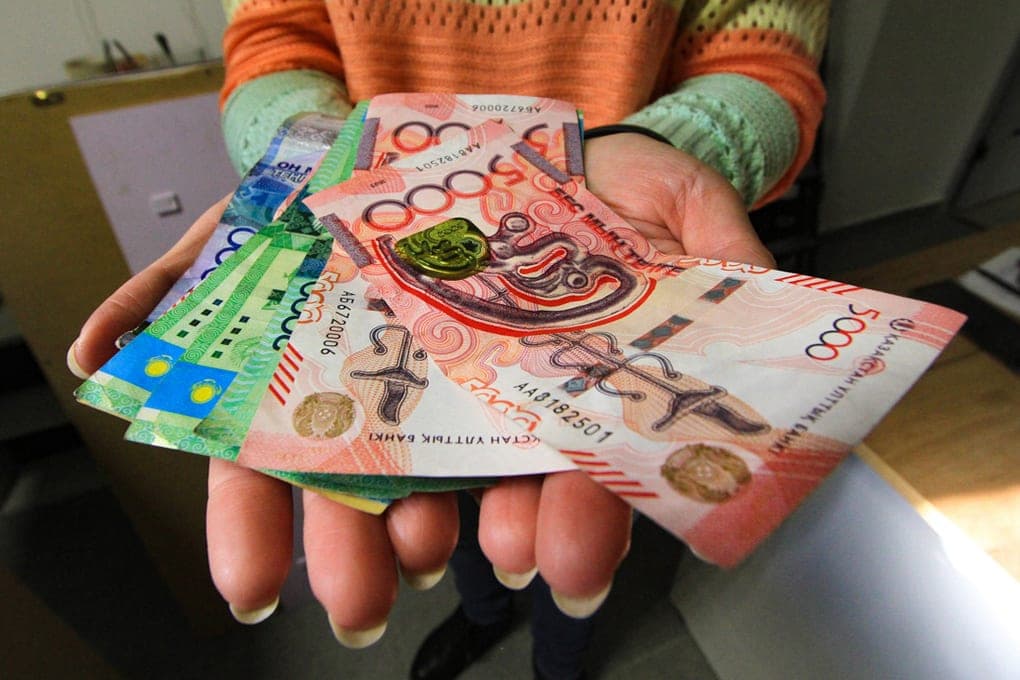
The national currency is at an interesting age. Comes in with scars from devaluations, a shiny digital wrapper and a chilling reality in the wallets of the vast majority of Kazakhstanis.
Secret cargo from London
November 1993 left no room for sentiment. The young republic has been in the paper mass of a neighboring state for two years. And the ruble zone has actually turned into a financial sink.
Neighboring post-Soviet countries dumped depreciated Soviet and Russian cash. They bought up our goods, accelerating hyperinflation to thousands of percent per annum. The economy was cracking. Without its own money, all sovereignty remained a beautiful declaration on paper.
The rescue operation was prepared as a spy thriller. In the basements of Almaty, four artists Timur Suleimenov, Mendybai Alin, Agimsaly Duzelkhanov and Khairulla Gabjalilov in the strictest secrecy drew sketches of future banknotes. They were printed in the UK by Harrison & Sons.
In Kazakhstan, crispy packs were imported by eighteen flights. In the invoices wrote: "Equipment for the residence under construction." No leaks were allowed. The presidential decree was issued on November 12, and the exchange began on November 15 at eight in the morning. For one new tenge was given 500 old rubles. Thus, the country has the main tool for independent monetary and fiscal policy. Our own financial history began.
Ninety-five falls and Saka style
If you make a psychological portrait of tenge today, then we have a classic survivor. Battered, grated, extremely cynical. In that distant November 1993 for one American dollar gave 4 tenge 70 tiyns. Today, the official rate revolves around the mark of 447.14 tenge per dollar and almost 500 for the euro. For 33 years, our currency has depreciated against the “American” more than 95 times.
This path is paved with sharp devaluation shocks, each of which left a mark on the savings of citizens. April 1999 – The repercussions of the Asian and Russian crises take the course from 88 to 140. February 2009 - a one-time jump from 120 to 150.
Then there was Black Tuesday in February 2014, when we woke up at 185. And in August 2015, the regulator abandoned the currency corridor and announced inflation targeting, that is, let the exchange rate float in order to restrain price growth with interest rates.
Tenge immediately flew for 255, and soon broke and 300. In the storms of 2020 and 2022 against the background of a pandemic, the collapse of oil quotes and geopolitics, the exchange boards at the moment showed 500 tenge per dollar. Then, really, the course was back.
“We are used to measuring the health of the tenge exclusively through the exchange rate against the dollar, but this is a look in the rearview mirror,” said Arman Toktagulov, our consultant and financial analyst. Devaluations were an inevitable price to pay for the commodity model of the economy. When you sell oil and you buy everything else down to toothpicks, anyone on the world's exchanges knocks your currency down. The tenge simply reflected the weakness of our real sector.”.
At the same time, externally and technologically, the birthday boy looks great. Tiyns have long sunk into oblivion, and coins of 1, 2 and 5 tenge have turned into souvenir metal, which is not even lifted from the asphalt. But the banknotes of the new series “Saka style”, which have been put into circulation for the past three years, are rightfully considered one of the most protected and aesthetic in the world.
But it's not even paper. We almost stopped holding money in our hands. The share of non-cash payments in the country exceeded 85-88%. Tenge went into smartphones, QR codes, and now goes into the phase of “digital tenge”. This is a programmable currency. With its help, the state gets the opportunity to literally color budget money and track down to a penny where exactly they went.
Technological triumph. And total control.
The illusion of wealth and life in installments
What is the tenge for the Central Asian region today? Undisputed technological leader. None of our neighbors have such a developed fintech ecosystem as ours.
On a global scale, the tenge is a typical local currency of the developing commodity market, closely tied to the quotes of Brent crude oil and the well-being of trading partners. But inside the country, strange metamorphoses occur with the perception of the national currency.
Recently, the country changed the very optics of how the state assesses our well-being. The old methods, based exclusively on the formal subsistence minimum and dry data on wages, finally broke away from the ground.
According to the new rules, a comprehensive digital profile is taken into account: not just how much is accrued on paper, but what is the real consumer load, whether there is property, how much is spent on basic needs and, most importantly, how much banks take away.
Why is it time to change the line? Because nominal incomes seem to be growing, but in fact people are getting poorer. Whereas a family with two cars and regular appliance purchases used to be seen as a confident middle class, the new rules revealed a merciless truth: it was all bought on debt. Half of the family’s budget goes to food, the rest goes to servicing old loans.
This is not wealth, but a beautiful showcase for borrowed funds.
The official statistics of this autumn try to radiate restrained optimism. According to the Bureau of National Statistics, annual inflation slowed to 9.2% in October after September’s 9.3% and August’s 9.8%. Food inflation fell to 8.5%, non-food inflation is 11%, and paid services are rising in price by 8.9% per year. Against this background, the National Bank at the end of October even decided to slightly weaken the screws and lowered the base rate to 15.75%.
The refrigerator does not read press releases. The slowdown in inflation means that the price tags in stores are rewritten a little slower than a year ago. The goods themselves don't get cheaper. Accumulated over the past five years, rising prices have already eaten up a huge part of income.
In 1993, one tenge could buy several loaves of bread. Today, the largest bill of 20,000 tenge is one modest trip to the supermarket for a couple of days. And winter is ahead with the risks of a new round of prices due to the increased price of fuel and the end of the moratorium on the growth of utility tariffs.
The main paradox of the current birthday of the currency is that most citizens have not their own, but other people’s tenge in their pockets (or rather, on bank cards). Banks. The decline in purchasing power has led to the fact that we borrow not for development, but for the maintenance of pants. From picking up a child for school to buying a winter jacket and even groceries for dinner, everything goes through installments.
The figures of the Agency for Regulation and Development of the Financial Market and the National Bank resemble reports from the front. The total debt of the population to banks reached a whopping 26.7 trillion tenge. And if you add microfinance organizations and quasi-state sector, the amount exceeds 28 trillion.
Since the beginning of this year, we have borrowed another 7.6% more. Two-thirds of this pie – 17.7 trillion tenge – is conventional unsecured consumer loans. Mortgages account for about 7.9 trillion.
“We have grown an economy of total debt, where installments replaced the growth of real incomes for people,” says Arman Toktagulov. When you have almost 9 million borrowers in your country, that is, almost the entire economically active population, and each has an average of 4.4 loans with an average check of 3.1 million tenge, this is no longer financial availability, but a macroeconomic diagnosis. Banks are making record profits at rates at 21 per cent per annum, and households are simply buying the illusion of living standards on credit.”.
It is clear that this year the regulator began to tighten the screws: tightened the calculation of the debt load ratio, banned the issuance of new loans to those who already have a delay.
As a result, in September, the issuance of consumer loans finally fell by 8.8% year-on-year, and car loans fell by almost 20%. But the old one hasn't gone anywhere. Loans with a delay of more than 90 days (the so-called NPL 90+) have already broken the mark of 1.2 trillion tenge. The debt burden continues to drag family budgets to the bottom.
Survival recipe for stash
What is the tenge going with in its 34th summer? It is an absolutely infrastructure-mature currency that serves a structurally skewed economy.
The future life of tenge will depend on three extremely mundane factors. The first is the world prices for oil and metals, from which we have not stopped. The second is the appetite of the government to spend funds from the National Fund, because it is the regular sales of currency from this cup that now hold the rate around 447 tenge per dollar. And the third factor is the ability of the authorities to curb tariff and budget inflation.
For those who have free money after paying taxes, communal payments and bank contributions, the issue of preserving the stash is an edge. Keeping everything in one basket in our latitudes is financial suicide.
Right now, tenge deposits provide a rare opportunity to earn real money. At a base rate of 15.75%, commercial banks offer deposits with an effective rate (EIS) from 14 to 16.5% per annum.
Subtract the official inflation of 9.2% and get a net positive return of 5-6%. For short money and airbags for six months or a year better not come up. But it works right up to the first geopolitical or oil black swan.
Therefore, the second wing of any cup is a hard currency. Dollars and euros. While the exchange rate is stable and relatively strong, analysts advise methodically, with each salary, to bribe the currency.
Yes, foreign currency deposits in our banks give a ridiculous 1% per annum, and cash under the mattress is slowly eating up already American inflation. But on the horizon of three to five years, the dollar in Kazakhstan has always benefited from the tenge due to devaluation jumps. Those who are smarter and have larger amounts go through brokers in currency bonds or foreign ETF funds.
The third element of protection against global storms is gold. Against the backdrop of endless crises in the Middle East and global fragmentation, precious metals have been breaking historical records for the past two years. Purchase of measuring bars of the National Bank or opening of impersonal metal accounts is a reliable conservative anchor for long money.
But the traditional Kazakh fetish - real estate - has clearly cooled. Due to expensive market mortgages and falling real incomes, square meters are no longer growing by leaps and bounds. Renting an apartment brings a modest 5-7% per annum, which is more than twice less than the usual tenge deposit, which also has no headache in the form of riotous tenants and ongoing repairs.
Taking concrete now makes sense only for life and only under the preferential programs of Otbasy Bank. For quick resale, the market is dead.
“The recipe for survival for private capital for the next year is extremely pragmatic,” said Arman Toktagulov. Keep 40-50% of available funds on tenge deposits while banks generously share high rates. Another 35-40% is gradually transferred to dollar instruments, taking advantage of the current lull on the currency exchange. Put the remaining 10-15% into gold. And most importantly, before you invest at least tiyn, close your consumer loans at 21%. No legal instrument in the world will give you a return that exceeds the value of bank debt.”.
Tenge survived in the nineties, survived the zeros and digitized into the twenties. So will we. If we learn to count our money as coolly as bankers do on their professional holiday.
