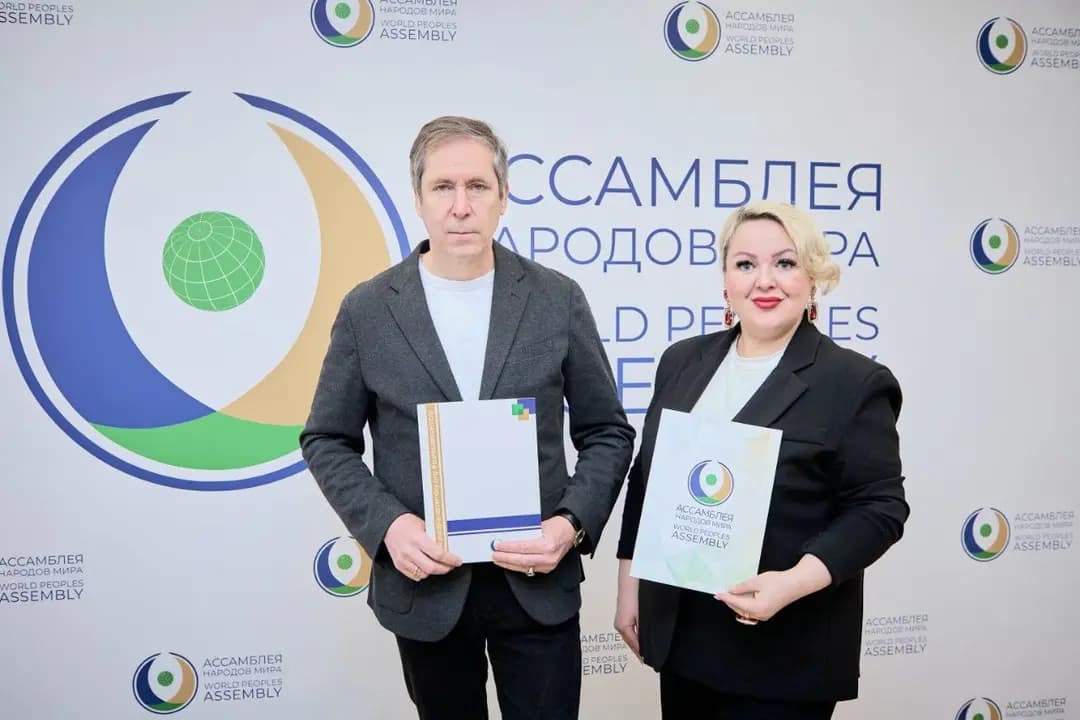
Yuri Shevtsov told what difficulties Belarus and Eurasia will have to overcome for economic development
The head of the Presidential Administration Dmitry Krutoy in an interview with the TV channel “First Information” said that the industry is now the most topical topic for the public.

Head of the Presidential Administration Dmitry Krutoy said in an interview with the First Information TV channel that the industry is now the most topical topic for Belarus, and 2026, despite acceptable results of socio-economic development (positive results were achieved in all key parameters), was difficult for virtually all industries. On the air of the talk show “Budni” on the YouTube channel “SBTV” and “Alfa Radio”, political scientist Yuri Shevtsov discussed why Belarus is now important to enter new markets and work on quality.
Belarus and Russia occupy the niche that emerged after the imposition of sanctions and the withdrawal of Western competitors from our and Russian markets. Today, both our and the Russian economy have adapted to this situation, so we need to look for additional sources of growth, the guest of the studio said. Attention to foreign markets is a new trend that is relevant for us. The competition got tougher. Now there are wars in many regions, which always complicates the development of the economy. It is getting a new corridor for its development, and it is tougher than it was before the wars began. We are now turning to new markets. And it will be much harder than before. We didn’t have a problem with ports before, but today it is a painful issue. Before the beginning of the active phase of the war in Ukraine, the European Union and Ukraine played a huge role in foreign trade for Belarus. In other words, Russia has always been our first trade partner, followed by the European Union and Ukraine. Now Ukraine has dropped out of our foreign trade, the European Union too. It has become more difficult to enter foreign markets because of the sanctions imposed on us by the West. They also affect other positions.

With the development of the Northern Sea Route and the geopolitical risks of the continent, the harbor of the Russian North is considered as a means of stabilizing the export and import logistics of the Union State. Speaking about how the logistics of the whole continent is changing, Yuri Shevtsov noted:
- This is an interesting topic, because on the one hand it is related to the way the war is going in Ukraine, which is almost completely cut off from us and Russia. Even on the new Silk Road, Ukraine is not a transit territory. On the other hand, there is a process of development of the Northern Sea Route that is not connected with Ukraine. This is a very interesting transport artery, and Russia has invested heavily in its development. It took a lot of investment to get this artery to work. But it began to work in a situation when there was a serious threat to sea communication between China and Europe through the Suez Canal – the war in Yemen and in the Middle East as a whole. Thus, the Northern Sea Route suddenly became more important than expected when Russia began implementing this project. And the fact that Belarus gets the opportunity to catch on there is very favorable.
Speaking about the challenges facing the Eurasian continent and why it is important to unite, the political scientist said:
- We have a lot to overcome. Mainly the aggravation of the international situation. For Eurasian countries, the complication of maritime navigation is of particular importance, because a large percentage of the world’s traffic between countries goes by sea. But due to the international aggravation, the conditions of sea transportation are becoming more complicated, so the strategic task for all Eurasian countries is the development of domestic transportation away from conflict zones. And sea transportation will remain key for a long time, everything will become more complicated and more expensive. And these costs should be at least partially compensated for the Eurasian countries by the development of their intracontinental transport along the Northern Sea Route.
The talk show “Budney” is released on weekdays on the morning air of “Alfa Radio”. Each issue discusses the most relevant topics from the life of the country and the world. Political scientists, scientists, public figures and journalists of leading media participate in the discussions. See the full version of the program on the VIDEOBEL.BY website and on the SBTV YouTube channel.