
Gorlov: the future of the agro-industrial complex is digitalization, biotechnology and land reclamation
On the eve of the holiday, Minister of Agriculture and Food Yuri Gorlov in an interview with SG spoke about significant achievements and prospects in the agro-industrial complex Fall --.
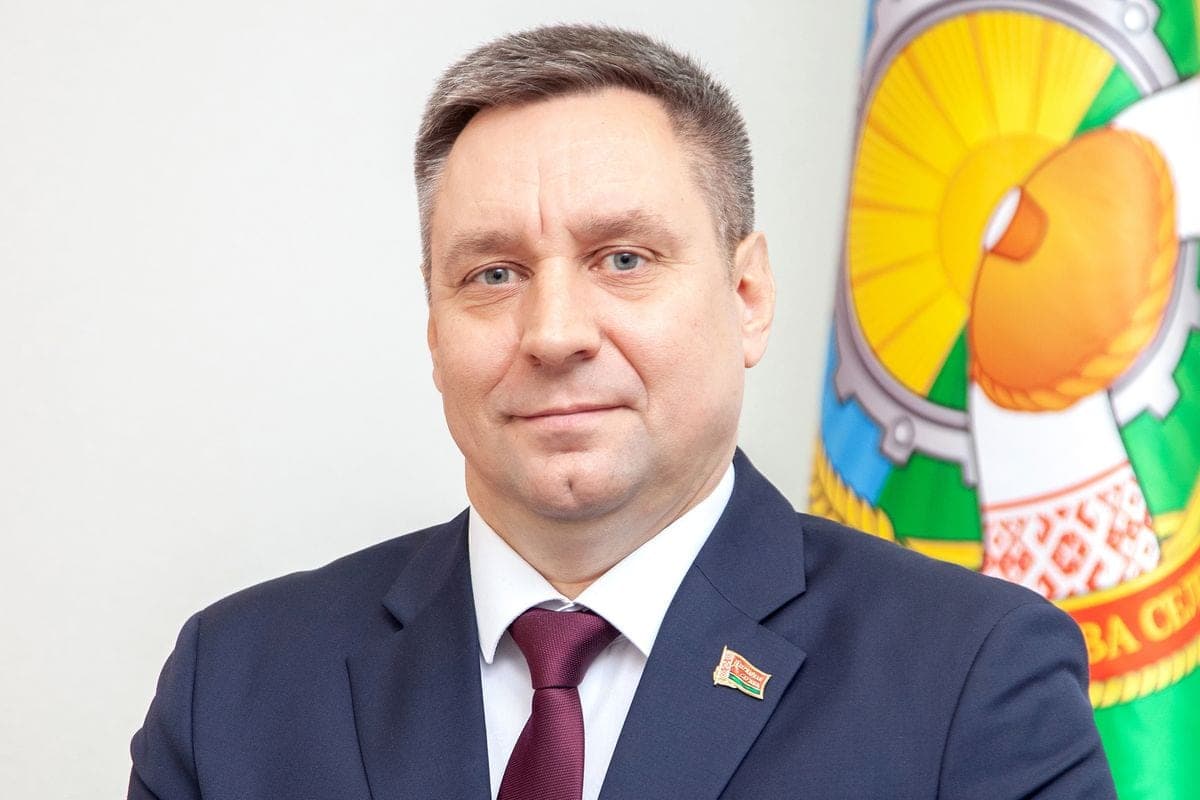
On the eve of the holiday, Minister of Agriculture and Food Yuri Gorlov in an interview with SG spoke about significant achievements and prospects in the agro-industrial complex
Autumn is the traditional time to sum up the results of the field suffering. We spoke with the Minister of Agriculture and Food Yuri Gorlov about how land responds to labor, why less technology means more efficiency and whether we will be with bread, on the eve of the professional holiday – the Day of Workers of Agriculture and Processing Industry of the Agro-Industrial Complex of the Republic of Belarus.
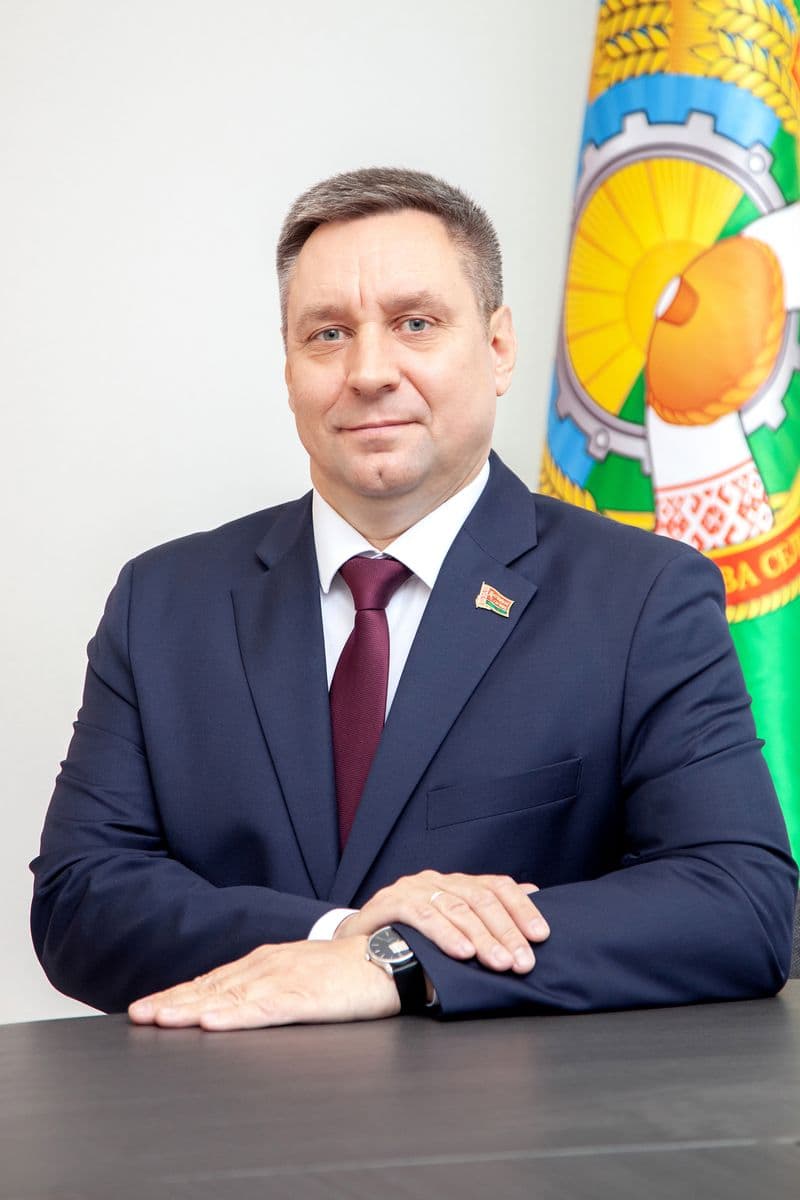
- The cleaning was quite effective, we did not lower the bar set last year. As of November 13, 11 million 449 thousand tons, more than five million tons of sugar beet, were removed from grain fields, taking into account rapeseed and corn. It is no exaggeration to say that growth is recorded in all crops and agricultural production positions. Of course, everything was achieved thanks to the hard, coordinated work of our farmers. After all, behind each record there is a round-the-clock, not always visible work for the overall result.
In each region, each district summed up the results at festivals-fairs of workers of the village "Dazhynki", confirming their success. But this does not mean that everyone relaxes and rests on their laurels. Work in agriculture never stops. Everything we see in the graphs and reports is the result of competent planning, accurate adherence to technologies and, of course, the dedication of people on the ground - from a mechanizer, agronomist-field or machine milking operator to the head of the region. These achievements include timely preparation of equipment, high-quality seeds, thoughtful plant protection and, of course, state support.
Apart from cleaning, we have something to be proud of this year. The numbers speak eloquently for our work: Belarus holds absolute leadership in the post-Soviet space and in Eastern Europe in terms of food independence. The highest percentage of self-sufficiency: milk and dairy products are almost 300 percent - a huge figure, meat - 139 percent, egg - 132 percent, 102 percent we are provided with potatoes, almost the same figure for vegetables.
On average, one Belarusian consumes 104 kilograms of meat, 255 kilograms of milk and dairy products, 89 kilograms of fruits and berries, 183 kilograms of vegetables, 159 kilograms of potatoes, 290 eggs. Today, our dairy and meat products are in demand in all corners of the world, in demand in foreign markets, which means that we need to use the potential that has not yet been realized and increase the production of livestock products.
This year is also a significant one for Belarusian livestock. For 10 months of 2026, high rates in milk production remained - 102.9 percent, livestock and poultry (in live weight) - 104.8, including cattle - 102.3, poultry - 105.7, pigs - 107.6 percent. Productivity of the dairy herd increased by January-October of this year by 246 kilograms and amounted to 5742 kilograms. The average daily gain in the cultivation and fattening of cattle was increased by 44 grams (710 grams), pigs by 24 grams (706 grams).
The success of domestic livestock breeders is directly related to the fulfillment of the requirements of the Head of State in terms of improving the development of the industry through the construction of new and reconstruction of existing livestock facilities, improving genetics, technology for feeding and keeping farm animals, and introducing innovations.
- In recent years, we have seen climate anomalies become the rule rather than the exception. Traditionally, it is believed that agriculture remains hostage to the weather and any vagaries of nature can wipe out months of labor. Is it possible to overcome this dependence?
- We can’t say that today’s weather anomalies have a big impact on our results. On the contrary, we have to use technology skillfully if we want to get a high yield. Today, Belarusian agrarians adapt to any conditions and at the same time perform their tasks, including through land reclamation.
More than 37 percent of agricultural land in the country is reclamated, and we can minimize the impact of weather conditions on agricultural production. It is on such lands that the main volumes of the fodder base are cultivated, and the reconstruction of reclamation systems gives an increase in yields by 1.3 - 3 times. Simple figures: for each conditional ruble invested in land reclamation, we receive 3.5 rubles of profit in the form of manufactured products.
- Today’s young generation grows up in urban environments and sometimes loses touch with the land, as well as understanding the value of creative physical labor. How can we educate young people about their “personal responsibility” for their native land?
- Belarus is primarily an agrarian country, and we have historically developed a special attitude to the land as a living heritage. Today, attentive, caring attitude to your land is a multifaceted indicator reflecting a high level of labor culture. We must teach this to our younger generation, so that they can see the results with their own eyes and understand that high yields and order do not arise out of nowhere - man is behind all this.
Therefore, we place great hopes on students of agricultural universities who study in the era of artificial intelligence, breakthrough progress in science and technology. The solution of the most ambitious tasks in the agro-industrial complex today depends on the training of qualified specialists with new knowledge and advanced technologies, which they will then successfully apply in practice. But a diploma is not enough. Extremely important is the transfer of experience - from mentor to student, from the older generation to the younger.
We still have strong labor dynasties in our industry, where a son or daughter continues the work of their parents. Such stories are a matter of pride and a role model, a kind of standard of succession of generations.
I think everyone wants to live in a beautiful, high-tech country under a peaceful sky. Everything depends primarily on us, on what we do for our native land with our own hands and efforts. Personnel potential is our main strategic resource, and by investing today in training young specialists, we are essentially laying the harvest of tomorrow.
Thanks to the openness of the industry in the digital space, university graduates and young specialists get a clear idea of how agriculture works today. They see modern technology, real technologies, people who control them, and this creates interest in the profession much better than any career guidance materials.
The formation of human resources and the involvement of young people in agriculture is impossible without creating decent working conditions, the most important of which is work on modern high-tech equipment. We see that the industry is making a serious bet on its own development
- Indeed, the park of agricultural machinery in the country is being improved, the best world practices of agricultural construction are being applied. Belarus produces tractors with a capacity of 542 horsepower, combine harvesters with engines of 530 horsepower and a capacity of more than 20 kilograms per second. There are equipment equipped with precision farming and parallel driving systems, control of technological operations. There is no need to talk about the comfort of the driver or mechanizer: the cabins are equipped with climate control systems, refrigerators for storing food. The dynamics of the share of our own production is also indicative: if at the beginning of the 1990s we produced only 13 percent of agricultural machinery from demand, today the share of domestic cars in the park exceeds 90 percent. This is what I call technological sovereignty.
Agriculture is increasingly called a high-tech industry, and dairy farming is no exception. It’s about managing an animal’s performance from day one. To what extent are scientific solutions introduced into everyday practice when working at dairy complexes to ensure not only good results, but also sustainable growth of the industry in the future?
- If we talk about the achievements of last year, the volume of milk production in the country amounted to almost 9.2 million tons. This is almost a ton of milk per person in Belarus. At the same time, we have leading farms that receive more than 10 thousand kilograms from a cow, and such advanced farms as Larinivka or Svisloch, and completely overcome the threshold of 13-14,000 kilograms.
However, I want to emphasize that the future is not for individual record holders, but for systemic genetics. Belarus was the first in the EAEU to develop and implement a national system of genomic assessment of the breeding value of animals using DNA technologies. This allows to reduce the interval between generations and accelerate selection progress at times.
Separately, I will focus on the safety of the young. We are moving away from the practice of keeping calves in the open. This year alone, more than 500 dispensaries have been put into operation in the country. These are not only optimal conditions for keeping livestock, but also the creation of comfortable conditions for farm workers and the undeniable improvement of their working conditions.
- The global agricultural agenda is changing rapidly, with technology replacing traditional technologies. At the same time, issues of food security and technological sovereignty come to the fore. Looking ahead, what key areas do you think will determine the competitiveness of the Belarusian agro-industrial complex?
- The future of the agro-industrial complex is digitalization, biotechnology and land reclamation. These three areas will shape the industry for years to come. As for digitalization, it is about precision agriculture. These are satellite monitoring of fields, differentiated fertilizer application, agrodrones for crop processing and assessment of plant condition, automatic driving of equipment. All these tools are already available to specialists, and I am convinced that in the near future farms will switch to real-time field management. We are working in this area together with our partners, including within the framework of allied programs with Russia, where there are already concrete examples of successful cooperation in the field of information technologies for the agro-industrial complex.
Separately, it is worth talking about breeding and seed production. We must have our own genetic material adapted to local stresses. This is a question of food security in the most literal sense. Here we are also actively developing international cooperation: the EAEU is working to unify legislation in the field of seed production and implement joint research programs for 2026-2030, which will allow us to jointly develop breeding, increase productivity and introduce resource-saving technologies. Work is already underway to create joint plant varieties with Russian colleagues.
And, of course, reclamation remains our foundation. Here we also have serious plans: legislation is being updated, clear terms are set for the involvement of reclaimed lands in circulation after reconstruction, so that no hectare does not stand idle.
- One can often hear that the main task in the current conditions is import substitution and filling the vacant niches. With what specific projects and technologies is Belarus able to dictate its conditions on the global food market?
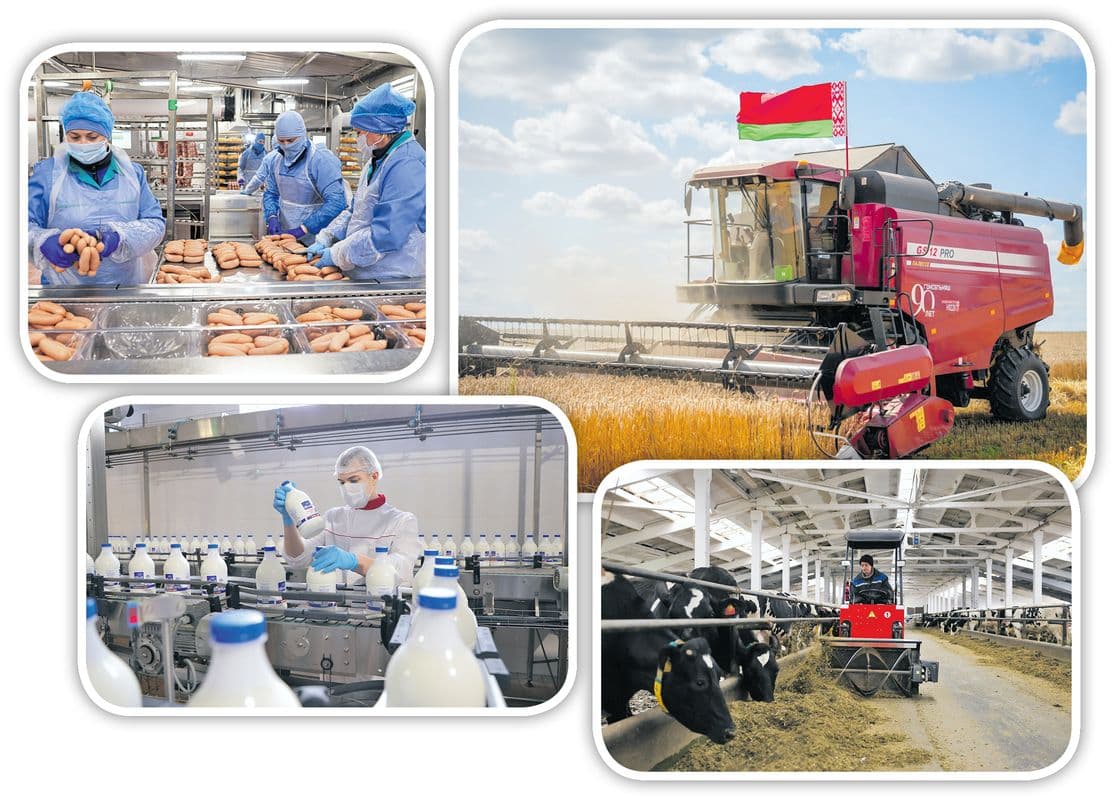
- Deep recycling is, without exaggeration, our strategic response to global challenges. In Belarus, there is a steady growth in agricultural indicators, and agricultural workers set themselves ambitious goals: to increase yields, achieve better results at each stage. We understand the demand for agricultural products, both domestically and abroad. But at the same time, we take into account the difficulties encountered in its production and implementation. Therefore, the bet on deep processing is an economic necessity.
Directions for lactoferrin, protein concentrates - products with high added value are growing. We have moved on to deep processing of grain and milk. Not only dry cream is produced from milk, but also protein concentrates, vitamin-rich quick-soluble dry mixtures for athletes, children, the elderly, food casein. These are products with high added value, in demand in the markets of foreign countries.
We want to emphasize that we create products that shape the global market. Our task is to set new standards for range and quality. Periodically there is information that somewhere in the world learned to make rice from plastic, and meat steaks are printed on 3D printers. This is an unacceptable fantasy for us!
We contrast these innovations with 650 cheeses and 1,900 whole-milk products. Even butter we produce 150 items of various packaging - from 10 grams to 10 kilograms, with a variety of fillers to the tastes of any consumer and fat content up to 99 percent. The naturalness of the products, their useful properties are higher than doubtful “progresses”, and Belarusian manufacturers will not tire of proving this by implementing the best solutions.
- Food security today is a matter of national sovereignty. Belarus provides itself with its own food with a reserve, confidently scaling successes to the foreign market. How sustainable is our export model, and how do international industry events help us convert manufacturing capacity into robust long-term agreements with partners around the world?
- In recent years, Belarus has achieved significant results in foreign trade and gained the status of one of the leading food exporters. It is known that at the end of last year, the export potential of food products amounted to a record $10.1 billion, positive growth dynamics persists this year. Food accounts for almost a quarter of all Belarusian exports and is supplied to more than 115 countries. Our manufacturers are constantly expanding the geography of supplies: we are ready not only to offer our products, but also to share technologies and experience. Given the global market situation, this year we have every chance to add to last year’s record level of food exports.
The main volume of supplies falls on the traditional markets of the CIS countries, including the Russian Federation. The share of countries in the far arc is also growing, primarily in Asia and Africa, and we are working intensively to become a reliable partner for these regions.
Strategic tasks for the near future include geographical and commodity diversification, growth of exports of products with high added value, adaptation of products to the cultural and taste characteristics of new markets.
- If you try to deduce the formula of success of a modern agricultural organization, reducing it to three main accents, what will it be?
- In agriculture, I would like to highlight three key emphasises on which results depend. The first is the production of profitable products. It is important not only to get a good result, but to do it economically profitable. The second emphasis is the observance of agricultural work deadlines. In the agricultural sector, time is crucial: it is necessary to sow, remove, and carry out all technological operations without delays. Deviation from the schedule results in loss of quality and volume. The third focus is industrial and technological discipline. It ensures that the first two conditions are met. When the technology is followed at each site, and the organization of work is clearly built, the result becomes predictable.
Following these three principles produces quality products. Then you can be proud of it, and it is profitable to sell in foreign markets. This, in my opinion, is the movement from good to great.
- Yuri Nikolayevich, thank you for an interesting conversation. Finally, I want to ask a lyrical question: what is it like to be the head of the agricultural department of the country?
- I think that this is a special, honorable mission and the highest trust that the Head of State has shown. The responsibility is enormous. Every day you are responsible for the food security of the country, for every Belarusian to have milk, meat and bread on the table, to produce products in super-sufficient quantities and sell them for export. This is also a responsibility for the huge team of the industry, which sometimes works in the most difficult geographical and climatic conditions. After all, special people work in agriculture - those who are not afraid of dirt and bad weather, who get up before dawn, who know the value of every grain. And our task is to create conditions for their work to be appreciated, so that young people want to go to the village.
It is necessary to see and constantly analyze not only the current season, but also plans for the years ahead: what crops to grow, what equipment to buy, how to develop processing. At the same time, strategically take into account global trends and the features of our land. I'm proud to be involved in a big cause. You know, there's a saying, "The land can't be sold, it doesn't belong to us, it belongs to our children." And this phrase is the whole meaning of our work, because we care and work not only for ourselves, but primarily for the future of our country. I would like to quote the simple but wise words of our President: Everything depends on us. We will work better, we will live better”. Dear workers and veterans of the agro-industrial complex! Friends and colleagues!
Accept sincere congratulations on the professional holiday - the Day of Workers of Agriculture and Processing Industry of the agro-industrial complex of the Republic of Belarus.
From year to year, the task of the agricultural industry remains unchanged – to keep pace with the times, innovate and strengthen production capacity, creating new products, improving production. Our main wealth has always been and remains people - village workers, agronomists, livestock breeders, mechanics, processors, logisticians, scientists - those who first meet the dawn in the field, who anticipate the mood of nature, who at modern processing enterprises turn raw materials into products of impeccable quality.
Words of gratitude and gratitude to industry veterans. Your many years of experience, worldly wisdom and selfless devotion to the profession have laid the solid foundation on which today the domestic agricultural production is confidently developing. It is you who teach the young generation the main truth: you can only come to earth with deep respect and honest work.
May generous harvests continue to be a worthy reward for your conscientious work. May love for the native land always be in the heart, and peace and prosperity reign in the houses.
I wish you good health, inexhaustible energy, inspiration for new peaceful victories and achievements for the sake of a strong, independent and prosperous Belarus!
Happy holiday!
Minister of Agriculture and Food of the Republic of Belarus Yuri Gorlov
