What you need to know about childhood vaccinations and why “refuseniks” provoke the risk of returning forgotten epidemics
Childhood vaccinations are one of the most important topics in modern health care: they save lives and prevent epidemics. Today, however, all vaccinations around the world...
Childhood vaccinations are one of the most important topics in modern health care: they save lives and prevent epidemics. However, today in the world around vaccination is increasingly hot debate: parents are concerned about possible adverse reactions, the quality of drugs and their effect on immunity. Medicine takes a categorical position in these discussions: the vast majority of such fears are based on myths that flood the Internet. While science has not yet invented a more effective way to protect babies from dangerous infectious diseases. Today, together with the epidemiologist of the Department of Immunoprophylaxis of the Department of Epidemiology of the Republican Center for Hygiene, Epidemiology and Public Health Natalia Saiko, we answer the most popular questions about childhood vaccinations and invite each parent to read this text from beginning to end.
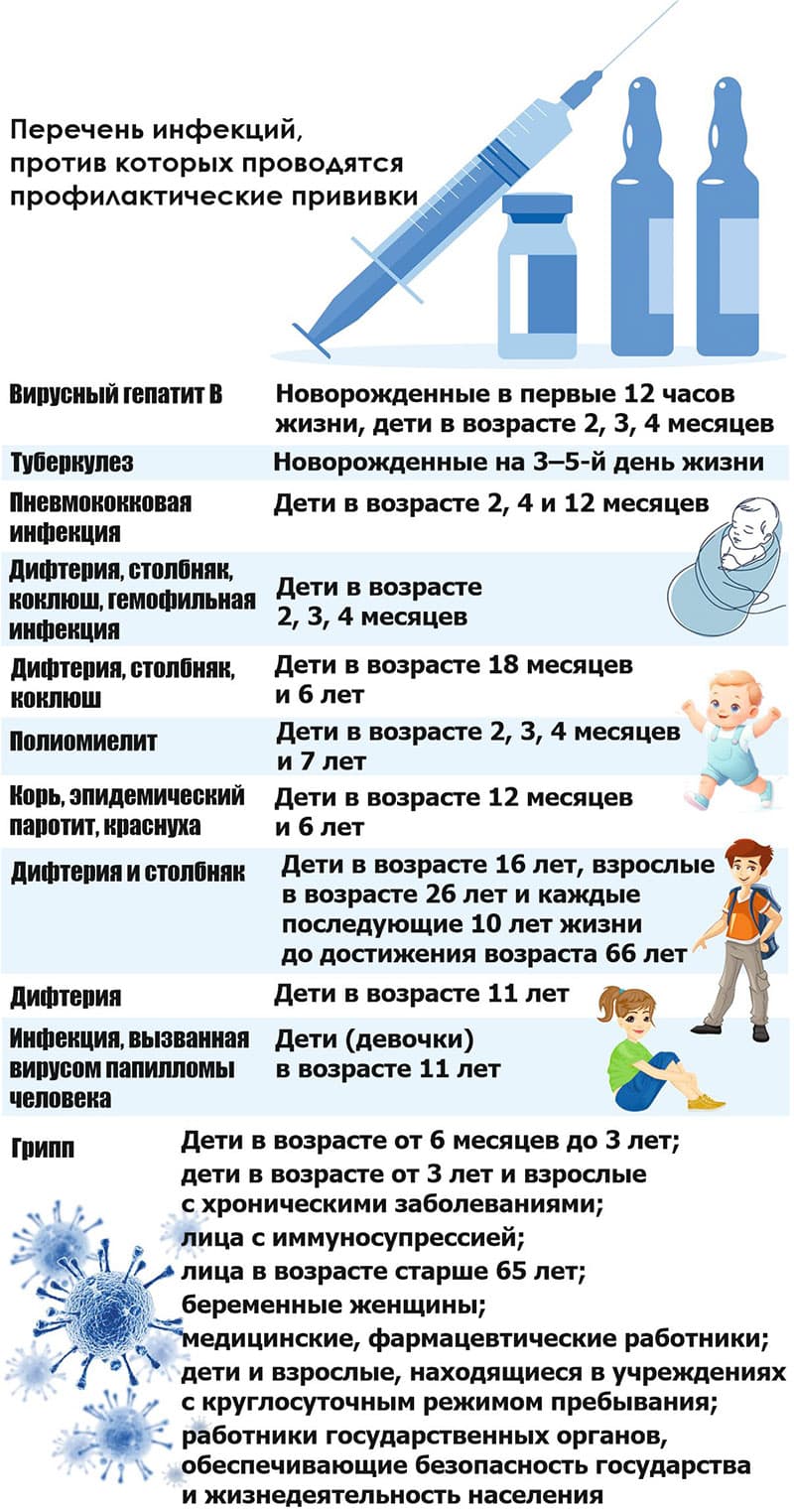
Immunoprophylaxis of children in our country is carried out according to the National calendar of preventive vaccinations. In accordance with this document, vaccination is carried out in certain periods of human life, regardless of the epidemiological situation, to create a specific immunity of the body to the relevant infectious diseases.
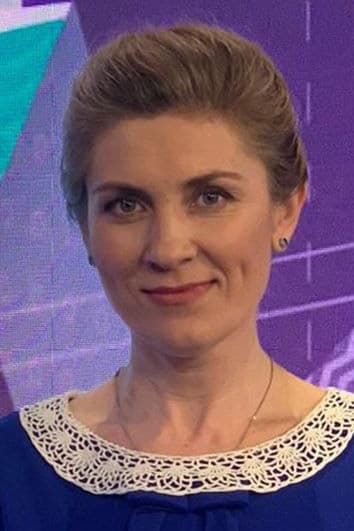
Natalia Saiko. “The National Vaccination Calendar includes 13 infectious diseases, against which the population is vaccinated free of charge in public health organizations,” says Natalia Saiko. We are talking about viral hepatitis B, tuberculosis, pneumococcal infection, hemophilia, diphtheria, tetanus, whooping cough, measles, rubella, mumps, polio, infection caused by human papillomavirus, and influenza infection for certain populations. It should be noted that in Belarus as a whole, as well as in each region in particular, optimal rates of coverage of children with preventive vaccinations are achieved annually (at least 97% of the eligible contingents).
Over the past decades of the last and the present century, vaccination has made significant progress in the prevention of a number of infectious diseases around the world: smallpox and circulation of two of the three wild strains of the poliomyelitis virus have been eliminated, there is a significant decrease in the number of cases of measles, rubella, diphtheria, tetanus, generalized forms of tuberculosis and acute viral hepatitis B in children.
A curious fact: the implementation of multi-year vaccination in our country in the framework of the National Calendar ensured the maintenance of the polio-free status of the country (since 2002), the elimination of measles and rubella (since 2016), as well as the achievement of regional goals for the control of viral hepatitis B (since 2023). In general, there is a significant decrease in many infectious diseases.
- Since 2011, there have been no cases of diphtheria in the country, since 2007 only isolated cases of rubella have been recorded (due to the importation of infection from other countries), the incidence of mumps has decreased by more than 10 thousand times, the incidence of viral hepatitis B - by 15 times (single cases were registered in 2024), since 2022 there have been no patients with tetanus, Natalia Saiko lists. The example of measles is also indicative: before 1967, about 70,000 diseases per year were registered, and in 2025-2026 it is sporadic, again due to cases imported from other countries among unvaccinated persons. A similar situation is observed with whooping cough: until 1957 - 17 thousand cases per year, in 2025-2026 - isolated cases. Vaccines are one of the most powerful tools in public health. Over the past 50 years, vaccines have saved more than 150 million lives worldwide. Of course, any parent is interested in the question of medical contraindications to vaccination of the child. And they do exist: they can be established as temporary (due to the occurrence of an infectious disease or exacerbation of chronic) and permanent (due to contraindications established in the instructions for the use of the vaccine).
- The decision to establish or cancel a temporary medical contraindication is taken by a pediatrician (general practitioner), Natalia Saiko emphasizes. But the conclusion on the establishment, extension or cancellation of a permanent medical contraindication is accepted by the immunological commission of the territorial health organization, which determines the further tactics of vaccination of this patient.
A permanent contraindication to all vaccines is a serious allergic reaction to the administration of a previous dose of the vaccine (for example, anaphylaxis that developed within 24 hours after vaccination), a serious allergic reaction to the vaccine component (chicken egg protein, yeast, antibiotics, etc.), as well as a contraindication directly indicated in the instructions for a particular vaccine.
Few people know that once made a baby vaccination requires revaccination. For example, for the prevention of diphtheria and tetanus, a booster vaccination of adults aged 26 years and every subsequent 10 years of life until the age of 66 years is necessary. And for influenza and COVID-19 infection, vaccination is given annually to certain populations. Since 2025 in Belarus, the list of planned vaccinations for children of the first year of life has been replenished with vaccination against pneumococcal infection, which is carried out at the age of 2, 4 and 12 months.
According to the World Health Organization, pneumococcal infection is caused by pneumococcus bacteria Streptococcus pneumoniae. And the source of infection can only be a person - a patient or a bacterium carrier. Before the widespread use of antibiotics, pneumococcus was thought to cause 95% of cases of pneumonia, and before the advent of preventive vaccinations, this infection killed 1.6 million people annually, of which up to 1 million were children. Although the progress in the fight against pneumococcal infection can be called impressive, according to WHO experts, up to 35% of cases of community-acquired pneumonia in the world are still caused by S. pneumoniae.
According to Natalia Saiko, in our country, vaccination against pneumococcal infection for epidemic indications is carried out by the following categories of children and adults:
children under 5 years of age who have not previously received preventive vaccinations against pneumococcal infection and have one of the following diseases or conditions:
Immunodeficiencies (HIV infection, chronic kidney disease, nephrotic syndrome, chronic hepatitis and others);
recurrent acute purulent otitis media (more than three episodes during the year);
recurrent pneumonia (three or more episodes);
bronchopulmonary dysplasia, congenital airway defects, primary ciliary dyskinesia, alpha-1-antitrypsin deficiency;
heart defects requiring hemodynamic correction and with the enrichment of a small circle of blood circulation;
the presence of a cochlear implant or planning for this operation;
⇒ diabetes mellitus;
⇒ bronchial asthma;
contact children under the age of 5 years from the focus of severe pneumococcal infection (destructive pneumonia, meningitis);
children 5 years and older, adults who have not previously received preventive vaccinations against pneumococcal infection, suffering from oncohematological diseases.
According to WHO, world experience has shown that routine vaccination reduces the incidence of pneumococcal meningitis and severe pneumonia in children by more than 80% and the incidence of all pneumonia and otitis by more than 30%. By the way, children under the age of 5 years are at an increased risk for the development of these diseases.
Almost every one of us was ill as a child chickenpox and remembers it as a fascinating adventure in style: try to hold on and not to tear off the anointed green crust on the body. Jokes with jokes, but in fact chickenpox is not a harmless childhood disease and does not always pass easily: adolescents, adults, patients with cancer, people with weakened immunity carry chickenpox much harder than children, and the risk of serious complications is much higher.
- Once in the body, the virus can remind itself after many years in the form of activation of infection with the development of herpes zoster, which is accompanied by high fever, rash, severe pain syndrome, prolonged disorders of sensitivity along the nerves, explains Natalia Saiko. The most frequent complications of the disease are inflammation of chickenpox elements due to the addition of a secondary bacterial infection, conjunctivitis, pneumonia, inflammation of the heart muscle, kidneys, liver, joints and the most dangerous - inflammation of the brain.
Vaccination is relevant for children and adults who have not previously had chickenpox and have not been vaccinated.
An important nuance: in Belarus, varicella vaccination is not provided for by the National Calendar. At the same time, according to the list of preventive vaccinations for epidemic indications, established by the decree of the Ministry of Health, varicella immunization is carried out free of charge for children who are planning to perform an operation for transplantation of organs and (or) human tissues, in the absence of antibodies or 2 years after the end of immunosuppressive therapy after such transplantation. Prophylactic vaccinations against chickenpox to contingents of children and adults not included in the list are carried out at the expense of citizens' own funds. Vaccines are allowed after the first year of life. The problem of anti-vaccination parents in recent years, alas, is gaining momentum around the world, posing a serious danger not only to their children, but also to the whole society: their solution increases the risk of spreading infectious diseases and especially negatively affects the health of people who cannot be vaccinated for medical reasons (since their only reliable protection is herd immunity). Many countries are seriously concerned about educating the population on this burning issue. The Ministry of Health of Russia, for example, plans to create a federal register of vaccinated citizens and those who refused to be vaccinated. The latter will be used to “develop outreach plans.” But where did this layer of people confident in the danger of vaccination come from?
The first anti-vaccination drugs appeared more than 200 years ago, along with the first smallpox vaccine. In 1796, the English physician Edward Jenner demonstrated the effectiveness of vaccinating cowpox to protect against smallpox. And part of society did not accept this innovation. The reasons were different: from religious - a violation of the divine plan - to political. In the 1970s, many parents and even doctors began to suspect that vaccines could cause brain disorders in children. It was about the use of a specific vaccine DTP is a complex vaccine against whooping cough, diphtheria and tetanus, designed for very young children. Opponents of vaccinations referred to the fact that in one of the hospitals in London, 36 patients who received DTP developed neurological diseases. At the same time, two women who claimed the polio vaccine caused brain damage to their children formed the Association of Parents of Vaccine Damaged Children. Members of the association tried to prove the link between DTP and neurological diseases through the court and to seek compensation from the state. The court dismissed the claims of the organization, but doubts were sown in society. In the UK, pertussis vaccination rates fell by 59%, leading to epidemics in 1979 and 1982. This has sobered society and the pace of the vaccination campaign has recovered.
Unfortunately, in 1998, another rise in the anti-vaccination movement began. This year, the British doctor Andrew Wakefield wrote an article in which he claimed that autism allegedly occurs in children due to MMR (combined vaccination against measles, rubella and mumps). Wakefield made his pathetic and loud conclusions, based on the examination of only 12 children. And, as it turned out later, carefully selected on a certain principle, that is, it was not without falsification of facts and violation of medical ethics.
As Denis Borozdenko, assistant of the Department of Pharmacology, junior researcher of the Department of Medical Chemistry and Toxicology of Pirogov University, told the Russian newspaper Gazeta.Ru, Wakefield was financially interested in discrediting this vaccine:
- Despite the fact that later the entire study was found methodologically untenable, the article was withdrawn, and the investigation revealed both falsification of data and the presence of a conflict of interest, which the author, among other things, did not report properly, the consequences of this publication we see so far. Public opinion is very receptive to such loud statements, especially when it comes to children. Against the background of such informational noise, the ranks of anti-vaccinators have greatly expanded.
But the scandal has also played a positive role: vaccine safety research has intensified. Between 2001 and the present, more than 100 full-fledged studies have been conducted, more than 200 meta-analyses have been written that completely refute the link between vaccine administration and autism. These studies have helped to restore public opinion on vaccination, and the percentage of vaccinated children has steadily increased worldwide.
In Belarus, health care workers constantly conduct active information and educational work with the population, including legal representatives who refuse to carry out preventive vaccinations to their children, about the role and availability of modern vaccines, the importance of timely immunoprophylaxis in protecting against infectious diseases, the relevance of maintaining health throughout life.
- This is necessary work, because to preserve the achieved epidemiological well-being in relation to vaccine-controlled infections is possible only with the active position of each of us, said Natalia Saiko. Since 2025, Belarus has successfully introduced new positions of the National Vaccination Calendar:
vaccination against HPV infection for girls 11 years old;
vaccination against pneumococcal infection of all children from two months of age;
• introduced a booster vaccination against whooping cough for children 6 years.
Work to improve the National calendar in terms of supplementing the list of infections against which preventive vaccinations are carried out continues. lvk@sb.by