What gives the vaccine against human papillomavirus and why it is important to make every girl
Cervical cancer (cervical cancer) is the most common oncopathology in women worldwide. In Belarus, this disease is diagnosed in 1000 patients annually.
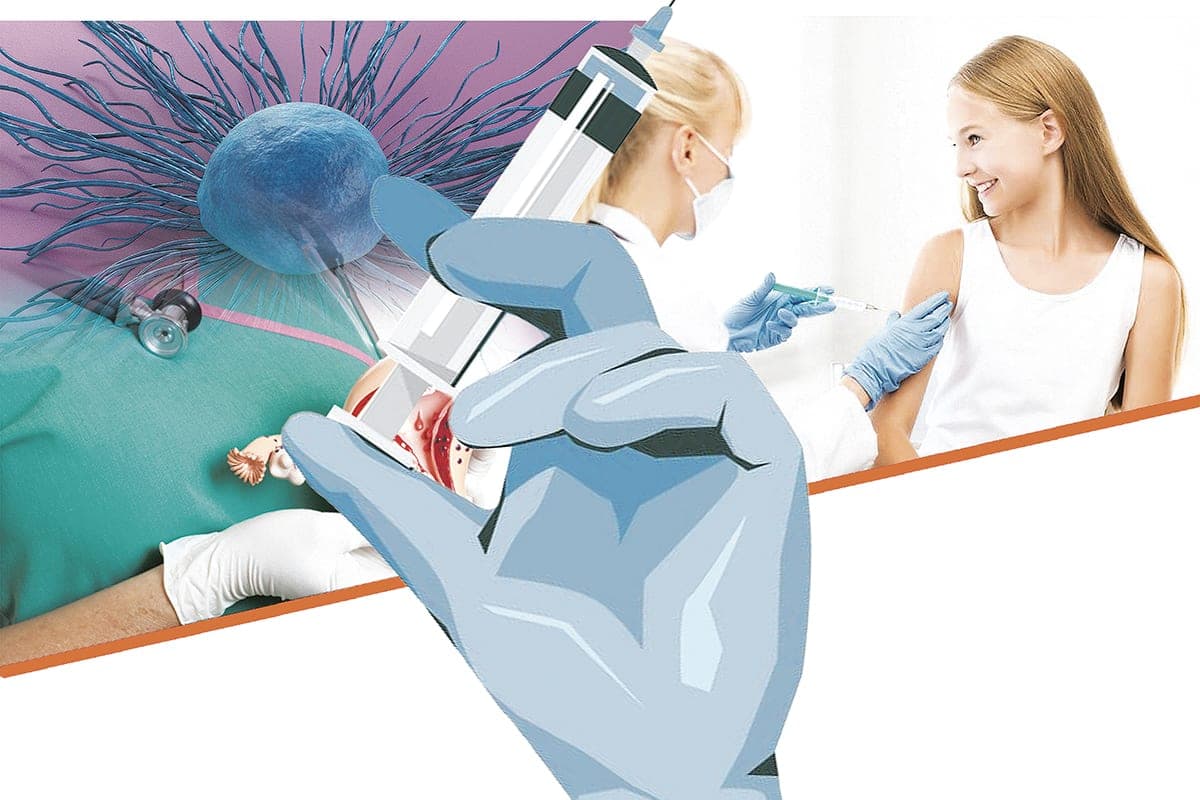
Cervical cancer (cervical cancer) is the most common oncopathology in women worldwide. In Belarus, 1000 patients are diagnosed with this disease every year, while about 300 cannot be saved. Vaccination against infection caused by human papillomavirus is one of the most successful examples of modern prevention of RSM. It is included in vaccination programs in more than 140 countries, and the results are impressive: where this approach in the health system has worked for more than 10-15 years, precancerous changes in the cervix and cancer itself almost disappear in young women.
Many countries that have introduced vaccination against HPV infection earlier (Australia, Belgium, Great Britain, Germany, Denmark, New Zealand, Norway, USA, Sweden, Switzerland), have demonstrated a positive impact of the vaccination campaign, says Veronika Vysotskaya, head of the epidemiology department of the Republican Center for Hygiene, Epidemiology and Public Health:

- Rates of infection with the most dangerous HPV serotypes (16 and 18) among young women aged 20 years decreased by 80%, the risk of precancerous diseases decreased by 60-70% among young women compared with the pre-vaccination period. Let me give you some illustrative examples. In Australia, a free program for girls was launched in 2007, and the vaccination campaign was later extended to boys. The prevalence of oncogenic HPV types 16 and 18 in young people fell from about 20% to 1%. Among women under 25 years of age recorded zero incidence of cervical cancer!
In the UK, Sweden, Denmark, the USA, Canada and New Zealand, with vaccination coverage of more than 70-80% of adolescents, there was a decrease in precancerous changes by 70-90% in cohorts vaccinated before the age of 15 years. World practice shows that in countries where at least 80% of adolescents have been vaccinated, not just a decrease in HPV circulation is noted in dynamics, but the real disappearance of precancer and cancer in young women. Since 2025, vaccination against human papillomavirus (HPV) in Belarus has been included in the National Calendar of Preventive Vaccinations, the main target audience is girls aged 11 years. Despite the positive international experience of vaccination, some of our mothers and fathers remain prejudiced against this approach. The most common question is: will the injection trigger the infection?
Vaccines against HPV infection do not contain viable biological material or viral DNA, so they can not lead to infection and cause the development of HPV infection or MSM, says Veronika Vysotskaya. Vaccines contain individual proteins of the virus, which, when ingested, activate immunity and lead to the production of antibodies aimed at fighting HPV. However, it is important to understand that the drug injected protects against HPV infection, but does not treat an already existing infection, does not “remove” an already settled virus. That is why it is advisable and most effective to vaccinate children and adolescents, ideally - before sexual debut.
Another common concern of parents: does this method of preventing MSM cause side effects? Some pseudoscientific publications on network resources claim that vaccination does not affect fertility in the best way.
Vaccines against HPV infection are safe and well tolerated by patients, have a good safety profile, confirmed by many years of observation, says Veronika Vysotskaya. Of course, like other vaccines and drugs, they can sometimes cause unwanted reactions, such as soreness, redness and/or swelling at the injection site, headache, or a slight increase in body temperature. These symptoms usually last from a few hours to three days and pass without a trace.
Over the years of observation of hundreds of thousands of vaccinated specialists do not note an increase in infertility. But they see that in vaccinated women, precancer is less common. The results of large scientific studies have shown no effect on reproductive health and fertility. The myth of “vaccination infertility” has been refuted by years of safety monitoring. “Inability to get pregnant” after HPV vaccination has no clinically proven fact. Despite the fact that the priority goal of HPV vaccination programs is the prevention of RSM and all activities are focused on girls, vaccinating boys also provides additional benefits, emphasizes Veronika Vysotskaya:
- Cervical cancer is the most common disease caused by HPV, but infection with this type of virus can also cause cancer of the penis, anus, head and neck. Therefore, boys also benefit from vaccination. In addition, the vaccine protects them from genital warts and at least one HPV-related cancer affecting men (depending on the vaccine used). Vaccinating boys also protects their sexual partners, thereby indirectly helping to prevent cervical cancer. By the way, the strategy of gender-neutral vaccination (vaccination of girls and boys) has already been implemented by several countries, including the United States, Canada, Australia, a number of EU countries.
Boys in Belarus can be vaccinated individually on a paid basis in the absence of contraindications to a specific vaccine.
Vaccination and screening are complementary measures. The vaccine reduces the risk of contracting oncogenic HPV types, but does not protect against all types and does not treat existing changes. Screening (PAP/HPV testing) detects precancer at an early stage when treatment is most effective and remains a mandatory procedure for all women.
KSTATI
Registration and research of vaccines covers the age of 9-45 years. Outside this age range, efficacy and safety data are lower (in the accumulation stage), so age restrictions are included in the drug instructions.
- After 26-30 years of age, the likelihood of encountering one or more types of HPV is higher, so the benefit of the vaccine becomes “partial” (protection against the types that a person has not yet encountered), but it is still possible and advisable, especially in women 20-45 years old, where the effectiveness against HPV types 16 and 18 reaches about 84.6%.
THEME
The number of doses depends on the age of vaccination:
♦ up to 15 years inclusive - a two-fold scheme. The second dose is administered 6-12 months after the first;
♦ over 15 years old - a three-fold scheme. The second dose is administered 1-2 months, the third - 6 months after the first.
Contraindications to the RSM vaccine are common to all vaccines. The second or third dose will not be administered to the patient if:
strong general reaction developed within 48 hours after the previous administration of this vaccine (increase in body temperature to 40 ° C and above, seizures);
severe allergic reaction (including anaphylaxis) after the previous dose of the vaccine or to any of the components of the vaccine.
During pregnancy, vaccination is delayed. Research in pregnant women is limited for ethical reasons, but accidental administration of the vaccine in the early stages is not an indication for termination of pregnancy.
Acute febrile condition is a temporary contraindication, vaccination is postponed until recovery.
Blood clotting disorders, thrombocytopenia are a relative contraindication: the decision is made individually, taking into account the likelihood of bleeding at the injection site.
lvk@sb.by