Seven Murders of Solikam Shooter Helped Reveal Lantern in Abandoned Jacket
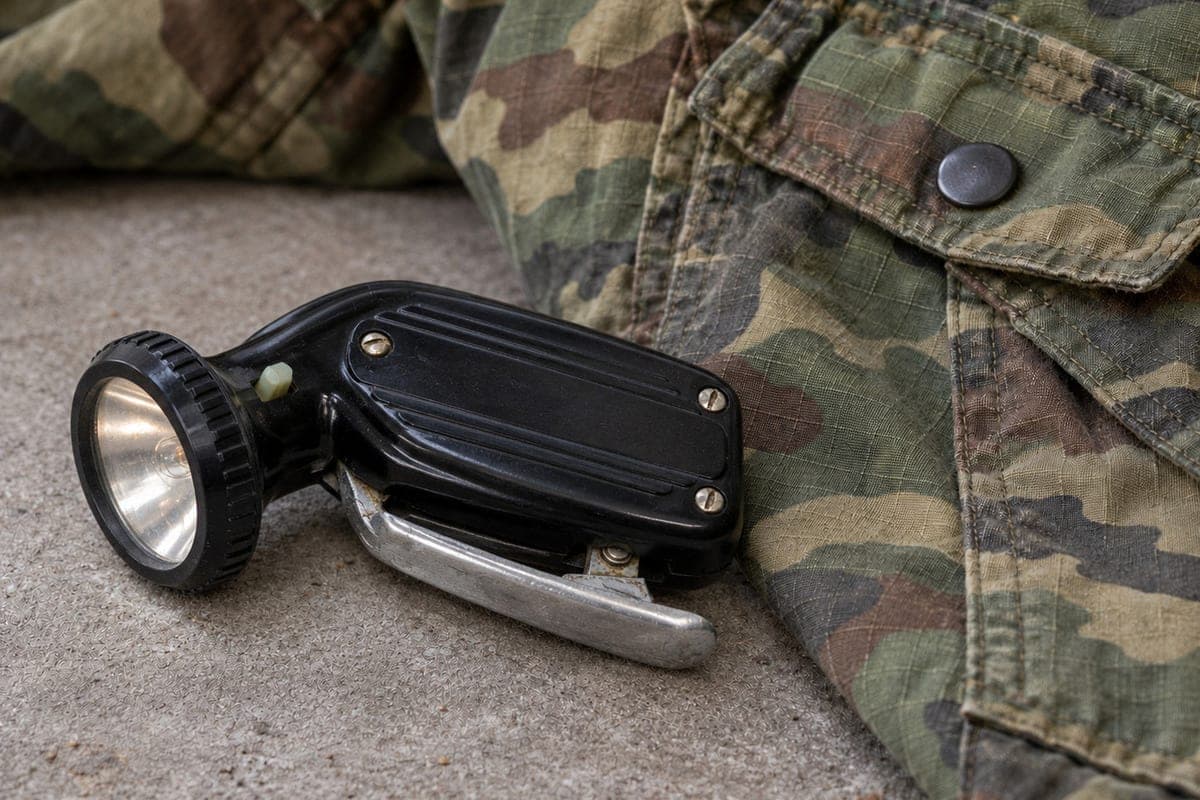
On December 23, 2005, in Solikamsk, Yulia Tyukhtina’s killer fled from the police, throwing a bag and a camouflage jacket. In his pocket found a flashlight "bug". Its owner, an employee of fire station No. 16 Alexander Gerashchenko, was detained more than two years later. The gun found after the fire linked the attacks, details of the fire belt narrowed the search, and a flashlight helped establish the gunman's name.
For seven murders, Gerashchenko received a life sentence. In 2026, the recovery of compensation for moral damage continued.
On July 13, 1998, Gerashchenko attacked the Kiselev watch guard guarding the warehouses of the Solikamsk Ural plant. He shot a soldier with a small-caliber rifle and stole his AK-74.
Kiselyov was taken to a hospital. They fought for his life for three months, but could not save him. The stolen machine remained with the attacker.
After the next two murders, the weapon did not become Gerashchenko's prey.
On July 1, 2001, he shot and killed Alexander Fedoseyev, a guard at the warehouse. The attacker was outside and fired through the window of the guard room. In August of the same year, the guard Mironov died on the watchtower of the Solikamsk Magnesium Plant. He was also shot through the window.
Gerashchenko hoped to take possession of their weapons. Both guards were unarmed.
On the next attack, Gerashchenko forced the guard out of his post. In June 2003, he cut the alarm wire at the Ural plant. Controller Kravchenko went to the site of damage. Gerashchenko killed him and took the revolver.
In September 2004, at the same enterprise, he fatally wounded a paramilitary security officer Popova and kidnapped her “Nagan”. The woman died in hospital on the day of the attack.
Popova has a son and a daughter. Their father died five years before his mother was killed.
On June 7, 2005, Gerashchenko guarded an employee of non-departmental security who was walking home from a secure bank for lunch. After shooting the policeman, he took his Makarov pistol.
The murder happened in the afternoon. Passers-by saw the shooter, but could not describe his appearance in detail.
After six deadly attacks, Gerashchenko had a gun, two revolvers and a pistol. During interrogations, he explained the crimes by the desire to possess weapons. He said it gave him confidence.
He associated the murder of Yulia Tyukhtina with revenge for rejected courtship. Back in November 2005, Gerashchenko came with a weapon to the woman's house, broke the window, but fled when he was noticed by eyewitnesses.
On December 23, he guarded Tyukhtin near the children's center and shot Makarov with a stolen pistol. Nearby was her four-year-old daughter.
Police heard gunshots and rushed after the attacker. When he fled, he dropped his bag and camouflage jacket, but failed to detain him. Things were seized, including a flashlight from his pocket.
The operatives were looking for a man who knew how to handle weapons and escape persecution. Pavel Budrin, who participated in the search, said that they checked the lists of those who served in special forces and previously convicted. These checks did not help to establish the shooter.
On December 24, 2006, Gerashchenko tried to break into the store. The policemen who arrived detained him. He opened fire, wounded one of the staff and fled again.
On May 17, 2007, the empty building of the former archive of the Ural plant caught fire. The next day, when dismantling the roof, employees of the enterprise found AK-74, fragments of fabric and leather, metal carbines and rings.
Ballistic examination established that this is a Kiselev assault rifle, stolen in 1998. He was shot in subsequent killings.
In October 2007, the investigation of the suspended cases was resumed. Later they were combined into one production. The investigative and operational group was headed by Sergey Sarapultsev from the regional department of the Investigative Committee under the Prosecutor's Office of the Russian Federation.
Investigators and operatives re-examined the sites of the attacks, interviewed witnesses and appointed examinations. Among the finds from the archive, not only the machine gun was important.
The examination established that the carbines and rings found in the archive were details of the fire rescue belt.
According to Budrin, operatives checked two nearby fire stations. This type of belt was used only in one. The inspection covered more than 70 people.
Four witnesses saw the face of the criminal, but only briefly, in a stressful situation. Their descriptions differed.
To clarify this testimony, a specialist hypnologist from Moscow was invited. In the reconstruction of the case, the investigative department reported that the descriptions obtained after the interviews were used in compiling a photo sketch.
The firefighter check continued. The group had stolen weapons, belt details and belongings abandoned after Tyukhtina's murder. There was a lantern among them.
The operatives found a store where flashlights were sold. As reported by the media before the trial, the sellers identified Gerashchenko.
In the reconstruction of the investigation published by MK, Sarapultsev explained that the investigation established the path of a particular subject: “We have established the entire movement of this lantern from the seller to the last owner – the criminal.”.
The operatives also questioned the head of the guard Mamonov. According to Gerashchenko, he bought the lantern on the recommendation of this colleague.
Gerashchenko found out about the check while on duty. Later, during interrogation, he said that he approached Mamonov’s office and heard a conversation about lanterns.
After the departure of the police, Gerashchenko asked the chief of the guard why they came. Mamonov first referred to commercial matters. Through the shift, Gerashchenko returned to this conversation. Then the colleague said that the operatives were interested in the lantern-"bug", which he bought on his recommendation.
By early March 2008, according to Sarapultsev, the investigation knew that the wanted man worked as a firefighter, lived in Borovsk, the northern part of Solikamsk, and had previously served in special marine units.
Gerashchenko did indeed perform such a service. His military specialty is a scout diver.
Gerashchenko was preparing to leave Russia. In order not to enter the service, he received a fake sick leave.
On March 7, 2008, the doctor Sergey Ananyev entered false information into the medical card and issued a disability certificate for 20 days. For the document, the doctor received 2000 rubles.
The hospital admission was investigated separately. Ananyev was convicted of receiving a bribe and forgery for three years and one month in a general regime colony. In August 2010, the investigation department reported that the sentence had entered into force.
Gerashchenko was arrested on March 19, 2008 in the forest. In his backpack were things for the long road. He had Russian and foreign passports, a revolver and a Makarov pistol.
The gun was stolen from the killed policeman, the revolver from the employee of the factory guard.
After his arrest, Gerashchenko pleaded guilty. Before the trial, Sarapultsev said that the testimony of the accused is supported by the collected evidence.
The case amounted to 23 volumes. Three of them were materials of expert studies. The case involved more than 100 witnesses and 16 victims.
On November 7, 2008, the Perm Regional Court sentenced Gerashchenko to life imprisonment. According to the Investigative Committee of the Prosecutor’s Office of the Russian Federation, the jury found him guilty of 26 crimes, including seven murders.
The defense requested a commutation. The lawyer referred to the admission of guilt, remorse, assistance to the investigation and positive characteristics.
Separately, he disputed the qualification of the murder Tyukhtina as committed with particular cruelty. The lawyer argued that Gerashchenko did not intend to cause special suffering and suffering to her young daughter.
The Supreme Court rejected that argument. To assess the crime, it mattered that Gerashchenko killed a woman in the presence of a person close to her and was aware of the suffering he was causing the child.
The court found that Gerashchenko knew that the girl next to Tyukhtina was her daughter. The qualification of the murder was found to be justified.
on february 10, 2009, the sentence remained unchanged.
In March 2009, three enforcement proceedings were instituted against Gerashchenko for compensation for moral damage. The basis was the execution sheets of the Perm regional court.
In July 2026, RIA Novosti got acquainted with the materials of bailiffs. The amount of recovery was 1.076 million rubles. With the performance fee, the total amount exceeded 1.15 million rubles. The execution lasted more than 17 years.
On July 2, 2026, the press service of the regional department of bailiffs reported that the department regularly sends requests to search for the debtor's property. The registered property of Gerashchenko was not found.
The penalty was applied to the income of a life prisoner. According to the bailiffs, the income was small, withholdings were carried out regularly. The amount of these deductions and the total amount already transferred to the recoverers were not indicated in the published response.
22-year-old daughter of a farmer raped and beat to death workers – revealed details
Apartment cannibal Spesivtsev became a trap for children in Novokuznetsk
Four complaints ended in rejection, and then the husband killed his wife and six children
Slivko hung children under the guise of filming: Honored mentor hid death in the tourist club
"Prison romance" Madueva ended with nagan in "Crosses"
Chikatilo was released with a knife and ropes, after which the murders continued
They beat the family to death in a dream: Colonel of the Ministry of Internal Affairs Gosht was brutally killed along with his relatives
10 years of the blood of the rostov gang “amazon” – they killed and returned home
Angara maniac Mikhail Popkov took women to their deaths in his car for years
Major Yevsyukov shot people in a supermarket and became a symbol of the failure of the interior Ministry
Children's voices heard in the basement, but the police went home
Maniac took women to the forest and began hunting them: in the taiga found dozens of bodies
Supplemented sleeping pills and raped locked up: 2 years of hell from a good grandfather from Yakutsk
Reliable news is always at hand - in the channel "MK" in MAX