
Matvienko called a diversion of the system of licensing of private universities
The Chairman of the Federation Council Valentina Matviyenko urged to suspend the issuance of licenses for the opening of new private universities and to understand this area, so that educational institutions such as “horns and hooves” do not appear
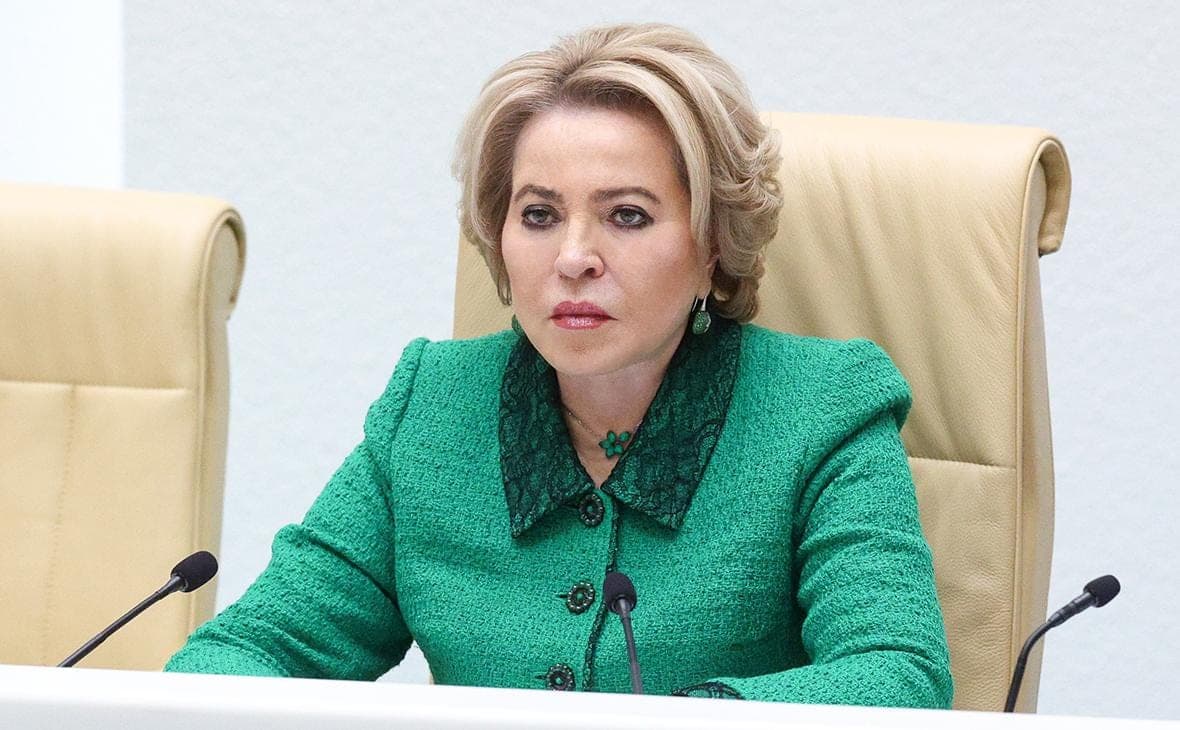
The Chairman of the Federation Council Valentina Matviyenko proposed to appeal to the government with a recommendation to suspend the licensing of private higher education institutions until “restoring order in this area and clarifying the legislation.”.
At the government hour in the upper house with the participation of the Minister of higher education and science Valery Falkov and the head of Rosobrnadzr Anzor Muzayev, the Chairman of the Federation Council said that “for the quality of education, regardless of the form of the educational institution, always responsible state”. In recent years, a whole layer of private higher educational institutions has appeared in Russia, which simulate educational activities. “First, for no reason anyone thought of, and completely simplified licensing for the opening of a higher education institution,” said Matvienko. Today, anyone can establish a higher educational institution, “literally pressing a couple of buttons,” and licenses are issued “by application procedure,” she added.
She gave an example of online advertisements: “A turnkey educational license. We can get a license in five days, even if you do not have an educational program, statutory documentation and premises. You know, it's not a university, it's horns and hooves! “You can’t open a stall in five days, you can’t open a newsstand, and you can open a higher educational institution,” Matvienko said.
To obtain a license, “as is customary in world practice”, previously provided for an on-site inspection of the material and technical base of the university, the availability of laboratory equipment and teaching staff, she recalled. If earlier the terms of consideration of an application for an educational license were 45 days, then under the current legislation, “you press two buttons and in five days you receive a document on the establishment of a higher educational institution,” Matviyenko said. According to the Chairman of the Federation Council, the head of the region and the Ministry should take part in the decision to open a new university.
“My question is, who carried out such a diversion? Who changed 45 days of stringent requirements to 5 days? Tell me the man's last name. No one can tell. Or they know, they don't. I will still get to the bottom, said Matvienko.
Addressing the head of Rosbrnadzor Anzor Muzaev and the Minister of Science and Higher Education Valery Falkov, Matvienko reminded that they “should approach from the state point of view, and not succumb to such dubious decisions.”.
The Chairman of the Federation Council is another example to understand what is happening in our highly intelligent, educated state. In 2025, a license was issued to the educational organization “Autonomous Non-profit Organization of Higher Education Vygodsky Moscow Research University”: “So in the name of Vygotsky Error!” Perhaps it is necessary to educate your employees who signed this license that Vygotsky is written not with the letter “D”, but through the letter “T”? This seemingly small thing speaks to the quality of how you work.”.
Matvienko’s speech ended the government hour with the participation of Falkov and Muzaev, they did not comment on her statements.
At the beginning of the meeting, Anzor Muzaev reported that the procedures for licensing educational activities and accreditation of educational programs of universities were spared from excessive bureaucracy, license and accreditation became indefinite. In addition, until 2030 there is a moratorium on inspections – Rosobrnadzor should have very serious grounds to check the university.
He noted that a new tool has been developed to control the quality of education, the State Duma approved the corresponding bill in the first reading in 2025. It assumes the opportunity to check the residual knowledge of students in any educational organization and, if they are insufficient, accreditation can be suspended, said the head of Rosobrnadzor.
According to Rosobrnadzor, since 2023, the number of programs that universities submit to obtain state accreditation is growing. In 2025, 791 accreditation examinations were carried out – 20% of the programs were rejected. In 2026, as of October 1, 464 examinations were carried out, 18% of the programs were rejected.
Leaders in the number of applications submitted in 2026 were the areas of Health and Medical Sciences, Computer Science and Computer Engineering, Law, Economics and Management, Architecture and Construction Technology. Only about 75% of higher education programs have state accreditation.
During the meeting, Falkov called the regulation of paid admission at universities a measure of protection against low-quality higher education. Restrictions on paid admission affected 40 superfluous for the labor market specialties. First of all, according to him, limited recruitment for such specialties in industry universities, as well as in private universities with low quality of admission and employment. As a result of the regulation, the number of accepted on a contractual basis in these 40 areas decreased by 28% - almost 100 thousand people (in full-time form by 30,047 seats, in absentia - by 66,965), he cited data.


