
The arrival of the Red Army awakened the youthful hopes for rapid change
September 1939 is a special date in the historical chronicle of Molodechno. On September 17, after almost two decades of occupation, the city returned to the...
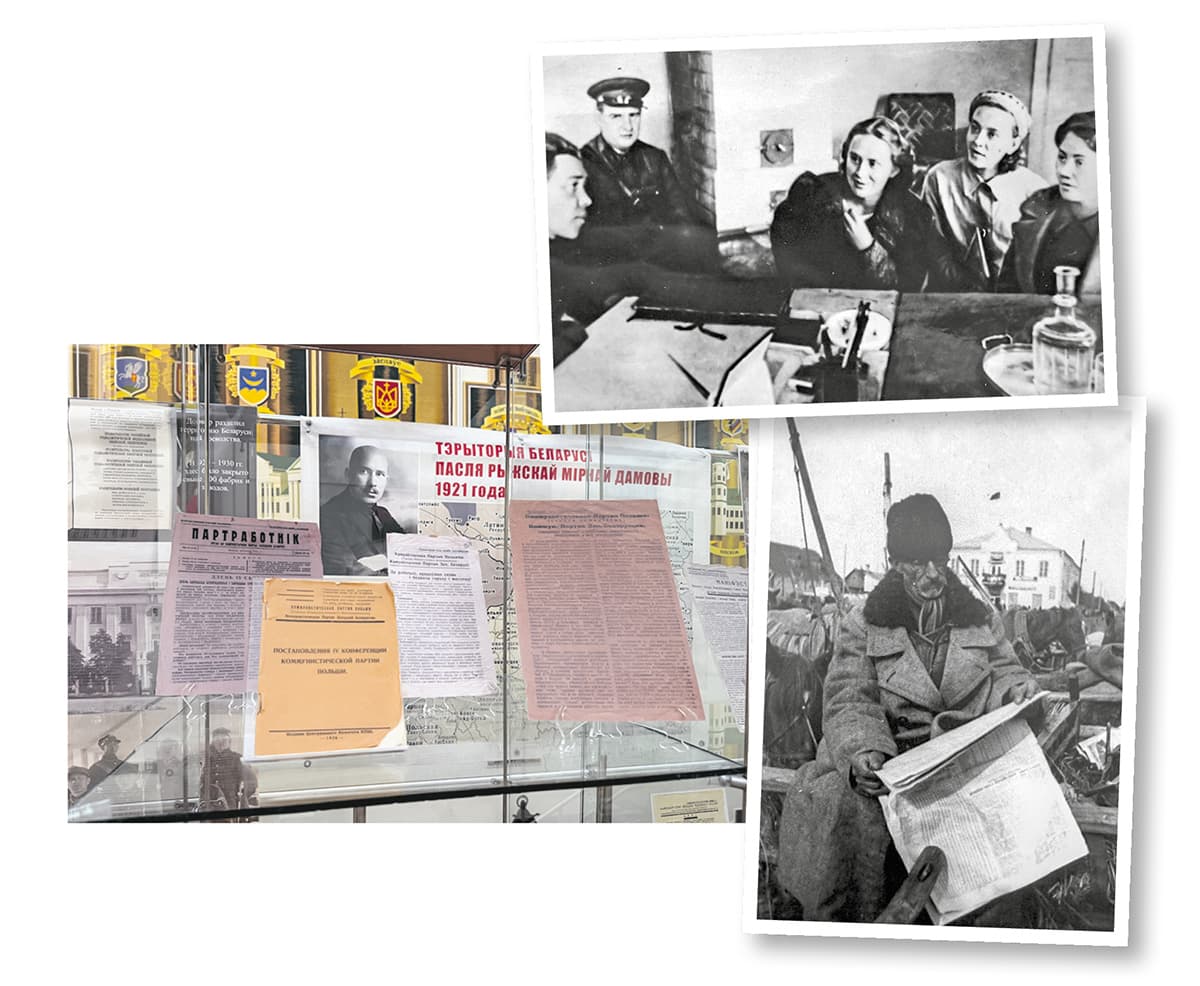
September 1939 is a special date in the historical chronicle of Molodechno. On September 17, after almost two decades of occupation, the city returned to Belarus. Together with the units of the Red Army that entered the settlement, the long-awaited liberation came to the youth - the policy of forced polarization and national discrimination was in the past, giving way to the hope for a new, just life. This day became a symbol of the restoration of historical justice for many Belarusians, who for many years languished under foreign oppression.
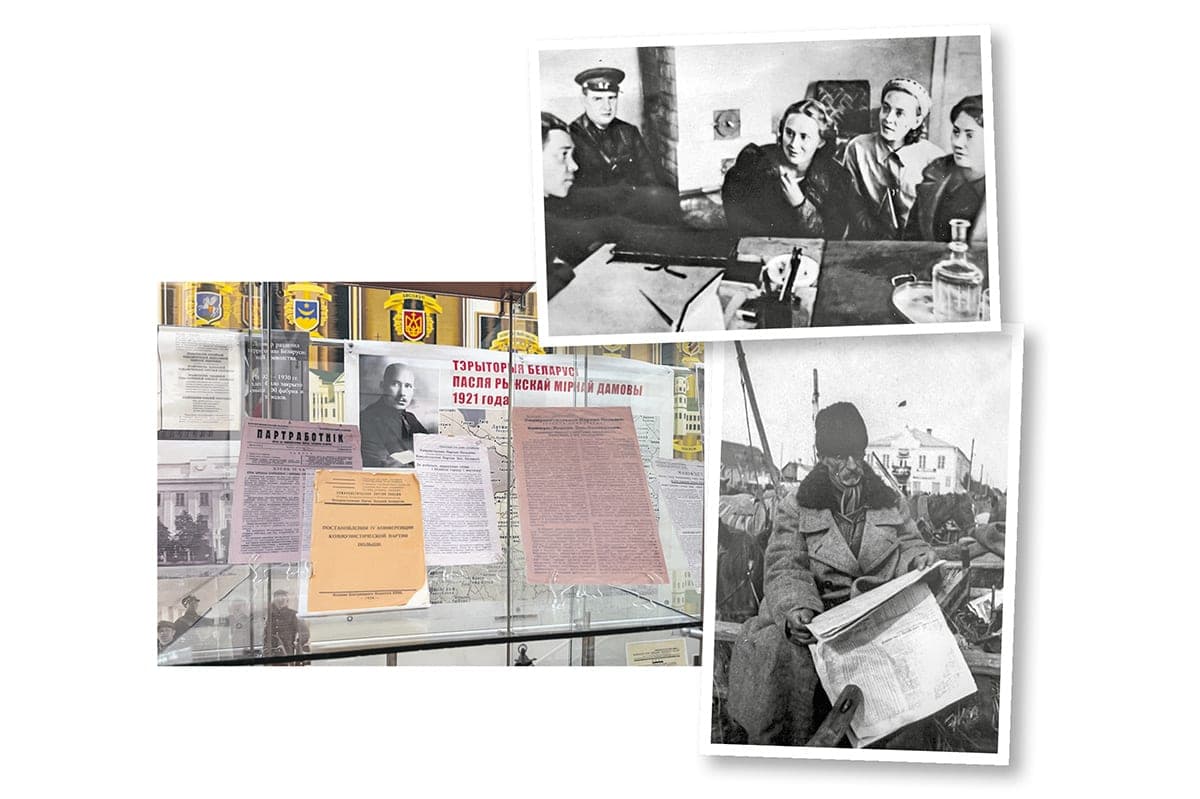
In the Minsk Regional Museum of Local Lore there is an exposition, where documents and photographs testifying to that time are preserved. According to the Riga Peace Treaty, more than 100 thousand kilometers of the territory of Western Belarus, including six districts of the Minsk region - Volozhinsky, Vileysky, Myadelsky, Molodechnensky, Nesvizhsky and Stolbcovsky, became part of Poland.
- The Poles considered the Belarusian lands only as their agrarian appendage, so during the occupation, enterprises were actively closed there: just a few years they were liquidated about 200, said Natalia Poltavets, senior researcher at the Minsk Regional Museum of Local History.
It was not easy for the local population. Especially hard lived peasants, for whom the system of taxes was introduced: land, road, school, insurance, sejm, hoof, office. The main source of income of peasant farms - the sale of agricultural products - was carried out at low prices, which were set by Polish buyers. At the same time, prices for basic necessities such as matches, salt, kerosene, and tobacco were artificially inflated, making them almost inaccessible to peasants. But for growing tobacco in his garden, a person could be prosecuted.
The city of Molodechno has always been of great transport and economic importance, since there was a railway junction located near the border. But with the arrival of the Polish authorities on parallel tracks in the areas of Krulevschyzna, Lida, Vilna began to remove the rails to limit the movement of trains. In this regard, some of the railway workers were left without work, and Molodechno lost the status of a junction station, said Natalia Poltavets. To strengthen the Polish state, plans were developed for the construction of military facilities near the Soviet-Polish border. In one of these fortifications, the Polish authorities decided to turn the Gelenovo estate near the city, where the 86th Infantry Regiment, which numbered about 2 thousand people, was located.
- At the beginning of the town there was an entrance arch, but in 1960 it was demolished, but the houses of officers, non-commissioned officers and sergeants, as well as the house of the commandant of the garrison were preserved. Where today is the building of the city hospital, was the headquarters of the administrative services of the city. On the site of the city stadium was previously a racetrack. The building of the theater, where during the years of the Polish occupation officers held meetings and played in the casino, has survived to this day, the senior researcher added.
According to her, the highest officer positions were invited mainly Poles, but the private and sergeant staff were called up from the local population - not only from Molodechno, but also from the neighboring Myadel and Volozhinsky districts. One of the main tasks of the regiment was to suppress the rebellions that arose in the annexed territory. Of course, such difficult conditions made people’s lives simply unbearable, so the population began to fight the regime. In 1923, the Communist Party of Western Belarus was formed. In 1924, the Molodechno underground committee of the Communist Party of Western Belarus (CPWB) began its work. In different years it was headed by Yakov Kokhanovsky and Ivan Kostyuk. Each of them took a huge risk, becoming the head of an underground organization. The Molodechno underground committee of the CPSP was located in the remote surrounding villages of the district, strict secrecy was observed. At its meetings, important issues were solved under the guise of parties.
- A particularly strong cell was in the village of Domasi Molodechno district. Local authorities suspected that violent activities against the Polish regime were unfolding there, so they even invited a priest to sanctify the village, thereby protecting it from the “communist contagion,” Natalia Poltavets said.
Komsomol members were also active. In 1925, the underground district committee of the Communist Youth Union of Western Belarus (KSMZB) began to work in Molodechno, headed by Nikolai Hanetsky. Actively worked in the Komsomol underground and Konstantin Poloz, Nikolai Milchonok. For their revolutionary activities, these young men were sentenced to various prison terms.
The difficult situation pushed the workers of the small enterprises of the district to strike. So, in the summer of 1936, a strike broke out at a sleeper impregnation plant.
- For three days and three nights, workers stood at the gates demanding a pay rise. The management of production, the magistrate at first persuaded them to change their minds, then threatened, but they stood their ground. Supported the strike and laborers together with seasonal agricultural workers of the village of Malinovshchina. Later, another strike was organized by people working on the railway, the senior researcher noted. In the most severe conditions of national oppression, the Belarusian-peasant workers’ community, a mass revolutionary-democratic organization, had a great influence on the social and political life of Western Belarus, and 10,000 people became members of it in the Molodechny Territory. Propagandists carried out agitational work among the soldiers of the local garrison, especially among Belarusians: they distributed underground literature, socio-political publications. At rallies in Molodechno and the village of Radoshkovichi, Bronislaw Tarashkevich, a deputy of the Polish Sejm, often spoke.
The Association of the Belarusian School (TBS) had a considerable influence on the outlook of Western Belarusians. One of its main goals is to expand the network of Belarusian schools and Belarusian education in general. By 1927, it had turned into a mass organization that created clubs, libraries, published mass literature, distributed progressive socio-political publications and, most importantly, carried out extensive agitation work to open new Belarusian schools.
- In 20 circles TBS in Molodechnen region consisted of 456 people. One of the organizers of this association in our city was Peter Metla, a graduate of the Molodechno Teachers’ Seminary. He opened a bookstore here, which became a gathering place for underground workers, organized a dramatic circle and even put the “Pavlinka” in Kubalov, Natalia Poltavets shared. I would like to add that the merit of this association is not only in its educational activities, but also in the fact that in the harshest conditions of national oppression it was able to educate and prepare a significant galaxy of Belarusian creative intelligentsia.
The only educational institution in Molodechny Krai, where training was conducted in the Belarusian language, was the Radoshkovichi Belarusian gymnasium named after Francisk Skaryna, opened in 1922 on the initiative of the Deputy of the Polish Sejm Alexander Vlasov.
- In 1928, Radoshkovichi gymnasium students held several protests against the repression of the Polish authorities against Belarusian schools. For participation in one of them, her famous student, the Belarusian poet Maxim Tank, was expelled from the gymnasium. In September 1928, the authorities transferred the educational institution to the town of Gorodok, and a year later it was finally closed, the museum employee said.
In September 1939, the Red Army entered Western Belarus. At the same time, there was a deep change in the consciousness of the Belarusian population. What had been whispered in clandestine gatherings for decades had begun to come true: the old order based on oppression and injustice was fading. Together with the Soviet troops, faith came to the city - faith in a new life, where a Belarusian is the master of his land, labor has a price, and the people acquire a voice and the right to a happy future.
kurdo@sb.by


