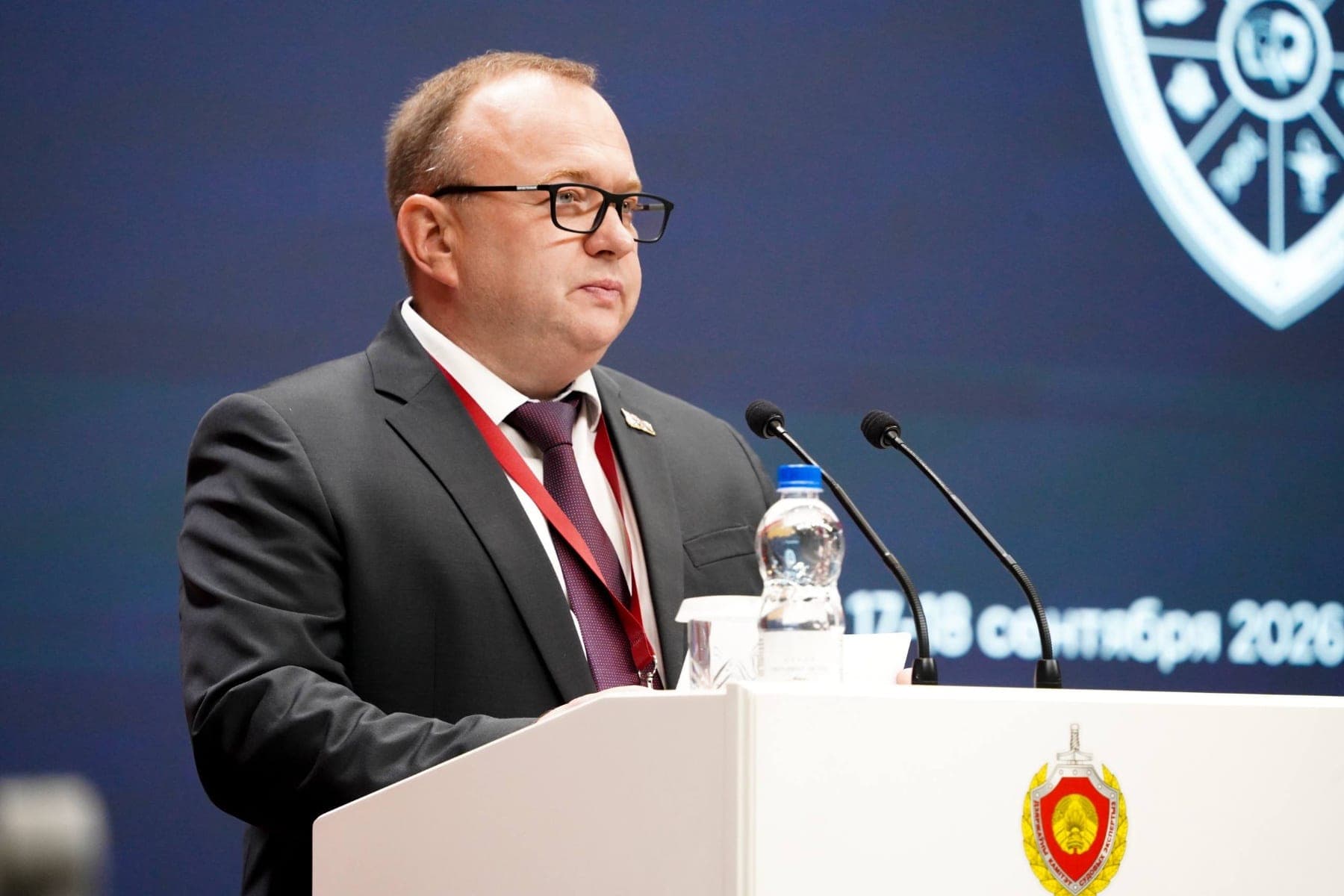
The expert told what domestic projects are most promising in the bioeconomy
What domestic projects are most promising in the bioeconomy and why digital solutions of bioeconomy 4.0 should be built into such projects from the outset? About.

What domestic projects are most promising in the bioeconomy and why digital solutions of bioeconomy 4.0 should be built into such projects from the outset? About this correspondent sb.by told the head of the sector of environmental and economic research of the Institute of Economics of the National Academy of Sciences of Belarus Nadezhda Batova.

According to the expert, the main barrier to the bioeconomy is the gap between scientific development and the market. It is not enough for the enterprise to obtain working technology: it is necessary to establish pilot production, confirm safety and quality stability, provide raw materials and find a buyer.
- However, lack of funding does not always come first. Meeting with representatives of Belarusian enterprises, we see a expressed request for information on suppliers and consumers of secondary resources, search for partners, consulting support and intersectoral interaction. For individual flows, including wastewater sediment products, regulatory certainty and understandable application conditions are essential. Therefore, it is important for the legislation to clearly distinguish waste, by-product and secondary raw materials; to establish clear procedures for the registration of biological preparations, feed components, biofertilisers and new materials; to determine the rules for the operation of pilot plants; to ensure quality, safety and traceability standards. These measures should be complemented by public procurement of innovative products and long-term supply contracts. Equally important are interdisciplinary personnel and technological intermediaries capable of connecting scientists, engineers, enterprises and potential buyers, said Nadezhda Batova.
According to the expert, priority should be given to projects that rely on domestic raw materials and scientific competencies. For example, in agrobiotechnology the most promising microbial fertilizers, biological means of plant protection, feed enzymes and probiotics. The corresponding developments are already being carried out by the Institute of Microbiology of the NAS of Belarus. In bioenergy, the most interesting is the production of biogas and biomethane from manure, food waste and wastewater sediments, as well as pellets and briquettes from wood and agricultural residues. Industrial biotechnology can develop around the production of amino acids, organic acids, enzymes, food and feed ingredients, components of green chemistry. Materials from domestic biomass have significant potential: composites and thermal insulation made of flax and wood fibers, cellulose packaging, sorbents.
- Digital solutions for bioeconomy 4.0 should be built into such projects from the outset. Sensors, automation, digital models of bioreactors and data analysis allow you to control the quality of raw materials, fermentation modes and product yield, reducing the cost and risks of industrial scaling. Various models of bioeconomy are already presented in Belarus. A major project was the Belarusian National Biotechnology Corporation, which united grain processing, production of amino acids, wheat gluten, feed on one site. The dairy industry shows a convincing result. Whey, which previously created a significant burden on sewage treatment plants, is now used to produce dry ingredients, protein concentrates and feed products. Appropriate production operates in Verkhnedvinsk, Pruzhany, Slutsk, Glubok, Brest and Shchuchin, Nadezhda Batov gave examples.
Bobruisk Biotechnology Plant produces biological plant protection products, feed additives, preservatives and other microbiological preparations. Mastering of dry forms allowed to increase the shelf life of products, simplify transportation and expand the possibilities of its implementation. This is a good example of the interaction of science and industrial production. Ferment company produces enzyme preparations and products of microbiological synthesis for agriculture, food, textile, leather and pulp and paper industry. Separate enzyme complexes are used for processing poultry waste into protein feed raw materials. The biopharma has accumulated competencies for the production of dosage forms of genetically engineered insulin and other biotechnological preparations.
- The economic efficiency of bioeconomic projects should be assessed by capacity utilization, cost, margin, payback period, sustainability of the raw material base and availability of a permanent sales market. For export products, certification, logistics and competitive price are important, for import-substituting products – the depth of localization and the possibility of further development of technology. Value added per unit of raw material, energy and water consumption, the use of side flows, reduced environmental payments and avoided costs should also be considered. For example, whey recycling simultaneously creates a new product and reduces the load on sewage treatment plants. A successful bioeconomic project is a production in which biological raw materials are used more deeply, receive a higher cost and find a stable sales market, Nadezhda Batova concluded.