Color of the regions of Belarus and the life of ancestors: visited the ethnographic museum near Minsk
The Belarusian State Museum of Folk Architecture and Life near Minsk covers an area of 151 hectares. Here in ...
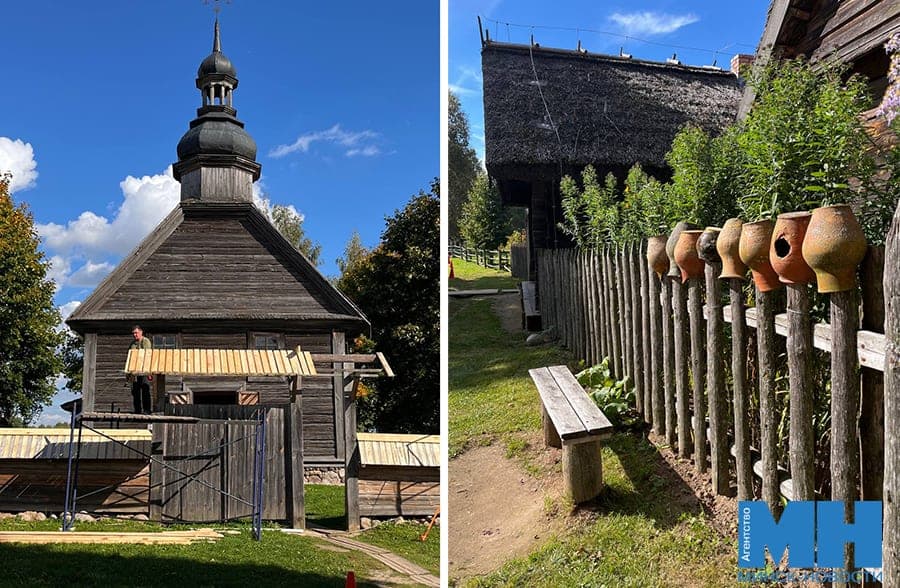
The Belarusian State Museum of Folk Architecture and Life near Minsk covers an area of 151 hectares. Here, in its original form, the village life of almost all regions of our country was recreated in the late XIX - early XX century. A correspondent of the Minsk-Novosti agency walked through the ethnographic complex.
The historical complex is located in the agro-town of Ozerzo - 4 km from the Moscow Ring Road.
At the entrance to the museum, I was met by a guide Sergei in a straw hat, dressed in a national Belarusian costume and shoeed in a paw.
- To get around everything on foot, it will take at least 3.5 hours, he warned. - So you have to be patient.
I look at the vast expanses - the territory of Skansen, filled with whole quarters of village houses with churches, a windmill, caplicas. I don’t see any official transport, so I ask the guide: “Do employees always walk?”
- Sure. But in the fresh air from morning to evening. We'll be better!
Immersion museum
On normal days, the complex is visited by up to 300-400 people. But when there are big holidays, the number of guests can reach 2 thousand people a day. What not to celebrate: and Maslenitsa, and Kupala, and Christmas. They even do old rituals.
- We celebrate all national and Christian holidays, both Orthodox and Catholic, the guide said.
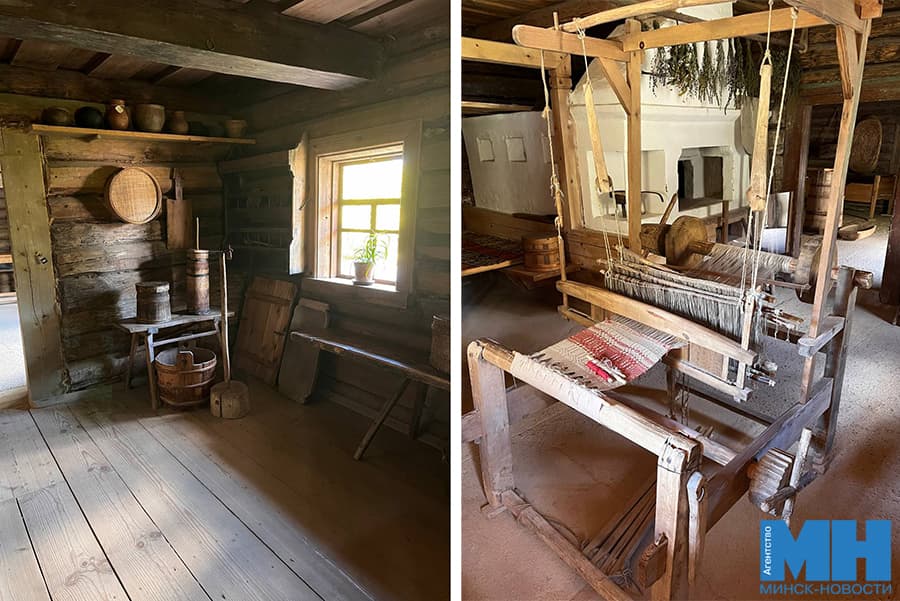
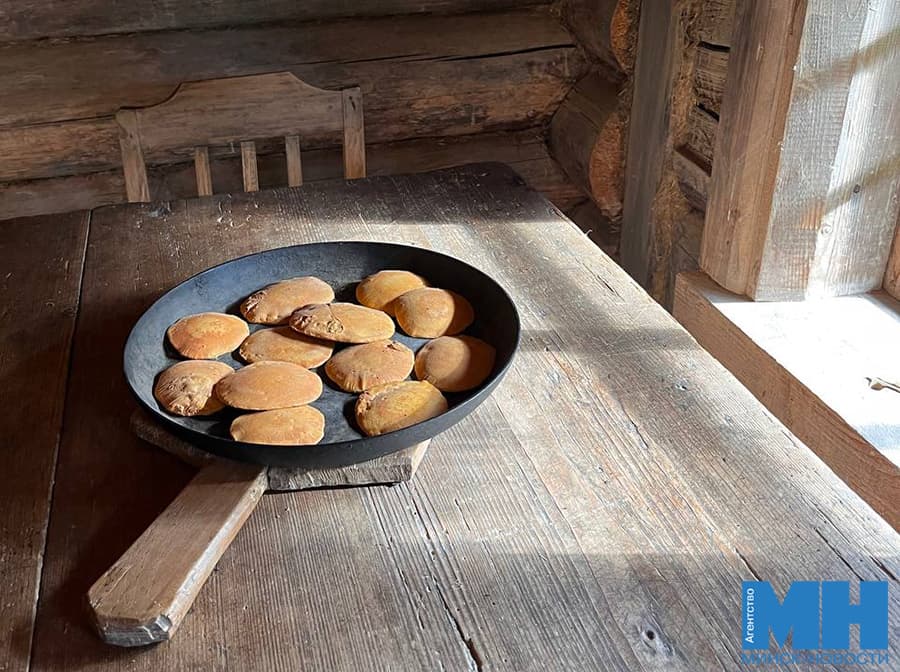
We pass by a large stage where concerts are held. To the left is the tailor's house. This building is a historical value, an architectural monument of the early twentieth century. Inside - everything is as if in its original form: the table at which the tailor worked, his sewing machine, fashion magazines for customers. By the way, sewn outfits can be tried on for an additional fee.
I ask Sergey to show me the fragrance room I found out about in advance. It turned out that it is about 30 minutes to go to it: it is in another region.
Belarus in miniature
The entire exposition of the museum complex is divided into historical and ethnographic zones. Wandering along winding and seemingly endless roads, you can see how this or that “area” is distinguished by architectural, cultural (decoration of houses, clothes) and even natural features.
- Everything in the museum is thought out to the smallest detail. For example, the “Dnieper” sector, representing Mogilev and Gomel region, is located on a hill surrounded by a coniferous forest. And nearby, according to the geography of the area, a river should flow, the guide said.
I see a river and a chapel next to it. This is a sample of the XVII century, brought from the Vilei district.
So, walking through the territory of the museum, you can get to the "Central Belarus" and "Poozerie", representing the Vitebsk region and the northern part of Minsk, go to a house, sit at a table and imagine how our ancestors lived in colors.
And interesting and useful
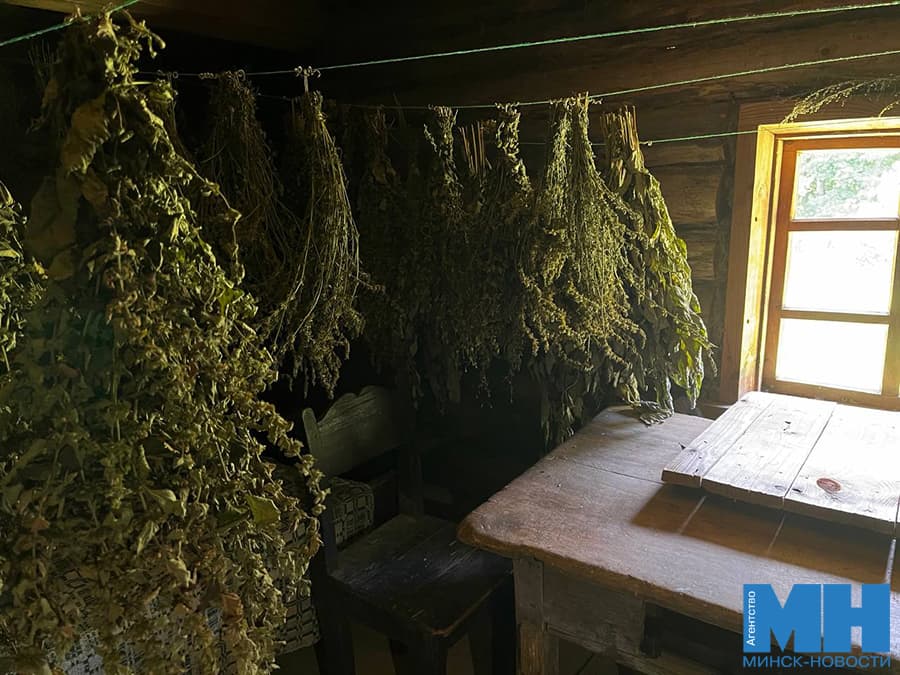
We continue to walk through the labyrinths of numerous village yards and finally reach the desired aroma room. Entrance is paid. Inside, everything is filled with dried herbs. I smell mint, lavender, thyme... It feels like wormwood.
- They were snarling mice, the source said. In this room, some scenes from the film “In June 1941” with Sergei Bezrukov were filmed. In general, many films on military themes were created on the territory of the museum.
Age-old construction
They wanted to create the Belarusian Skansen back in 1907. The idea belonged to the famous artist Ferdinand Ruszczyc. Until 1936, he actively worked to save unique monuments of Belarusian wooden architecture. But the implementation of his plan was prevented by world wars and the redistribution of Belarusian land, as a result of which part of the territory was transferred to other states.
The construction of the Belarusian State Museum of Architecture and Life started in 1976. It wasn’t until nearly a decade later (in 1987) that Skansen finally opened.
Today you can see three scientific and exposition sectors: "Central Belarus", "Poozero" and "Dnieper". Work on “Ponemania”, “Eastern Polesie” and “Western Polesie” is still underway. In total, about 40 objects are located on the territory of the ethnographic complex, some of which are still being restored.
Traditionalist
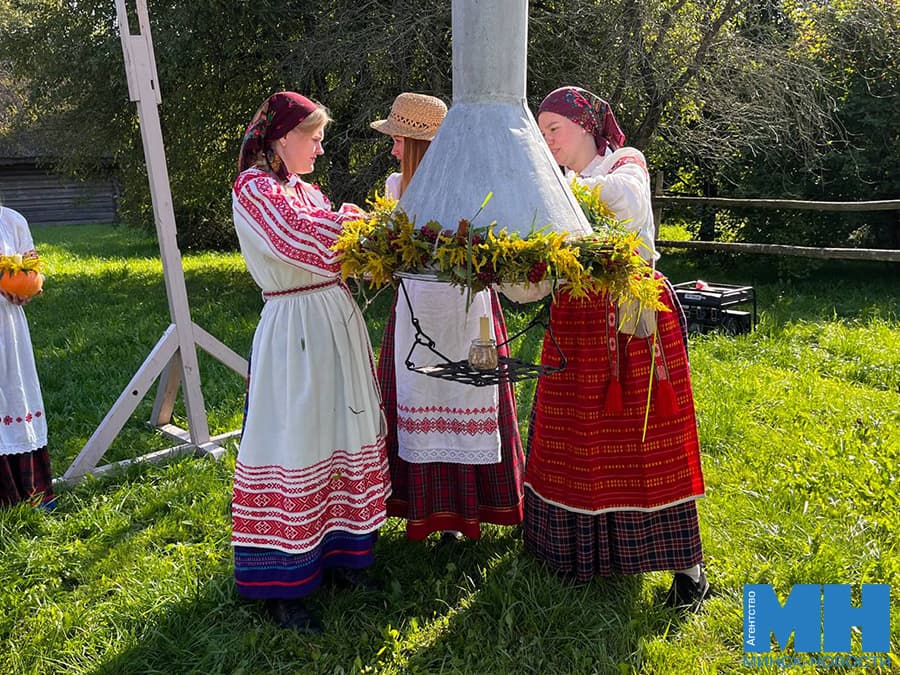
Returning to the main entrance, we get to the ceremony "Marriage of the Comin".
- This is a traditional ritual of the first autumn lighting of a fire in the furnace, Sergey introduced. - Join me!
The presenters in national costumes told more about the ceremony, and then whirled visitors to the museum in a large dance.
Looking at this little holiday in the middle of a weekday, you think: how wonderful that our national culture is not lost in time. It is carefully preserved by dedicated ethnographers.
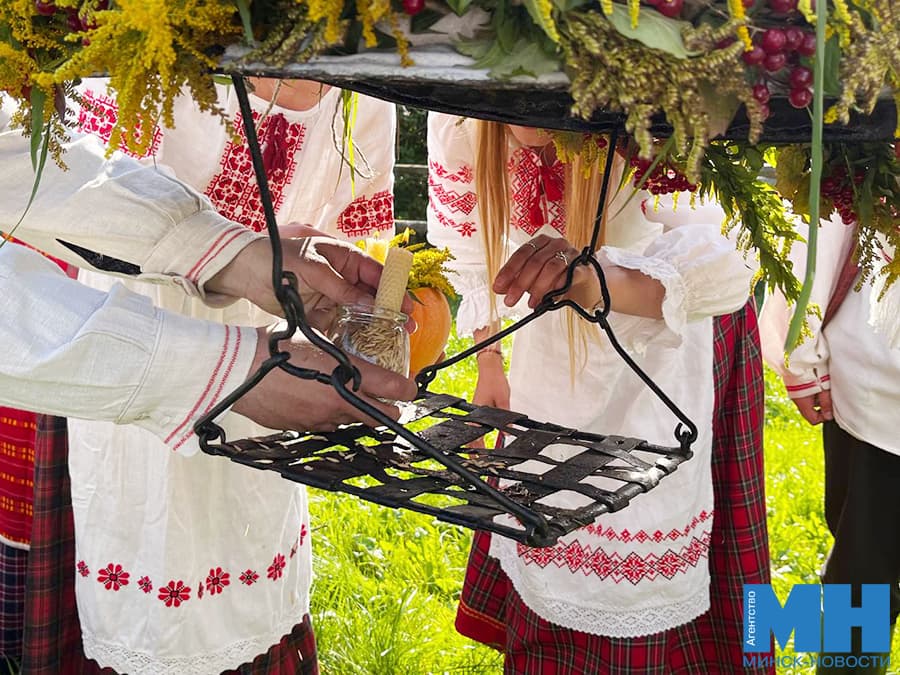
Photo by author