
In the Krasnodar region began to harvest rice
The main harvesting campaign of autumn started in the region: the first harvesters came out on rice checks of the region
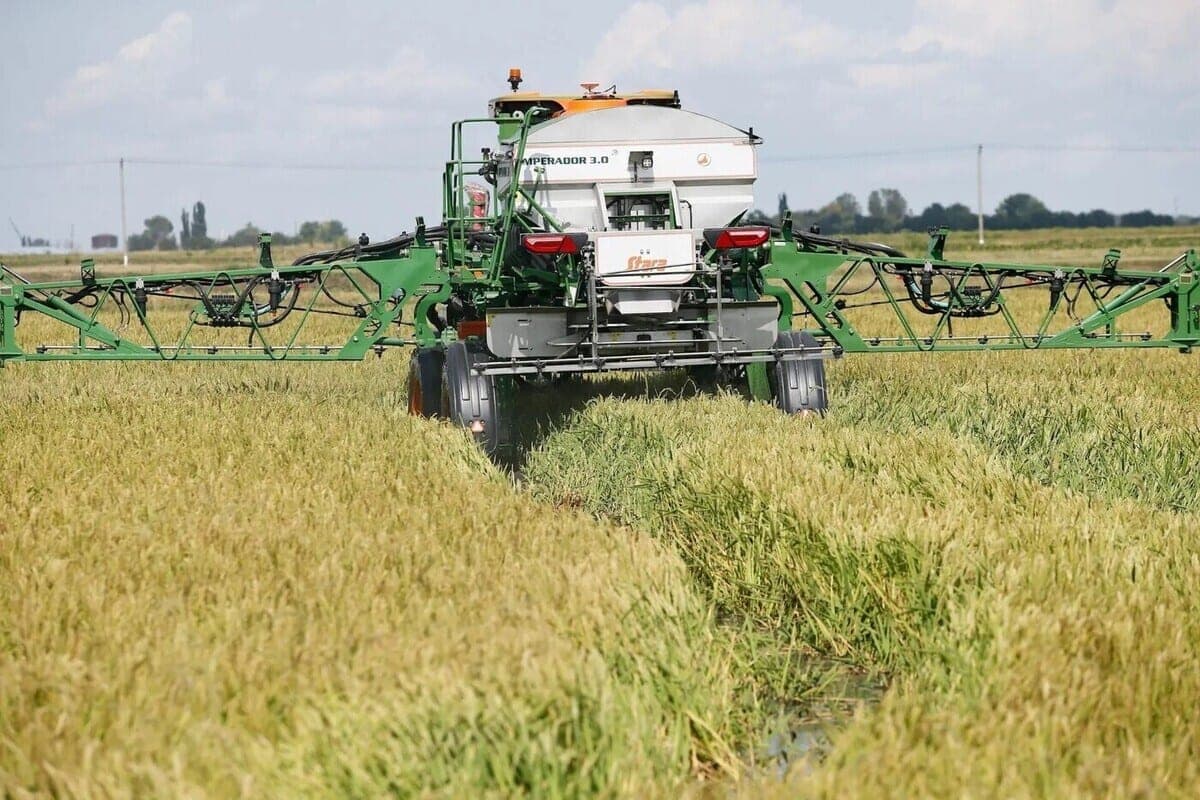
The main harvesting campaign of autumn started in the region: the first harvesters came out on rice checks of the region. From year to year, Kuban confirms the status of the absolute leader of the rice industry: by the end of 2025, the gross harvest of white grain in the region amounted to 853.3 thousand tons after refinement. This is 71.4 percent of the total Russian harvest, which reached one million 194.4 thousand tons. Today, farmers face the task not only to repeat this success, but also to correctly distribute resources: the sowing area this year decreased by eighteen percent and amounted to 94.4 thousand hectares against last year’s figures. About forecasts of the harvest of white gold Kuban - in our material.
Water is abundant
The economy dictates its rules to agronomists. This year, the area of rice sowing in the Krasnodar Territory has been reduced, but this does not prevent us from predicting a rich harvest, because nature this season was on the side of farmers. This year turned out to be truly favorable for the industry in terms of water supply: the filling capacity of reservoirs at all stages of vegetation was at a sufficient level, which allowed to completely remove the issue of irrigation and create ideal conditions for the maturation of crops in sown areas.
An important role in the practice of irrigated rice farming is played by a qualitatively planned surface of the field - this is one of the main factors in obtaining stable high yields with significant savings in irrigation water. Understanding this dependence, Kuban farmers annually conduct a strict revision of their checks. To increase yields and reduce water consumption, farms need to plan at least thirty percent of the sown area.
This year, this work was carried out on an area of 22.2 thousand hectares of capital planning. The highest indicators are traditionally demonstrated by the advanced areas of the region: Kalininsky, Abinsky and Slavyansky. It is the calibrated geometry of fields that allows water to be evenly distributed on checks, preventing both drying out of seedlings on elevations and soaking of the root system in the lowlands, which ultimately directly converts into fertility, increasing centners per hectare.
Bet on Russian selection
Sowing was traditionally carried out exclusively by Russian seeds created by Kuban scientists of the Federal Research Center of Rice. This guarantees not only the high quality of the grain, but also the technological sovereignty of the industry. According to the results of the analysis of the structure of sown areas this year, agronomists relied on time-tested varieties of two main groups. In the medium-ripe rice segment, the leaders are Rapan 2 (14.6 percent), Nautilus (12.4 percent), Classic Rapan (6.3 percent) and Jubilee 85 (4.5 percent). Among the mid-mature varieties, which occupy the majority of checks, the "kauris" (13 percent), "patriot" (11.2 percent), "Apollo" (10.5 percent) and "Polevik" (3.7 percent) prevail.
It is these novelties and promising hybrids that Kuban agronomists were able to study in detail within the framework of the traditional rice field day. The status of the event was emphasized by the composition of its participants: a member of the Federation Council Committee on Agrarian and Food Policy Alexey Kondratenko, Deputy Chairman of the Legislative Assembly of the Krasnodar Territory Vladimir Beketov, Chairman of the profile committee of the ZSK Sergey Orlenko, Deputy Minister of Agriculture of the region Mikhail Timofeev, Head of the Federal Research Center of Rice Sergey Garkusha and Chairman of the Council of the National Rice Union Igor Lobach.
The guests were told about the current priorities of the work by the chief researcher of the selection department Grigory Zelensky. He noted that today scientists are focused on creating ultra-early and medium-ripe varieties with a growing season of 90-105 days, which allows you to get away from the August fog and reduce the risks of stem diseases. One of the main achievements was the Slavic 100 variety transferred to state tests last year, which matures in exactly one hundred days. In addition, the participants were presented with a long-grain variety of “zlata”, as well as specialized developments for baby and dietary nutrition. Leading researcher of the Federal Research Center of Rice Nadezhda Ostapenko emphasized the invariable principle of breeding work: each new variety must surpass the previous one in key characteristics.
The practical part of the visit was opened by the chief researcher of the Federal Research Center of Rice Viktor Kovalev, who demonstrated the nurseries of testing offspring and revealed the stages of painstaking work on new genotypes. Head of the selection department Andrey Ogly elaborated on the methods of the center, which harmoniously combine classical approaches and modern biotechnologies. Thanks to this integrated approach, scientists have already managed to create a number of breakthrough varieties. Among them, “fregate” and “optimus” – they are highly resistant to the main disease of culture – pyriculariasis, as well as “classic” and “junior”, which demonstrate higher yield and similar immunity to diseases compared to the popular standard “rapan”.
Currently, Kuban rice scientists are expanding their horizons and are already working with Brazil’s leading Rural Development Institute in Paraná to share the genetic resources of rice, specifically preparing to work together to genetically improve its varieties.
By the way, Kuban scientists are conducting large-scale work not only in the selection of white gold. On the fields of the Federal Research Center of Rice, within the framework of the field day, employees of the All-Russian Research Institute of Oilseeds presented their soybean varieties. For the guests, production experience was laid, the purpose of which is to determine the varieties of legumes most suitable for sowing directly in rice checks. This will allow farms to introduce idle after water discharge areas in the second turn and receive additional profit per hectare without disrupting crop rotation.
From field to warehouse
Technical readiness for harvesting is at a high level: this year, 670 harvesters are planned to participate in rice harvesting, of which 526 units are already available on farms. In order to complete the suffering in the shortest possible time and to prevent a grain break, farmers additionally plan to attract another hundred and forty-four machines.
No less large-scale work was built at the stage of harvest acceptance. For the storage and processing of white grain in the region involved three key elevators: Angelinsky and Starovelichkovsky in the Kalinin district, and Poltava in the Krasnoarmeysky district. Their total capacity allows uninterrupted acceptance of huge volumes: the total capacity for raw is about three hundred and twenty thousand tons, thirty-three grain dryers with an average capacity of 5.2 thousand tons per day are able to pass through themselves up to fifteen thousand tons of raw rice daily. Such infrastructure ensures that no grain from the new crop will remain in the open air, even if nature throws rice farmers to the test of prolonged rains at the peak of the harvesting campaign.
From words to deeds
The rice harvest strategy was discussed at an extended meeting. Deputy Minister of Agriculture of the Krasnodar Territory Mikhail Timofeev confirmed that this year nature was on the side of farmers: problems with water supply did not arise at any stage of vegetation. However, due to the shift in the timing of sowing, farmers will have to adjust harvesting plans and use the entire fleet of equipment to work in the shortest possible time. At the same time, it is necessary to think about the future now: it is necessary to start planning the structure of next year’s sown areas in order to fulfill the strategic task of bringing the gross rice harvest in the country to two million tons by 2030. At the same time, more than half of the harvest should fall on the Kuban – in the Krasnodar Territory by this time it is necessary to reach an indicator of 1.1–1.2 million tons.
Deputy Chairman of the Legislative Assembly of the Krasnodar Territory Vladimir Beketov spoke about the quality of the scientific foundation of the industry. In his speech, he emphasized the high technological advantage of domestic rice breeding, which today completely covers the needs of Kuban rice growers. According to him, the existing market challenges are surmountable, but it is impossible to relax: it is extremely important not to slow down the pace of production and quickly find effective solutions to support domestic producers, preserving the status of the main guarantor of food security of the country for Kuban.
Special attention was paid to the utilization of rice straw - an important and priority task. Due to the specific properties of raw materials, burning remains the main method of clearing fields. Due to the large number of appeals of citizens for the cleaning period, farmers were reminded of the strict order of work. Incineration should be carried out strictly in accordance with the Rules of fire control in the Russian Federation, only in windless weather, as well as with mandatory consideration of the Procedure for the use of open fire and the breeding of fires on agricultural lands, which establishes fire safety requirements for the breeding of fires.
In conclusion, the meeting participants wished good weather, decent harvest and economic prosperity. Now it's up to the harvesters.


