
In Tel Aviv collapsed building on Nahalat Benjamin
This morning, October 14, 2026, in the center of Tel Aviv on Nahalat Binyamin Street, 63a, there was a partial collapse of a building that was at the stage of work under the TAMA 38 program, a national initiative to strengthen and renew the old housing stock
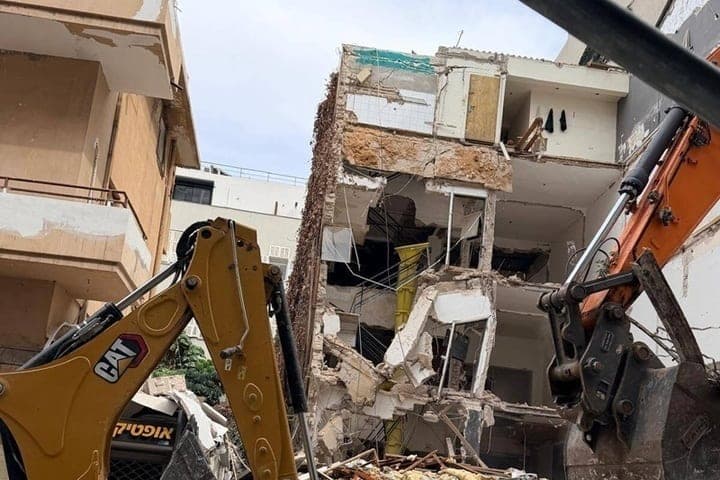
This morning, October 14, 2026, in the center of Tel Aviv on the street Nahalat Binyamin, 63a, there was a partial collapse of the building, which was at the stage of work under the program TAMA 38 - a national initiative to strengthen and renew the old housing stock.
According to the Ministry of Labor of Israel, at the time of the incident, the building was working on the addition of floors and strengthening of structures, but the object was not registered with the Office of Labor Protection, and the appointment of a responsible foreman was absent, which is a direct violation of the law. Despite the seriousness of the incident, victims and casualties were avoided: three workers trapped under the rubble were promptly rescued by firefighters and police officers, medical care was not required, and the area was quickly cordoned off to ensure the safety of citizens.
The Chief Labor Inspector of the Ministry of Labor, engineer Hazi Schwartzman, in an official statement stressed: “The TAMA project with the addition of floors, which failed for reasons that will be investigated on the spot.” He noted that "הא,ר ,א ,ווח ,משר, הי,ו,ה ומא, ,ירו, ,חו,." ктאктר מкт ктא מוктה מктהкт אктוктה ктרש — “The object was not declared to the ministry, which is contrary to the law, and no foreman was appointed there, as required by law.” According to Schwarzman, such unregistered construction projects pose a danger not only to workers but also to the general public. An unregistered facility poses a threat to the safety of workers and society as a whole. In this regard, he appealed to the municipal authorities to conduct regular raids to identify and immediately stop such works: I call on the heads of municipalities to conduct proactive rounds to identify and immediately stop such work.”.
In response to the incident, inspectors of the Occupational Safety and Health Administration immediately closed the facility for a long time, and the investigation of the causes of the collapse was entrusted to engineers of the Tel Aviv municipality with the participation of specialists from the ministry. Special attention in official statements is paid to the fact that from next week in Israel come into force three new regulations on safety at construction sites: toughening the responsibility of developers, the mandatory appointment of each facility as a foreman and a special inspector for safety, the introduction of a new format of training at height and mandatory certification for all new foreign workers. As Schwarzman noted, “It is now clear to everyone that these rules are necessary to ensure occupational safety and save lives.”.
What happened in Tel Aviv is not unique on the world stage. Such tragedies regularly occur in different countries, often for similar reasons: lack of registration of the object, illegal add-ons, lack of professional supervision. In November 2021, a 21-story building collapsed in Lagos, Nigeria, killing at least 45 people; an investigation revealed a lack of permits and oversight by engineers. In February 2023, a seven-story house partially collapsed in Istanbul, Turkey, where illegal construction work was carried out, according to AP News, leading to the deaths of two people. In October 2026, in New Orleans (USA), there was a partial collapse of a building in the historic French Quarter - city authorities a few months before that revealed unauthorized work, but measures were taken only after the incident. Dozens of such cases are recorded each year in India and Egypt, involving illegal superstructures and lack of control, resulting in numerous casualties (Reuters, Le Monde).
Analyzing the situation, experts note that TAMA 38, despite its importance for the renovation of the housing stock of Israel, is fraught with special risks: work is often carried out on partially populated buildings, and the technical complexity of integrating new structures into old ones requires strict engineering control and transparency. According to the Ministry of Labor, it is the lack of registration and professional supervision at such facilities that causes most emergency situations. In recent years, Israel has recorded a consistently high level of accidents at construction sites, especially in the segment of urban renewal, which was the reason for tightening the legislation.
In conclusion, today’s incident in Tel Aviv was another reminder of the need for strict compliance with building regulations and transparency in the industry. The introduction of new regulations that tighten the responsibility of developers and strengthen security controls could be a turning point for the entire construction sector of the country. However, as international experience shows, only systematic work to identify and prevent violations, as well as the inevitability of punishment for illegal work can reduce risks and prevent tragedies in the future.


