
In the Tula region, children with developmental disabilities receive free assistance
Early Care Service in Tula region helps children under three years who have developmental disorders or risk of their occurrence
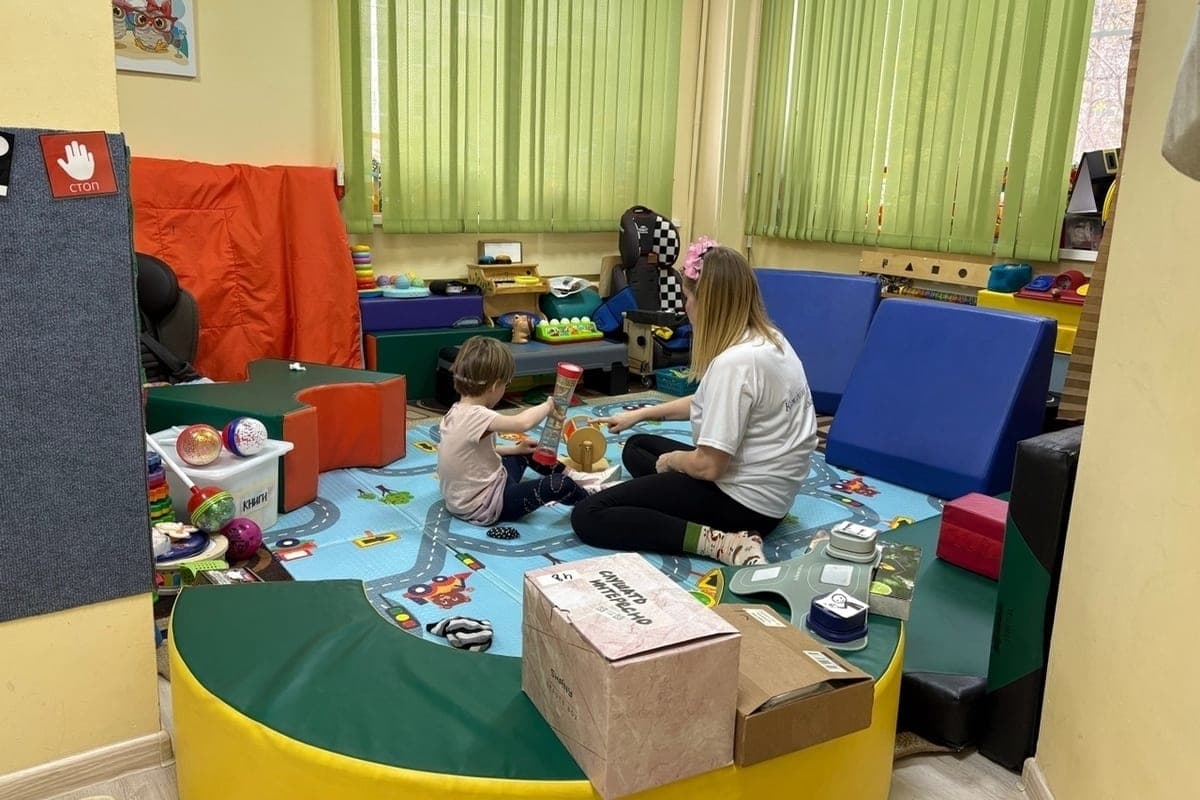
The early care service in the Tula region helps children under three years old who have developmental disorders or risk of their occurrence. Assistance is provided regardless of disability. The task of the service is to teach the child to better cope with everyday tasks and adapt to society.
Specialists find possible problems at an early stage, conduct diagnostics and conduct comprehensive support: from psychological and pedagogical examination to correctional and developmental classes. Families are also not left out: parents are taught game methods of interaction with the child and help build a further educational route. Defectologist of the early care service of the Tula Regional Center for Rehabilitation of Disabled People Irina Fadeeva emphasizes: the main engine of development is the parents themselves.
“Our task is to build a cooperative relationship with parents, in which we are carriers of some knowledge: how to develop a skill, what environmental conditions contribute to the development of this skill. In service classes, we model different activities, and then we talk about it with parents: how they see it, how it can be built into a child's daily life. Classes are held once a week, and our task is to isolate the ways in which parents interact with their child, which he will take home with him. If something fails, we return to that activity. Our main task is to give the parent a way of interacting with the child, which will develop a particular skill, the expert stressed.
Most often, parents come with the request “the child does not speak,” added Irina Fadeeva:
“The first thing a family meets when they come here is the specialists who do the initial appointment. We find out the request of the family, their fears, what they are associated with, and we see the results in which areas of development the child is delayed. We always talk to parents about which area of development they would most like to focus on.”.
For children there are both individual and group classes with defectologists, psychologists, speech therapists and social teachers.
Svetlana Zhiltsova is not just a mother of a special child, but also a co-host of a group for children with severe and multiple developmental disorders. Her daughter Vasilisa has been attending classes for the third year: “She already does without me, learned a lot, learned a lot and calmly lets me go.” Due to this, I can be a co-host in a new group with young children and pass on knowledge, experience, and support to parents who are just beginning this path. I want to support these mothers and children, and that as many mothers as possible decided on such groups, because they mean a lot. This team and all the professionals are a huge support.”.
Natalia Bessonova and little Artem go to classes for a year and a half: first individual, now group. During this time, the mother noticed a big difference in the behavior of her son, and most of all, Artem is attracted to soap bubbles. “The child adapts, acquires new skills, he is already calm about the specialists. If he used to cry when he saw them, now he calmly plays with them, sits more, there is more interest in everything: books, songs, music. Previously, Artem was afraid of all this, but now he plays, looks at other children, repeats after them, Natalia Bessonova shared.
To start classes, you need to get a referral from a medical institution with the recommendations of specialists, and then contact the center for a consultation.
Where to get help:
Tula, Puzakova Street, 36-8 (4872) 24-51-04 (ext. 12569);
Tula, Kalinin Street, 20, 3 - 8 (4872) 24-51-04 (ext. 12554, 12563);
Novomoskovsk, Berezhnoy str., 15 - 8 (4872) 24-51-04 (dec. 12571);
Kimovsk, Tolstoy St., 18-8 (48735) 5-70-29;
Donskoy, Sovetskaya str., 14 - 8 (4872) 26-84-94 (ext. 402).
Older guys get services in a semi-stationary.
Early care services in the region are provided within the framework of the national project "Family", the federal project of which - "Modern School" - provides for systemic support for families with disabled children and children with disabilities, including the development of a network of early care services throughout the country.


