Second chance
Stay without housing, lose documents and support of loved ones for various reasons n
Money is not the main thing
In such cases, not only material assistance is important. A person needs to restore documents, get medical and legal support, solve the housing issue, find a job and rebuild relations with society.
This is what the centers for the resocialization of people in difficult life situations are doing. Today, such a system exists throughout the country. According to the Committee for Regulation and Control in the Field of Social Protection of the Population of the Ministry of Labor and Social Protection of the Population of the Republic of Kazakhstan, as of August 31, 2026, 632 organizations received licenses for the provision of special social services. Among them are 68 organizations providing services in temporary stay. Of these, 25 are intended for people without a specific place of residence. The services of these 25 organizations covered 3,216 people.
The history of this system is more than a quarter of a century. After the Government Decree No. 408 of March 16, 2000, the first centers of social adaptation for people without a certain place of residence began to open in Kazakhstan. The document recommended the establishment of such centers in cities with a population of over 100 thousand people, providing funding from local budgets and other authorized sources.
Over the years, the approach has changed. Now it is not only about temporary accommodation of a person who has nowhere to live. The modern system of special social services involves comprehensive assistance - from household issues and medical support to the restoration of documents, registration of benefits and assistance in employment.
Not just a roof over your head
The word “resocialization” means the return of a person to full participation in public life. In the Karaganda center for the resocialization of persons who find themselves in a difficult life situation, the Department of Employment and Social Programs provides psychological, legal, social assistance. Cultural-patriotic and leisure events are held with the recipients of services, amateur art circles work. People are involved in the preparation of concerts and various events. At first glance, such activities may seem secondary compared to paperwork or job search. But through communication, social ties are gradually restored and a sense of self-importance returns.
The practical side of the work is equally important. Specialists of the center help to issue benefits, compensation, alimony and other payments provided for by law, advise on social security and citizens' rights. If necessary, help prepare appeals to state organizations.
A separate area is the restoration of documents. For a person who has lived without an identity card for a long time, the registration of a document can be the first step to returning to normal life. Without it, it is impossible to fully find a job, issue social payments, solve the housing problem and use a number of public services. Therefore, the work of specialists of the center sometimes begins literally with the restoration of a person’s identity in the legal sense.
Documents Decades Later
Especially difficult are cases when documents are missing for many years. The Karaganda Center works with people who have not had documents since birth or have not changed passports of the USSR since 1994. To solve such issues, specialists cooperate not only with state bodies of Kazakhstan, but also with embassies and consulates of foreign countries, as well as with migration police. Among the countries with which such work is carried out are Georgia, Ukraine, Kyrgyzstan, Russia and Uzbekistan.
Since the beginning of 2026, 19 people have received identity cards, another 13 – pension cards. Documents of nine people were sent to obtain a birth certificate, 17 people appealed to the migration police department for advice and obtaining the necessary certificates. Behind each such figure is a separate story, meaning the opportunity to apply for a pension, receive social benefits or officially get a job, confirm civil status and begin to solve the accumulated problems.
Back to society
Resocialization does not end with paperwork. One of the main tasks is to help a person after a period of stay in the center to move to an independent life. For this purpose, specialists promote employment, help solve housing issues, if necessary, draw up documents for placing elderly people and persons with disabilities in stationary social service organizations.
Since the beginning of the year, 25 people have been employed. This is one of the most important results, because a constant income gives a person the opportunity to gradually refuse the help of the center and independently solve issues of living and everyday expenses. The center cooperates with the municipal organization "Gorkomtrans" in employment, other enterprises of the region.
Since the beginning of 2026, 69 people have entered the Karaganda center. Among them are 59 men and 10 women. When asked how people get to the center, the institution’s psychologist Dana Kusherbayeva answers:
- We have such options: either people apply themselves, or they are brought by the police. Our mobile service is also on call. We conduct raids, gather people in the streets. Hospitals are calling. Residents turn when they see people living on the street. The mobile group includes a paramedic, a social worker and a driver. We serve service recipients from all over the country. For example, a Russian citizen came to us. He came to Kazakhstan in 2007 without any documents. We thought he had a Soviet passport. We began to find out through the immigration service. It was not documented in Soviet times. We contacted the Russian Embassy. They gave me the papers. Turns out, a Russian citizen. While we have him. He needs a passport.
In the center, a person can stay from a month to a year. In difficult cases, the stay is extended. The results of the work are distributed differently. Nineteen people were placed in nursing homes, dormitories and private boarding houses, 13 were assigned to relatives, 24 were expelled on a personal application, another 13 for violation of internal regulations.
- We find relatives through social networks, continues Dana Kusherbayeva. - Precinct officer, please help. Recently I wrote to the daughter of a service recipient in social networks. I asked the police to find a phone number. My husband didn’t believe me at first. After a while, he called back and apologized: “I thought scammers were calling.” Two hours later, the daughter came to her father. Recovered his data. Another man has been with us for 10 years. We can't document it, send it to the street, either. But there is usually no difficulty in documenting. If you have a Soviet passport, it is more difficult.
From retirement to medical care
In 2026, in the Karaganda center, three service recipients were issued documents for receiving pensions and social benefits. Three more were put in line for vouchers to medical and social institutions. In addition, three underwent surgery for medical reasons for vision.
This work shows that resocialization is not one service, but a whole sequence of actions. First, it is necessary to determine what problems a person has, then restore documents and social rights, resolve issues of health, income and residence, and only then help him take the next step.
Who lives in the center today
At the moment, 35 people live in the Karaganda center - 29 men and six women. At the same time, the composition of recipients of services is heterogeneous. Each person has their own life story and their own set of problems.
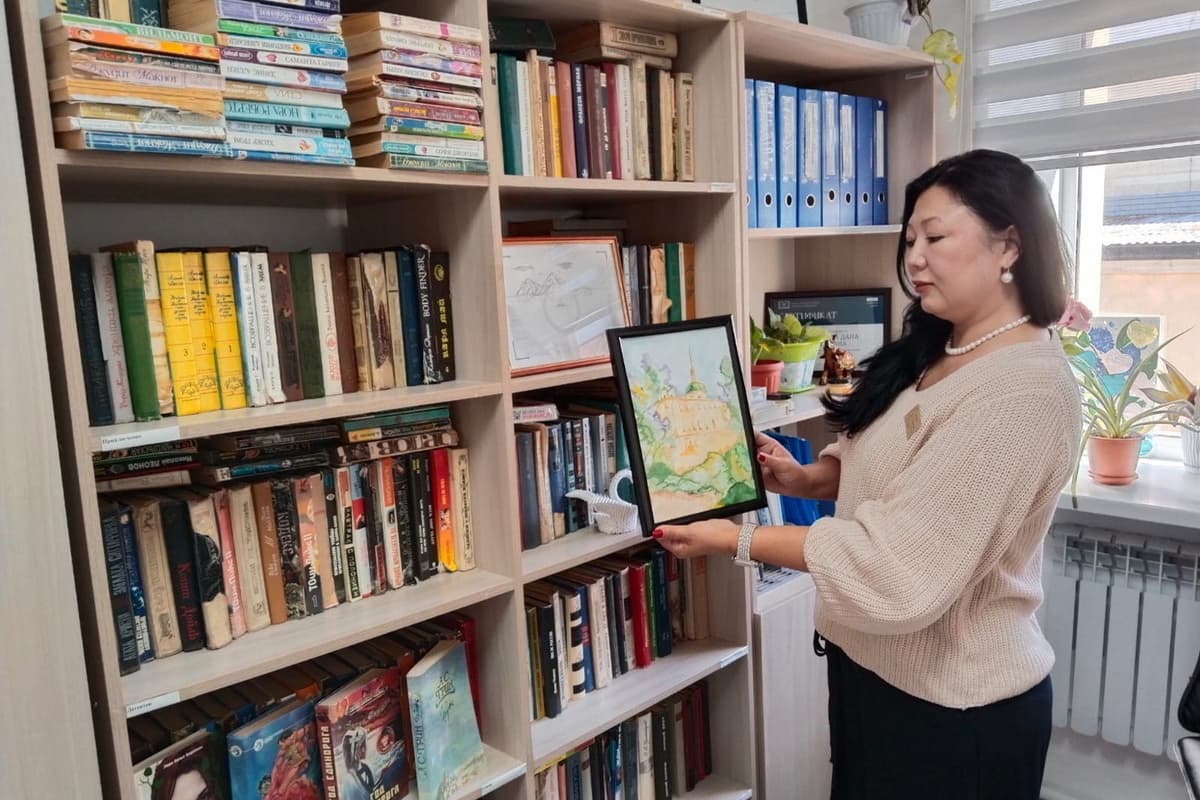
- It is very clean, good repair, says one of the recipients. - It's not a show. You can't do that in a day. I want to mention all the employees who work here. We have a big library. The psychologist does the training. Doctors can help if you are sick. The nutritionist makes the menu. The chefs always offer us a supplement. We have four meals a day. The dishes are very diverse. And I say this not for a red word, but as it is. Director Berik Yessenov can simply approach with any question. And he'll never get past. Berik Useinovich will always ask how things are. You can’t please everyone, as they say. But I am very grateful to this center.
This woman is 73 years old. She is a former teacher of Russian language and literature. Originally from Ukraine, she came to Kazakhstan in 1995. To the question of why without housing, he answers briefly: “It happened.” The Embassy of Ukraine at the request of the center issued a birth certificate. Work continues.
Between past and future
A special category of recipients of services are people previously convicted. In Karaganda center since the beginning of the year they received 24. After release, a person faces not only domestic difficulties. He needs to re-enter public and working life. Therefore, resocialization in a broad sense is an attempt to break the vicious circle. A person is helped not to forget the past, but to get the opportunity to build life further.
The youngest employee in the staff of the center is nurse Karakat Erekeeva.
- I enjoy talking to people, says Caracat. - They have different fates, different situations. It's experience. We take the recipients to fluorography. We work with the first multidisciplinary hospital. If appropriate treatment is needed, we take you to a tuberculosis center.
From temporary shelter to new life
From January 1, 2025, Kazakhstan has a mandatory licensing of organizations providing special social services. It is designed to establish uniform requirements for security, staffing, material base and accessibility of institutions.
According to the Ministry of Labor and Social Protection of the Population of the Republic of Kazakhstan, which leads kz.kursiv.media, 5.7 billion tenge was allocated by local executive bodies in 2025 to assist people without a certain place of residence. 1,420 people registered in the country, 1,008 documents were restored, another 843 were employed. 649 people received temporary or permanent housing, 403 received pensions, benefits and other social benefits. For eight months of 2026, 1001 people registered and 715 documents were restored. 548 people found work, 374 people received housing, and 254 people managed to restore contact with relatives.
According to akimats, in 2025, 11,451 people were covered by special social services. Of these, 10,078 were men and 1,373 were women. Since the beginning of 2026, 5,566 people have received appropriate assistance. Among them are 4,715 men and 851 women.
And start over
Twenty-five such organizations in the country are not just temporary residences. These are elements of a system that gives you a chance to start over. The Karaganda Center shows this work in specific figures: 69 new applicants since the beginning of the year, 83 people who have undergone a course of resocialization, 25 employed, 19 arranged in residential institutions, 13 returned to relatives, dozens of restored documents. Behind each figure is a person who needs not only somewhere to spend the night or get a plate of hot food, but also to understand that after a difficult period, he still has the opportunity to return to normal life.