
Why learn Chinese in Orsha and how to memorize hieroglyphs: the teacher gave advice
Tatiana Polkhovskaya, a teacher from Orsha, explains why learning Chinese in the region and how to become a global citizen. Simple mnemotechnics for memorizing characters and tones: associations, emotions and physics instead of rote.
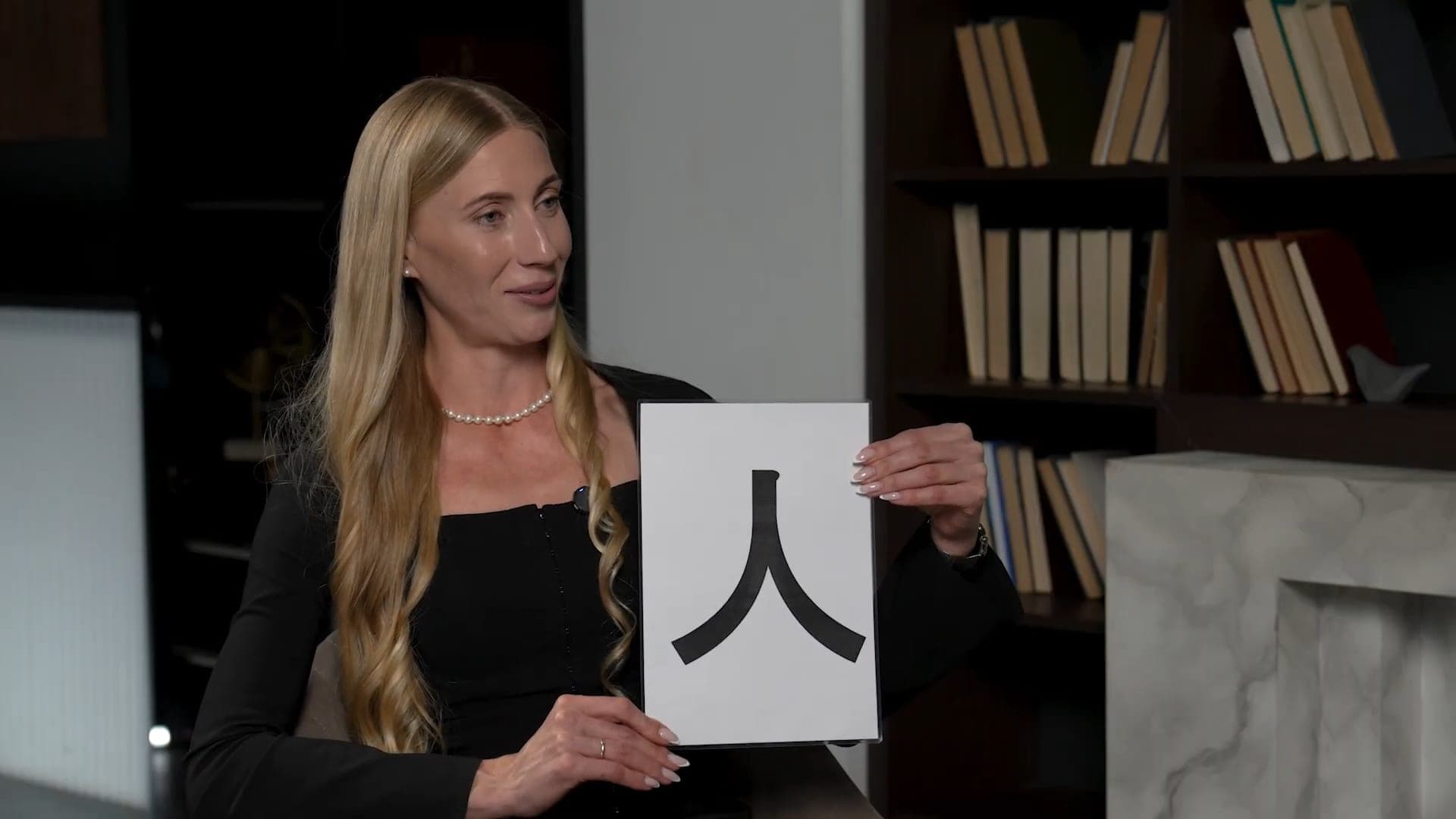
“Why do I need Chinese if I live in Orsha?” was a question once asked by Tatiana Polkhovskaya, a teacher of Chinese and English at Gymnasium No. 2 in Orsha. Instead of talking about career prospects or economics, the teacher replied that language is needed to bring your culture to the world. In an interview with the program "Face to Face" on ONT. She explained how to explain complex characters to a child without rote learning and why imagination is more important than memory.
Whether you are in Orsha or Istanbul, you should present yourself as a Belarusian
Tatiana Polkhovskaya is convinced that learning a complex language is necessary not only for a career, but also for a cultural mission. One day, a student asked her about the feasibility of learning such a complex language in a regional city. Tatiana's response became her pedagogical credo:
You never know where you will be in 5-10 years. You can never know in advance who you will work with in the future, what people you will meet in life. Whether you are in Orsha or Istanbul, you should present yourself as a Belarusian. You must carry your culture.”.
This position was formed after an internship in China, when it turned out that many locals do not know where Belarus is. Tatiana understood that language is not needed to tell foreigners about their own realities, but to bring their culture to the masses.
How to explain a complex character to a child
The Chinese language scares even adults with the number of signs and tones. Tatiana uses mnemotechnics and associations to remember. Live she demonstrated to the host of the program method on the example of the hieroglyph "man".
- Let me show you the simplest basic character. What do you think it is?
- It looks like pants. Like a man walks, but without a torso.
- Great. Look, you're caught, you might say, on the first rod. You said it was pants, like a man walking. I mean, they turned on their imagination. The first association that came to you was a person. Indeed, the character "man." And pronounced in Chinese as "r(j)en". But look, the thing is, how do we remember? You visually imagined it was a human, didn't you? You can even draw a head, pens and so on. But how do you remember what it is and what it is pronounced with the second tone?
- And if it's a different tone, can it still be a rude word?
- Yeah, yeah, yeah. In this case, in addition to the fact that we presented a visual, we can come up with a mnemonic phrase that will help us remember not only the mark, but also the pronunciation and tone. And think about what phrase you can come up with that there is a syllable “r(g)en”?
- I only remember it because of the marketers. There are such seeds, called "Ren".
- Ren. But "ren" is not exactly "r(g)en", because in the transcription of paladium the first sound will be "g".
- Maybe you're too lazy to go. Laziness.
- Great. You made up your own self-imposed phrase. I offer you this option. Two people get married. How's that? "Wiver." That is, look, in this phrase we encrypted both the semantics of the hieroglyph that it is a person, and the pronunciation of "r(g)en", to marry.
"Woman" is getting married, yes, it seems. How do you remember that this character is pronounced with a second tone?
- That's the problem. I'm afraid you have to get it right. Man, that sounds proud. And we raise our heads up because the second tone in Chinese is the rising tone, where the voice has to go up. That's kind of how tech works.
For successful language learning, according to Tatiana, imagination and the ability to create your own images are critical, and not just mechanically memorize the outlines.
Watch the full issue of the program “Face to Face” with Tatiana Polkhovskaya:
Read also:
Teacher Denis Dubanevich from Smolevich became Teacher of the Year of Belarus


