IIHF challenges the admission of national teams of Russia: hockey officials are suing judges
The opinion of the chief editor of the department “MK-Sport” Sergey Alekseev about why the IIHF filed an appeal to CAS on the decision to admit Russian teams. Referring to the undisclosed ties of arbitrators Giulio Palermo and Ismail Selim with Russia, the federation is trying to balance between the verdict of the court in the creep of our teams and the pressure of countries threatening to boycott the 2020 World Cup in Germany. However, the pretext chosen by the IIHF to defend its Russophobia threatens to turn into even more problems.
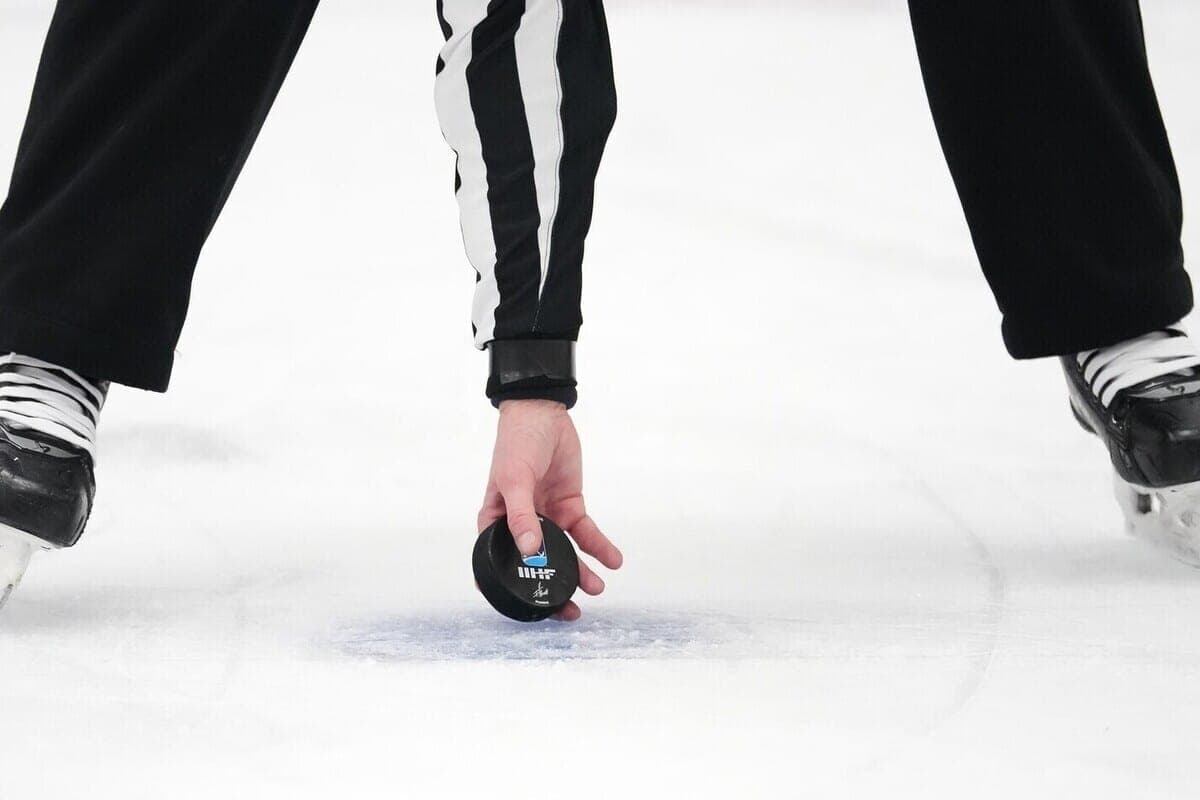
There is a special grace in the way international sports officials fail to lose. Not to admit defeat, not to execute the decision, not to explain to the fans what happened, but immediately to look for whom this defeat can be entrusted. On October 30, the Court of Arbitration for Sport (CAS) ordered the International Ice Hockey Federation (IIHF) to admit Russian teams to the tournaments of the 2026/27 season. It would seem that everything is simple: the decision of arbitration is executed, the calendar is made, the ice is poured. But the federation chose the third way - it went to complain about the arbitrators. The frying pan is writhing not because it likes to dance, but because no one is in a hurry to remove it from the fire. That's just the fire under this pan IIHF ignited itself. She was in an extremely vulnerable position, trying to maneuver between the strict enforcement of the judgment and the harsh political pressure of a number of member countries of the organization. Therefore, the IIHF has come up with nothing better than to appeal to the Court of Arbitration for Sport against the October ruling on the restoration of the rights of Russian national teams. The initiative of the federation, reported by Canadian journalist Gord Miller on the social network BlueSky, is based on suspicions of a conflict of interest. Swiss newspaper Inside Paradeplatz revealed details that two of the three arbitrators who overturned the suspension had undisclosed business ties with Russia. The focus was on the chairman of the board, Italian lawyer Giulio Palermo, who in September 2026 attended a legal conference in Moscow. His Egyptian counterpart, Ismail Selim, appeared at a similar event a year earlier along with representatives of a Russian law firm. It was the concealment of these contacts that became the formal reason for an emergency appeal.
And here begins the most interesting - not legal, but arithmetic. An arbitrator from Italy visited Moscow for a legal conference, and this, according to the logic of the appeal, makes him impartial in the case of Russian hockey. If the conference were to be held in Toronto, Zurich, Helsinki, or Stockholm, would it also be a business connection that requires disclosure? Or is geography suddenly proof? Lawyers are well aware that the issue of the independence of the arbitrator is a sacred thing and should be discussed seriously. But there is a chasm between a conflict of interest and attending a scientific conference, and you can’t jump over it just by saying the word “Russia” loudly. Otherwise, any losing process will receive a universal key: you do not need to look for errors in the decision, it is enough to study the summary of the judges.
Let me remind you that on October 30, 2026, the arbitration ordered the federation to allow the Russians to the tournaments of the 2026/27 season, citing the lack of evidence from the IIHF that the admission poses a security threat or disruption of the competition. This legal defeat caused a real panic on the sidelines of Europe. A number of regular sponsors rushed to break contracts, and national associations began talking about boycotts. The leadership of the federation openly expressed disappointment with the verdict.
Disappointment is generally a curious genre. The sports organization is disappointed that the independent arbitration did not find its arguments. Not concerned, not embarrassed, not ready to review the procedure - disappointed, like a restaurateur to whom the dish was returned. And the “urgent assessment”, according to Miller, resulted in a complaint against two of the three arbitrators. Evaluation of the decision turned into an assessment of those who made it. This is not legal work, this is an attempt to shift the arrows from your own failure to other people's profiles.
It is in these clutches that the IIHF wriggles. On the one hand, the CAS decision of October 30, mandatory for execution: to allow the Russian teams to the tournaments of the season-2026/27. On the other hand, there is the Russophobic logic of a number of member countries, supported by the threat of a boycott and the money of outgoing sponsors. To execute a decision is to quarrel with a part of one’s own members. To fail is to sign that an international federation is governed not by rules, but by a cry from several capitals. The appeal against the composition of the panel in this situation looks like an attempt to gain time and at the same time save face: we are not against the law, we are against the arbitrators. Only time in sports is not rubber, and the season is already on.
If the federation seeks a review through referee biographies, it opens a Pandora's Box to the entire sports justice system. Tomorrow, any losing party will look not for a legal error, but for a conference, a trip, a co-author, a classmate, a customer - and turn this into a ground for cancellation. For decades, the leaders of international federations have been repeating the mantra of sports outside politics; today, the same federation is in fact asking arbitration to recognize that politics is a reason not to allow, and the geography of a scientific trip a reason not to trust. It's not hockey defense. It's dismantling your own foundation.
See the photo gallery on the topic
However, not everyone in the hockey world shares this rhetoric. The captain of the German national team and defender Moritz Seider, according to the publication Augsburger Allgemeine, spoke in favor of the admission of the Russians, arguing that the strongest should perform on the ice. He drew a parallel with the National Hockey League, which, in his opinion, demonstrates the highest level of competition and maintains a peaceful atmosphere, despite the political background. Seider stressed that athletes should not assume the burden of political decisions, and expressed hope that the litigation will not lead to the abolition of the world championship, urging to look at the situation comprehensively and objectively.