How a smart watch counts calories
Discuss how smartwatches estimate calorie consumption, what affects accuracy and why it is important to consider basic metabolism.
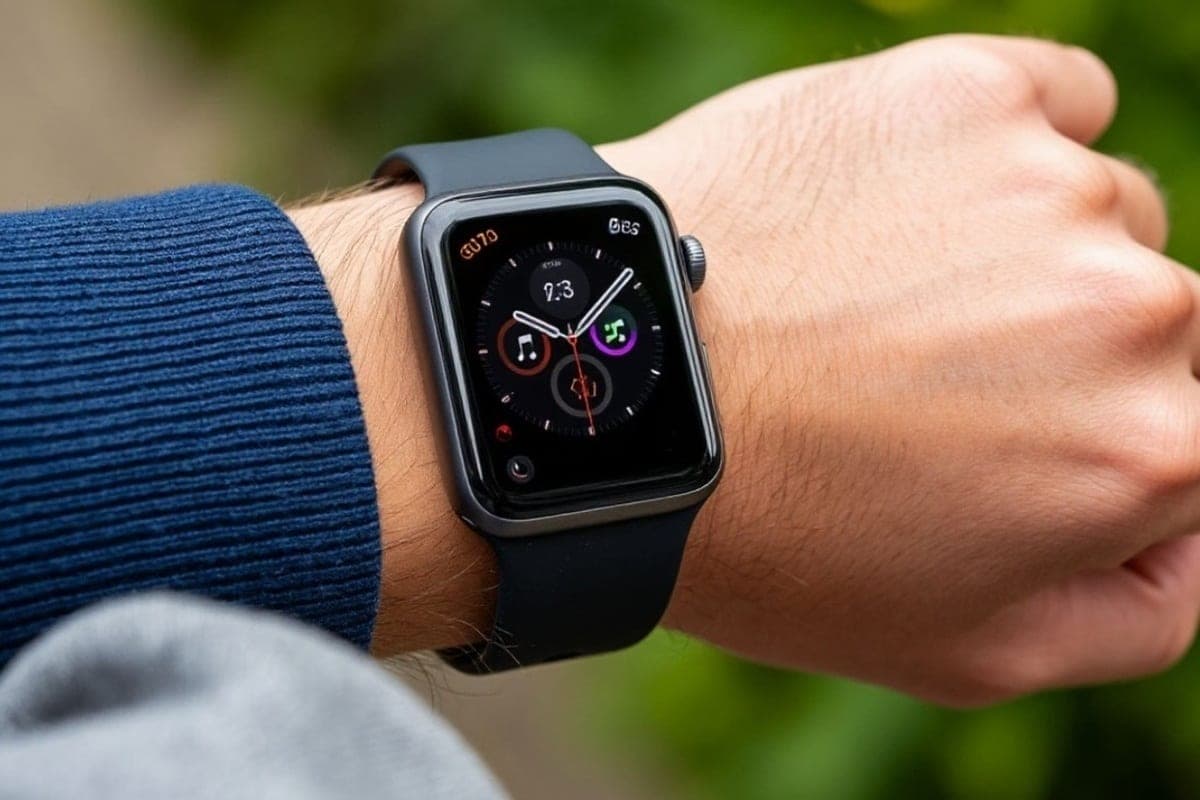
Smart watches do not measure energy consumption directly: they combine information about the movement, pulse and parameters of the owner with calculated models. Therefore, the number on the screen is useful for monitoring the dynamics, but does not replace the laboratory estimate of energy consumption.
How a smart watch counts calories
The watch evaluates calories by steps, acceleration of movements, pulse, weight, height, age and type of activity. The algorithm compares the load with the typical energy consumption and gives an approximate result. Many fitness bracelets show mainly active calories, and for daily consumption you need to add a basic metabolism.
What data is used by the device
Modern sports technologies cover a variety of aspects of activity – from tracking physical activity to interest in sports competitions. For example, the most popular sports bets relate to the entertainment side of the sports industry, while smartwatches help assess physical activity and energy expenditure. The device records the movements and pulse rate, and the final indicators of burned calories are calculated using the manufacturer's algorithms.
The principle is similar to how to estimate the probability of an event from a set of indicators: one parameter alone is insufficient. Pulse without movement data does not always indicate training, and steps without weight do not reflect individual energy expenditure.
Movement and steps
The main motion sensor is a 3D accelerometer. It determines the acceleration and direction of movement of the device. The gyroscope helps to take into account the turns of the wrist, and the magnetometer is oriented relative to the magnetic north.
By combining these signals, the watch recognizes walking, running, rest periods and some other activities. With normal walking, the accuracy of counting steps can reach 92.8-99.7%, but household chores, slow walking and active hand movements reduce the reliability of the assessment.
Pulse
On the back side of the case, LEDs and an optical sensor are usually located. This technology is called photoplethysmography, or PPG: light passes through the tissues of the wrist, and the sensor reads changes in the reflected signal associated with changes in the volume of blood in the capillaries.
At rest, PPG can determine heart rate with an accuracy of 97-99%. During movement, the wrist and tissues are displaced, interference appears, so fitness trackers are able to lower the pulse by 6-11% compared to the chest pulsemeter. Pulse error inevitably affects the calculation of calories.
Owner profile and training regime
Weight, height, age, and gender are needed by an algorithm to assess basic metabolism and the body’s response to stress. If this information is outdated, the calculation becomes less personal. The choice of exercise mode is also important: different energy consumption patterns are used for walking, running and other activities.
Active calories and basic metabolism
Total daily energy expenditure consists of calories of the main metabolism and calories spent on activity. These values cannot be unconditionally replaced by a single number from the watch application.
In informal speech, basic metabolism is sometimes referred to as “sofa” or supporting calories: the body spends them even in the absence of exercise. Active calories occur beyond this level, from walking to intense sports.
Many fitness bracelets and health watches show predominantly active calories. Therefore, the indicator of 500 calories on the screen does not mean that the body has consumed only 500 calories per day. To estimate the total consumption, add the active calories of the device and the calculated base exchange.
What formulas are the basis of the calculation
Manufacturers use their own algorithms, but often rely on the metabolic equivalent of load and basal metabolism. These methods provide a benchmark rather than a direct measurement of the energy that a particular organism has expended.
Met settlement
MET is the metabolic equivalent of a task. It shows how many times the energy expenditure at a certain activity differs from the state of rest. The basic scheme looks like this:
Calories = MET x weight in kilograms x time in hours.
For example, the algorithm can determine the type of load on movement and pulse, choose the MET coefficient for it, and then adjust the result taking into account the weight and duration of the lesson. An error in activity recognition also changes the final figure.
Evaluation of basic metabolism
For BMR, or basic metabolism, the Harris–Benedict formula can be used. It uses weight, height and age.
As weight changes and with age, the base exchange also changes, so the profile data should be updated. The Garmin, Polar and Suunto sports watches can take both components of the flow into account at once, but their calculations remain an algorithmic assessment.
Why calorie readings can be wrong
Accuracy depends not only on the model of the watch, but also on the nature of activity, strap fitting and individual characteristics of metabolism. The most noticeable discrepancies occur where it is difficult for sensors to recognize the real intensity of the load.
In passive rest, individual models determined energy costs with an error of no more than 8%, but the clock does not guarantee a universally accurate result. Calorie numbers are more reasonable to use to compare your own days and workouts in the same conditions, and not as a basis for an accurate calculation of the diet. How to Use Clock Metrics to Control Weight
The practical value of the watch is to observe habits and trends. Stable measurement conditions are more important than trying to achieve absolute accuracy.
It is not necessary to compensate for every calorie specified in the application with food: the watch can overstate the cost of training and underestimate household activity. With pronounced changes in health, pulse or weight, the readings of a wearable device do not replace medical diagnosis. What is important to remember about additional indicators
Pulse, sleep, and stress help to supplement the pattern of exercise, but their accuracy is also limited by the way the wrist is measured. These indicators are useful as benchmarks for monitoring changes, not as a diagnosis.
Trackers are able to overstate the duration of sleep and miss night awakenings. In different tests, bracelets were added from 20 to 60 minutes of sleep, and the assessment of sleep phases was markedly different from polysomnography. The assessment of stress is based on heart rate variability or close indicators, but movement and interference of the optical sensor reduces its reliability.
For calories, this means a simple rule: the more accurately the clock recognized the pulse, the nature of movement and the duration of activity, the more useful their estimate of consumption. However, the final figure is always approximate.
FAQ
Smart watches show all calories burned per day?
Not always. Many fitness bracelets show mainly active calories, and basic metabolism should be considered separately. Some sports watches count both components at once.
Why do hours overestimate calories during exercise?
The algorithm can incorrectly estimate the intensity of the load on the pulse and movements. During walking and running in some tests, the revaluation of energy consumption was 16-40%.
Do I need to update the weight in the watch app?
Yeah. Weight is involved in the calculation of base exchange and flow during activity, so outdated data reduce the accuracy of the estimate.
Is it possible to lose weight, focusing only on calories in hours?
No, it is worth using them as a guide for the dynamics of activity. The indicator of consumption can significantly deviate from the real, especially in training and household affairs.
What affects calorie accuracy the most?
The correct profile of the owner, the density of the clock, the type of activity and the quality of the pulse measurement are important. Wrist movements and improper recognition of workouts most often increase the margin of error.