Nobel Prize in Physics Awarded for Contribution to IceCube Neutrino Observatory
The Nobel Prize in Physics in 2026 was awarded to the Belgian-American astrophysicist, professor of the University of Wisconsin-Madison Francis Halzen, according to a press release.
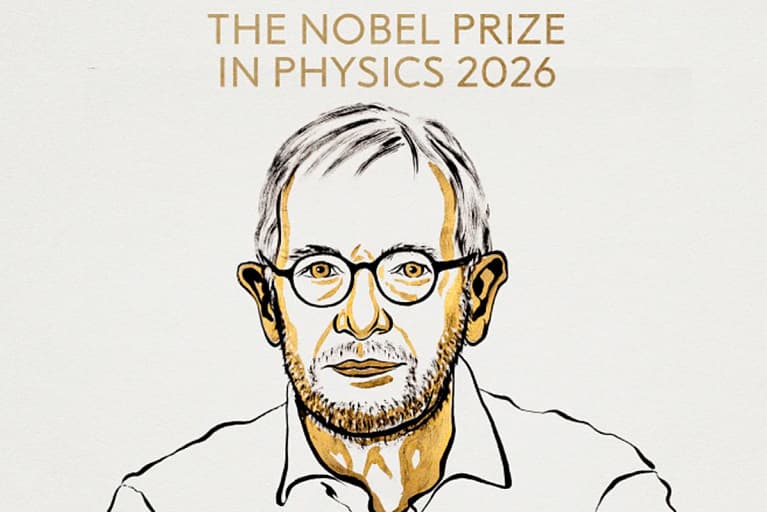
The Nobel Prize in Physics in 2026 was awarded to the Belgian-American astrophysicist, professor of the University of Wisconsin-Madison Francis Halzen, the correspondent of the agency “Minsk-Novosti”.
Photo: The Nobel Prize
The prize was awarded for the decisive contribution to the work of the IceCube neutrino observatory and the discovery of high-energy neutrinos of astrophysical origin.
Francis Halzen discovered that ice at the South Pole could be used to track particles known as neutrinos. His vision and scientific leadership played a fundamental role in the creation of the IceCube neutrino observatory.
Neutrinos are tiny subatomic particles that have almost no interaction with matter. Every second about 100 trillion of these particles fly through the human body. The Nobel laureate proposed using the ice of Antarctica as a giant neutrino detector. When they fly through the ice, they sometimes collide with its particles and create faint flashes of blue light – they are captured by installed optical modules. IceCube records more than 100,000 neutrinos each year.
Because neutrinos do not interact with matter and freely pass through everything – the Earth and galaxies – they carry information from places where conventional telescopes can not see: light from there is often absorbed or does not reach. By registering these particles, scientists have a new way to look at the universe and study the most powerful processes in it – for example, what happens around supermassive black holes.
This nomination was the second in the program of the Nobel week – 2026. On Monday, the winners in physiology and medicine were named. Next, the turn will go to chemistry, literature, peace prizes and economic sciences.