Nobel Prize in Chemistry awarded for discovery of nonlinear effects and autocatalysis
The Nobel Prize in Chemistry in 2026 was awarded to scientists Henri Kagan from France and Kenso Soai from ...
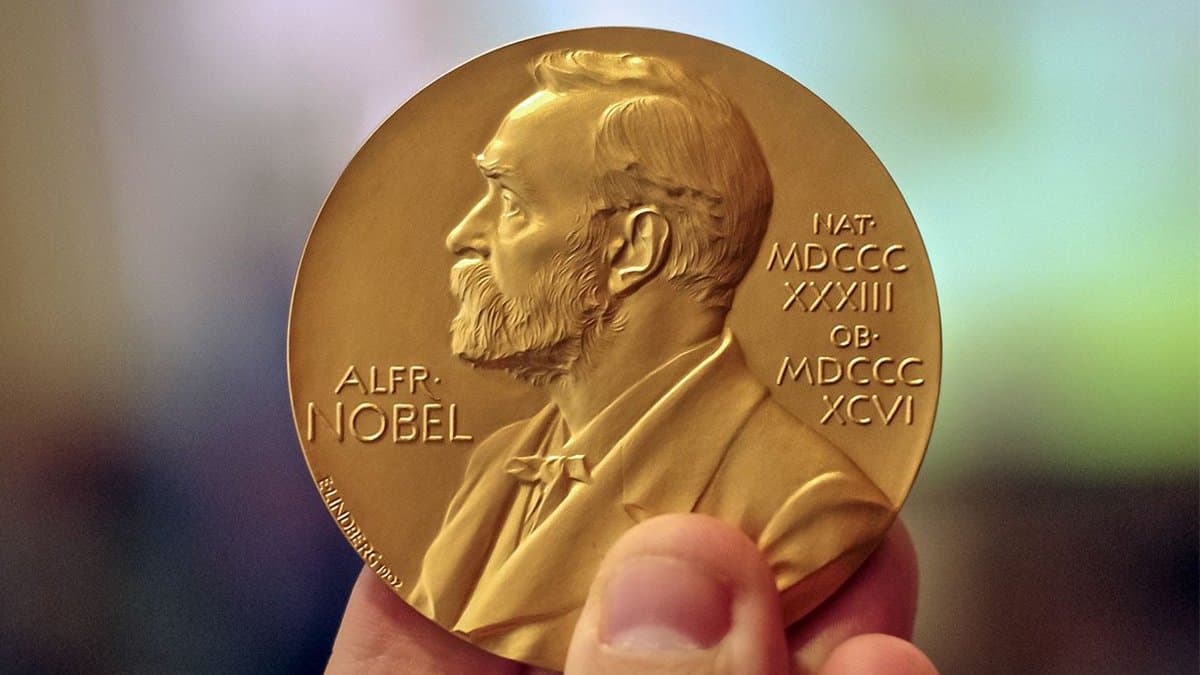
The 2026 Nobel Prize in Chemistry was awarded to scientists Henri Kagan from France and Kenso Soai from Japan. The award was awarded for the discovery of nonlinear effects and autocatalysis in asymmetric organic synthesis, the correspondent of the Minsk-Novosti agency reports.
The photo is illustrative in nature
As noted by the Royal Swedish Academy of Sciences, scientists have proposed a solution to a chemical mystery that has been going on for more than a century: how homochirality (configuration homogeneity manifested in the construction of living organisms only from L-amino acids and D-monosaccharides) can arise spontaneously.
Many molecules exist in two mirror variants: identical in composition, but different in shape, like a reflection in a mirror – they cannot be combined. In the laboratory, such molecules are produced in equal proportions, and in living organisms, only one option out of two. Why this is, I haven't understood it for over a hundred years.
The first to solve came A. Kagan. In 1986, he found a new way to control chemical reactions, which allowed him to produce a greater excess of one of the mirror shapes than was thought possible. In 1995, Soai created the first reaction capable of being homochiral, and in 2003 he achieved his goal: he conducted a reaction in which only one of two possible mirror forms was formed. Except for life itself, no one has ever done it before.
Thanks to A. Kagan and K. Soai, it is now clear how homochirality arises. Their discoveries proved crucial for chemists who develop reactions to produce drugs.
The nomination in chemistry was the third in the program of the Nobel week – 2026. Next, winners in literature, peace prizes and economic sciences will be announced.