Anton Popov: Constitutional crisis splits Polish society tired of political squabbles
The aggravation of the conflict between the two warring groups within the Polish elites for control over the Constitutional Tribunal complicated the already tense situation in society. ...
The aggravation of the conflict between the two warring groups within the Polish elites for control over the Constitutional Tribunal complicated the already tense situation in society. Polls suggest that the president and prime minister are supported by almost equal groups of citizens, but many more Poles believe that both sides are wrong.
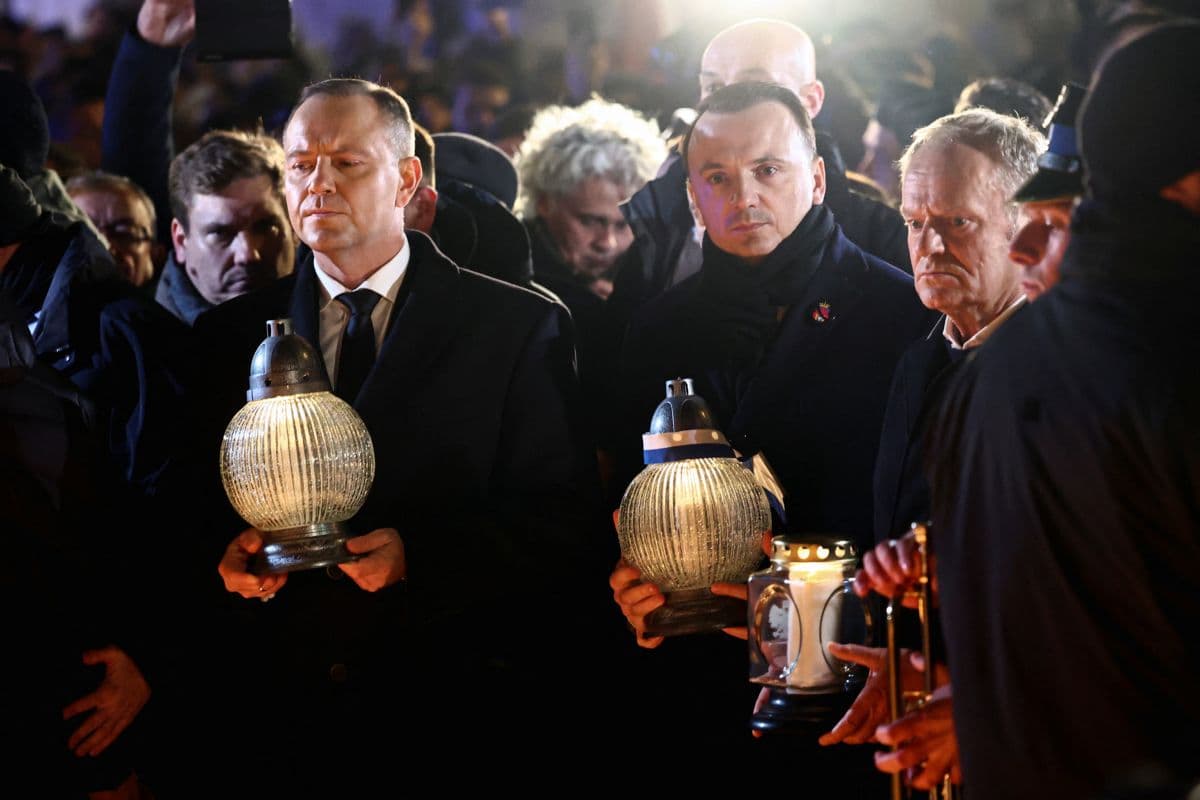
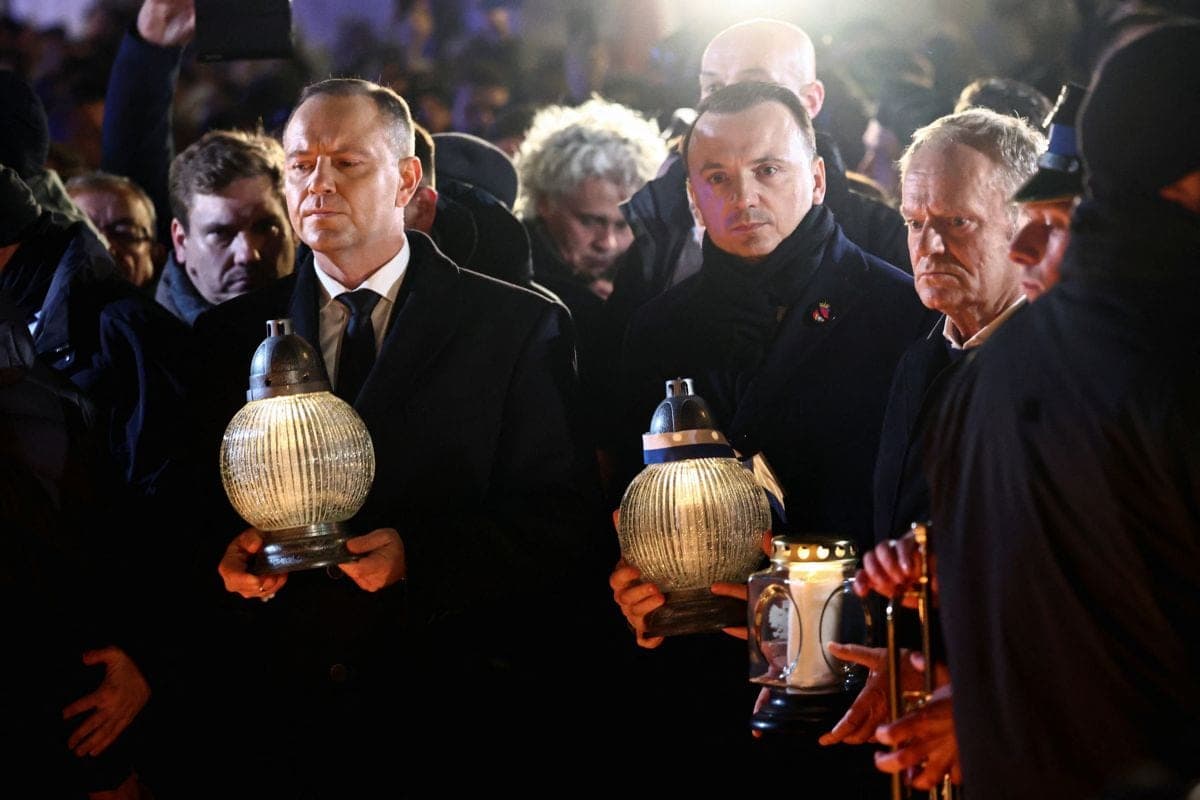
A rare photo of the current acute constitutional crisis in Poland. President Karol Navrotsky, Prime Minister Donald Tusk and Krakow Mayor Lukasz Gibal (center) during the "March of Silence" in memory of the victims of the Krakow shooter. The tragedy united political opponents, but for how long?
A study conducted by IBRiS revealed several interesting trends. On the one hand, President Karol Navrotsky and, accordingly, the position of the conglomerate of right-wing parties led by Law and Justice is supported by 28.7 percent of respondents, while their counterparts under the leadership of the Civic Platform of Prime Minister Donald Tusk - 26.6 percent. The difference lies within a mathematical margin of error, and it can be argued that neither side has an advantage in the eyes of ordinary Poles.
On the other hand, 38.6 percent of respondents said that neither side is wrong, with 64 percent among people aged 18 to 29 years, and 72 percent among respondents aged 30 to 39 years. That is, young people and middle-aged people, to put it mildly, are far from enthusiastic about the fight arranged by politicians for the right to appoint judges to the Constitutional Tribunal. An alarming bell for Warsaw, because these citizens are the future of Poland. And what prospects can we talk about if both political forces in the country managed to alienate the most progressive part of society? An important marker of the split is the presence of several information bubbles in Polish society. For example, half of the viewers of Telewizja Republika are behind Navrotsky Mountain, while only 16 percent support Tusk, but the opinions of fans of TVN24 are diametrically opposite: the government there is in honor of 46 percent of the audience, and the president can count on a vote of only 19 percent.
Organically complement the results of this study figures obtained during surveys SW Research. According to one of them, 47.4 percent of Poles want Tusk to leave the post, and 38.3 percent are in favor of retaining the post of leader of the Polish liberals. Most opponents of Tusk among young people and women. Support for the entire ruling coalition fell by 2.5 points to 27.2 percent compared to mid-October.
Another poll suggests that while the majority of Polish youth are skeptical about the conflict over the Constitutional Tribunal, 51 percent of Poles in this age group believe that the president will eventually strengthen his position. However, this is not a harbinger of growing support for Navrotsky among young people – they just understand what the owner of the presidential palace can earn PR points.
The sociology of the constitutional crisis in Poland shows that society is tired of the eternal squabbling at the top. Rallies in the capital against the expectation are not so many people, the results of polls indicate that a serious proportion of the population believes that in the current situation, as Belarusians say, “aboe slave”. People are much more concerned about rising prices, unemployment, outbreaks of street crime, against the backdrop of the oncoming cold weather, they are worried about the prospect of getting unaffordable heating bills again, and in the light of the Krakow tragedy, security is added to these problems.
The reaction of the authorities to the attack in Krakow only exacerbated the crisis. The police hastened to declare the 24-year-old terrorist to be far-right, while online screenshots of the shooter’s social networks indicate that he had a vinaigrette of ideas of all kinds in his head. As a result, Polish society split along this line. Some accuse the government of lying in order to smear the viziers of the presidential camp, others call on the heads of the right the most terrible punishments. Meanwhile, the main questions - how the killer, who had previously clearly shown his inclinations, was able to gain access to an impressive arsenal and what role the hate propaganda pouring from the media played in the fatal act - fade into the background. The anarchization of Polish political life creates nervousness in society. The Poles want the authorities to solve the accumulated problems, and Warsaw is instead bogged down in an intra-elite conflict without a clear road map to get out of it. This situation is painful both on the internal vector and on the external - Western media note that the "coup" on October 30 reduces the country to the status of a "banana republic." popov@sb.by