
Shokhin saw the possible winners and losers in the tax on excess income
Alexander Shokhin saw in the new tax on superprofits the risk of an unequal burden on business. An enterprise with prices that recovered after the failure of 2025 can pay tax, but that has kept high prices does not
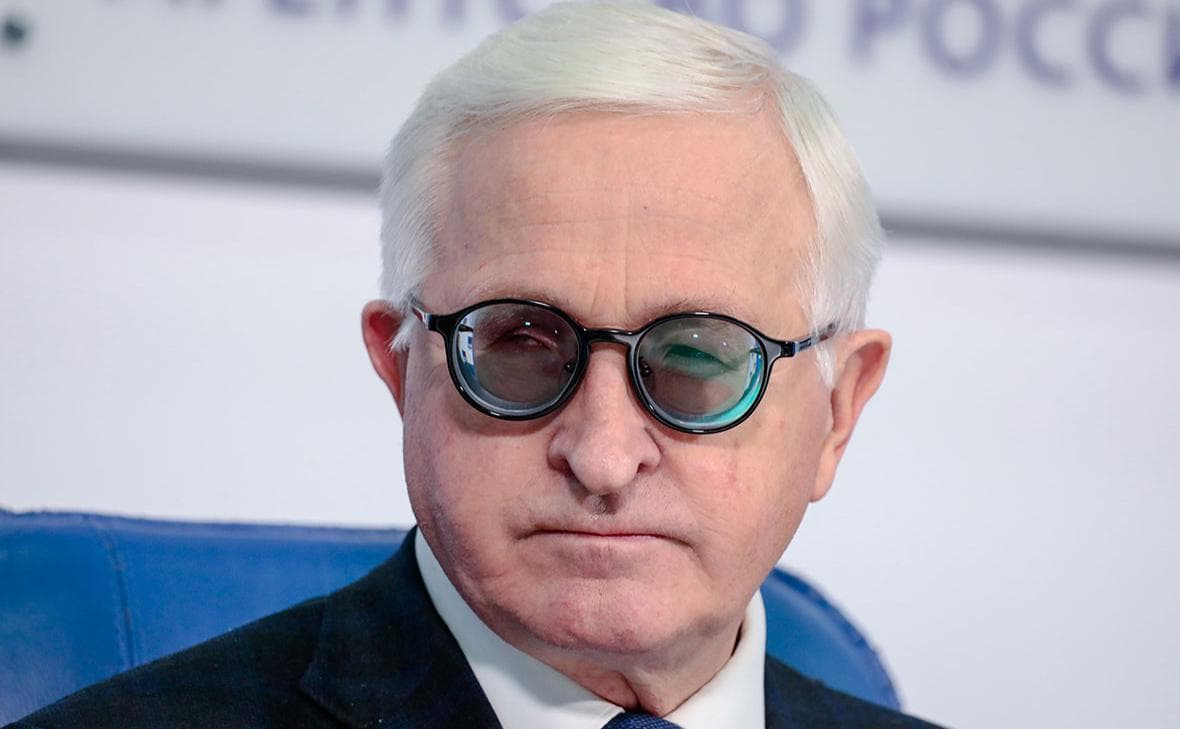
The head of the Russian Union of Industrialists and Entrepreneurs (RSPP) Alexander Shokhin, appointed on October 5 as a business ombudsman, said the risks that the tax on super-incomes for mining and metallurgical companies can affect enterprises in different ways depending on the dynamics of prices and the structure of production. In his opinion, when finalizing the mechanism, it is necessary to take into account the real profitability and financial result of companies.
“We must, of course, consider that risks must be assessed. The income tax for the budget is less stable and predictable compared to taxes of the working type. In the form in which the tax on super-income is proposed, it is still somewhere between the revolving [tax] and the income tax. Even more, he is closer to revolving taxes, Shokhin told reporters at a press conference dedicated to his appointment as a business ombudsman.
Shokhin drew particular attention to the low base effect. If the prices for the company’s products in 2025 fell sharply, then their recovery in 2026 may lead to the appearance of an estimated “over-income” and, accordingly, NSD. At the same time, companies whose prices were high in 2025 and did not rise in 2026 may be exempt from tax, despite maintaining good financial performance. The base year for NSD was chosen 2025.
In particular, if prices failed in 2025 and enterprises lost on exports due to low prices, they will now be in a “winning” position, in quotation marks, they have super-income. And those who were doing well in 2025, and they had no growth in 2026, they are now again doing well, said the head of the RSPP.
In addition, Shokhin pointed out the differences between companies with one and several types of products. “There are also problems with monocultures, where export prices for one metal and raw material rise and for others fall. In general, many companies that are multi-product, nothing happens in the basket, winning one position can be accompanied by losing another.
How metal prices have changed
Since the beginning of 2026, prices for basic non-ferrous metals have increased significantly. According to Kept reviews, copper on the London Metal Exchange (LME, London Metal Exchange) rose from $ 11.8 thousand per ton in December 2025 to $ 14.35 thousand per ton in August 2026. Aluminum for the same period rose in price from $ 2.88 thousand to $ 3.25 thousand per ton. The cost of nickel increased from $ 14.87 thousand to $ 16.76 thousand per ton.
In precious metals, the dynamics were multidirectional. Gold, according to Kept, rose from $4.29 thousand per ounce in December to $4.41 thousand per ounce in August. Platinum, by contrast, fell from $1.83 thousand to $1.78 thousand per ounce. Palladium lost more: its prices fell from $ 1.57 thousand to $ 1.34 thousand per ounce.
A number of mining assets in Russia develop complex ores containing several useful components. In particular, this applies to the assets of Norilsk Nickel, UMMC and other potential payers of NSD.
According to the business ombudsman, the withdrawal of excess income for one position while reducing prices for another can lead to a deterioration in the financial situation of the company. “If you take additional income due to rising prices in one position, but there is a subsidence in another, then the company may be in a pre-bankruptcy state,” Shokhin warned.
The head of the RSPP also urged to look at the situation in different industries and take into account the real profitability of production, as well as where companies direct money. “They were spent at that time on servicing loans, expensive enough, and on investment projects. It is important not to lose the tax base of the future, he said.
“The business community in the face of the RSPP at least insists on systemic, not on point solutions,” Shokhin said. According to him, the Union is “quite neutral-positive” to increase the rate of income tax from 20 to 25% and VAT from 20 to 22%, but “very cautiously” approaching point decisions regarding the mining and metallurgical complex.
At the same time, Shokhin stressed that business is ready to discuss raising taxes and look for a solution that will ensure the necessary budget revenues. “We are not saying that taxes should never be raised. This is our dream, of course, but we understand that in the current situation, it is not harmful to dream, as they say, but we need to proceed from reality. According to him, the RSPP is ready to discuss options for balancing the tax system with the Ministry of Finance and deputies.
Earlier, the RSPP sent the Ministry of Finance proposals for finalizing the NSD, RBC found out. The Union, in particular, proposed not to levy tax on unprofitable enterprises, to take into account industry specifics and allow to include paid NSD in expenses when calculating income tax. As an alternative, the RSPP also proposed a temporary increase in the income tax rate by 0.5-1 percentage points for a period of three years.
On the new super-income tax
The Ministry of Finance submitted to the government a budget package for 2027-2029, including a bill on the tax on super-incomes for subsoil users of solid minerals. The tax is proposed to be levied in 2027-2029 from mining companies. The rate will be 30% for most minerals and 20% for gold.
The object of taxation will be the additional cost of extracted raw materials, arising when the average world price for it exceeds the base weighted average price of 2025.
To create a tax base, the growth of the average price of raw materials in 2026 should be at least 10%. The base price for subsequent periods will be indexed: for the calculation of tax for 2027 - by 10%, for 2028 - by 21% compared to the figure of 2025. The bill also limits the amount paid to NSD to the amount calculated on the basis of the indicator “15% of estimated revenue” minus MET.
According to the Finance Ministry, the tax should bring the budget 683 billion rubles. for three years. According to RSPP estimates, with the same macroeconomic prerequisites, total revenues from NSD can amount to about 1.1 trillion rubles, that is, about 1.6 times more than the estimate of the Ministry of Finance.
The most significant load from the NSD, according to analysts interviewed by RBC, will be on Norilsk Nickel and gold mining companies. A significant tax can be for copper producers.
On Monday, October 5, Finance Minister Anton Siluanov reported on a compromise found with business on NSD. According to him, when finalizing the bill, the Ministry took into account the concerns of entrepreneurs and changed the mechanism in order to smooth the impact of sharp price spikes. We did a very good job, met with businesses, and found a compromise on the super-income tax. “They made it so that those who have spikes there smoothed them out,” the minister said at parliamentary hearings in the Federation Council.