October 25 is a landmark date in the history of Belarusian cinema: 90 years would have been Viktor Turov
Victor Turov has long received all his epithets - an outstanding, innovator, one of the founders of modern Belarusian cinema. Therefore, in ...
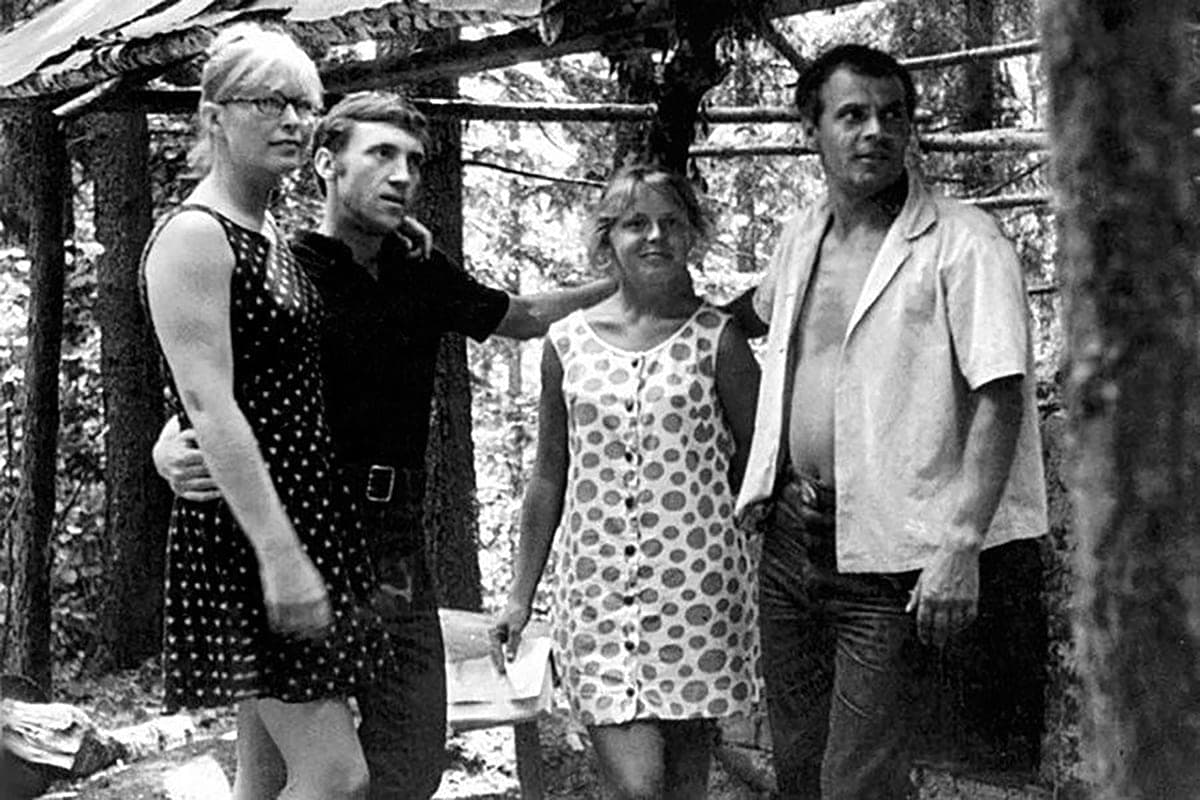
Victor Turov has long received all his epithets - an outstanding, innovator, one of the founders of modern Belarusian cinema. Therefore, in this material we will not be too sophisticated in compliments. Just look at an old black and white picture, which captures well-known people. They are so familiar that over the years many have become relatives.
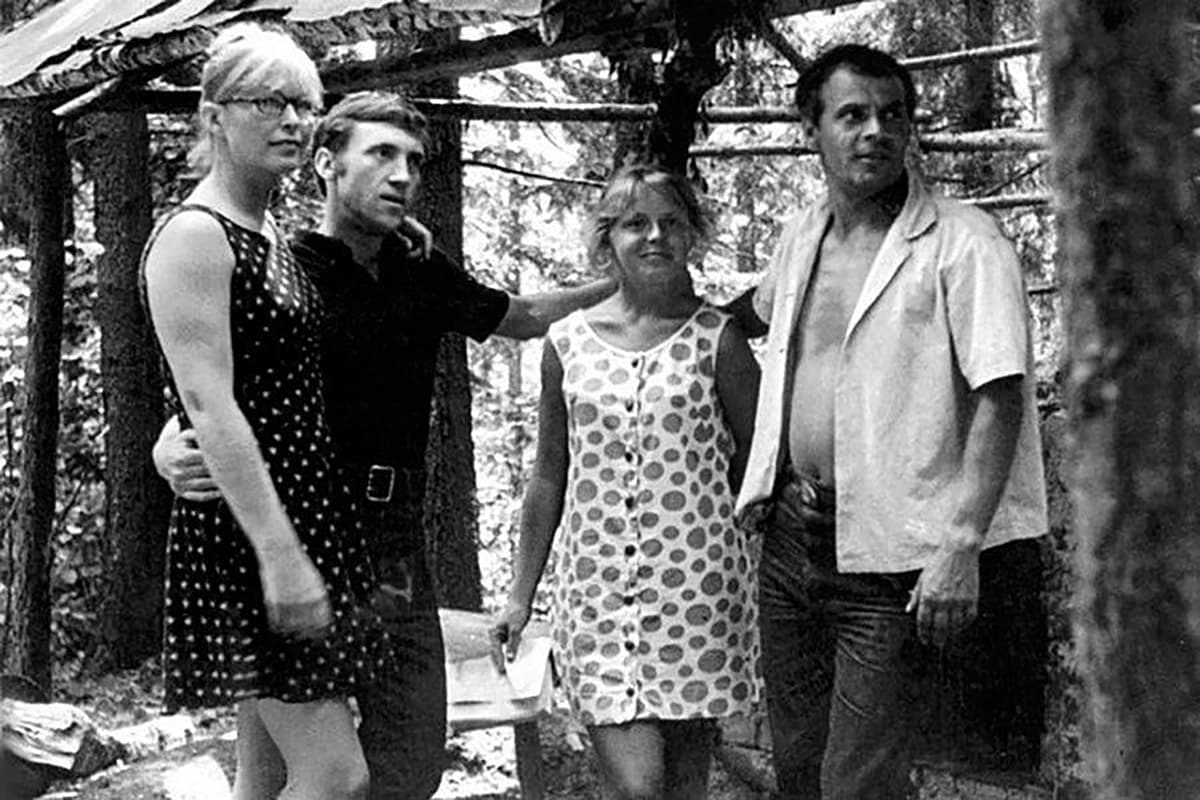
On the right in a loosely unbuttoned shirt - Victor Turov. In the frame he is only 32, and eight years ago he graduated from the directorial department of VGIK. Started Turov with traditional documentaries, and in the spring of 1965 he “shot” with a powerful, bright debut – “Through the Cemetery”, an adaptation of the novel by Pavel Nilin. It was followed by the equally strong work “I come from childhood” scripted by Gennady Shpalikov (December 1966).
And then began a real epic with the dilogy “War under the roofs” and “Sons go into battle” according to the script by Ales Adamovich. These were the first films of Turov, which experienced the close attention of censorship and eventually added a lot of gray hair to the director. But, of course, in the process of filming there were many happy, inspired moments, moments of pure creativity. And moments of human communication, one of them was captured by the photographer. Turov is clearly funny, maybe someone said something funny behind the scenes
To the left of the director is an aspiring, still young actress Svetlana Sukhovey. So far, she, a 16-year-old native of Mozyr, has only two roles behind her shoulders: Dunyasha in Baby Kingdom and Zworykin’s sister in Director. Lena in “Sons go into battle” will be the third role of the actress. VGIK Sukhovei will graduate in 1973. In 1989, she headed the Guild of Screen Actors of Belarus, ten years later she became an honored artist. And even to the left - probably the most star couple not only of Soviet cinema, but of all Soviet art of the second half of the century - Marina Vladi and Vladimir Vysotsky. Happy, in love, young: both are only 31 years old.
The most “star” in this company, of course, was Marina Vladi. A native of France, the daughter of Russian immigrants, she made her film debut in 1954 and managed to star with such stars as Marcello Mastroianni, Jean Gabin, Jean Mare, Hugo Tognazzi. Marina herself the status of a world-famous actress brought the Swedish-French film of 1956 “Witchcraft”, and at the Cannes Film Festival – 1963 she received the prize for Best Actress.
In the clip of Vladimir Vysotsky, too, there were a lot of films, but really popular he made released in December 1966, “I come from childhood” Viktor Turov and “Vertical” Stanislav Govorukhin and Boris Durov (July 1967). In both films, Vysotsky's songs sounded, in both he played as an actor (in "Vertical" - the main role). In Moscow theatrical circles, the name of Vysotsky was well known to all fans of the Taganka Theatre, his first solo concerts as an author-performer have already been held. But so far, these were only hints at the future “people’s” status, at a time when the name “Vysotsky” will open any doors, when every heart will respond to it. In the meantime, the official ideology perceived the actor and the bard in two ways: it did not prohibit, but did not approve. June 9, 1968 in the newspaper “Soviet Russia” appeared a large material “What sings Vysotsky”, where it was noted that in the songs of Vladimir Semenovich “under the guise of art presented philistine, vulgarity, immorality.” Vysotsky sings in the name and in the name of alcoholics, finesmiths, criminals, vicious and inferior people. It was a “fat” hint: tie up, do what you need, and not what your soul wants
But by that time, Marina had already appeared in his life, and he did not care. She came to the Moscow International Film Festival in 1967 and came with her children. Vysotsky was also unfree at the time. And the spark didn't slip right away. The French actress was impressed by Vysotsky’s play on Taganka in the role of Blouse, but for the first time she looked at a new acquaintance with other eyes only when he picked up a guitar: “I saw and heard only him, miraculously instantly transformed from a simple guy into an extraordinary creator.” The main problem of the couple was the borders: getting from the USSR to France in the late 1960s was no easier than flying to Mars. In 1968, Marina decided to join the Communist Party of France: “This short-term and symbolic membership of the party will give my requests weight.”.
But in the picture that we are now looking at, Vysotsky and Vladi are not yet married - they will register their marriage only in December 1970. In the photo, the hot August of 1969, a film set on Novogrudok, a partisan camp. The work on “Sons go into battle” in the midst of... With Turov Vysotsky by that time already connected one film – the above-mentioned “I come from childhood”, in which the role of a tanker was originally to play Vladimir Zamansky or Alexei Petrenko. But the cameraman Alexander Knyazhinsky offered to try the actor with Taganka - and did not lose. Then followed the collaboration in “War under the roofs” and, finally, “Sons go into battle”, for which Vysotsky wrote several songs: “He did not return from the battle”, “Song about the earth”, “In the dark” and the same name with the film. It was a time when films about the war were heard in every soul, when they were made by people who remembered the Great Patriotic War not by someone’s stories and not by “lessons of courage” – by their own experience. “The war was my enemy – a personal enemy,” recalled Yuri Vizbor, whose childhood fell on the 1940s, as did Vysotsky and Turov. That's why those films were so true, and that's why the director fought so desperately for every scene that censorship tried to cut out of his creation. For him, it was not just a movie, it was the truth that he wanted to convey to the viewer, already with a head gone into peaceful life, forgetting something, and simply did not want to remember something, because “well, as much as possible.” Turov and Vysotsky as no one understood: you need to remember. Because the ashes of Khatyn pounded into their hearts every day.
And how Vysotsky and Marina appeared on the set of “Sons go into battle”, recalled Viktor Turov: “It happened strangely, unexpectedly, accidentally.” In the area of Novogrudok I shot the picture “Sons go into battle” by Ales Adamovich. Somehow, apparently, through the film studio, Volodya phoned me at the hotel and blurted out:
- Vit, I would like to come to you with Marina Vladi.
By that time, I knew that Volodya was already in love with the famous “sorcerer”, that I had dedicated several songs to her, but I could never imagine that fate would bring them so close and for a relatively long time. In the meantime, a call
- I'd like to come... Show Marina your Belarus.
We must pay tribute to Voloda: he really sincerely loved Belarus, visited here more than once and even at that time called it a “country”. I said
- What question? Of course you should come. When?
- Tomorrow!
I was not surprised – it was in Volody’s character.”.
And after all, they came, and with pleasure walked around the lake Svityaz, where they ... almost beat the rest! ... The fact is that among the local public instantly spread the news that movie superstars will come from Moscow. “And when they appeared in front of the crowd during the walk, the public’s disappointment was incredible! Some amazingly simple woman in some antediluvian handkerchief, some strange man in a cap, short height, not more than seventy meters, thin long legs, narrow pelvis, slightly sloping shoulders, lengthening the figure. What a gray-haired lieutenant Brusentsov from “Two Comrades Served”! In short, an ordinary normal person... The crowd surrounded them:
Do you think that if we are provincials, we can be mocked? What do you say you are legendary actors
And the partisan camp, where “our” photograph was taken, was built near Novogrudok, in the village of Litovka. Screenwriter Ales Adamovich recalled: “Vysotsky stands right there, talks, laughs – in youthful light, friendly, voice unexpectedly quiet, listens more than he speaks ...” And at this time, the “guerrilla” forest thundered with Vysotsky’s songs. Not only do you hear them, but how do you see them: with swollen - about to break - veins on the neck, red eyes with strain... He brought them to us ready, the songs for the first and second films - "Storks", "We had a quiet game yesterday the day before yesterday ...", "In the dark", "He did not return from battle", "Song about the Earth", "Sons go into battle" - or maybe he wrote immediately on the spot? I still can't say for sure..
And again the word to Viktor Turov: It so happened that both my paintings on Adamovich’s dilogy “Partisans”, for which Volodya wrote songs, were difficult for me. They've been on shelves for more than two years, they've been cut, and they don't exist as they originally intended. By the way, we shot some scenes in the paintings in relation to specific Vysotsky songs. Some, perhaps stylized, not so “documentary”, more graphically, plastically. They tried to convincingly fall under the decision of a particular scene. And yet the time came when my paintings, with alterations, with cuts, accepted
And today we are looking at a photo in which everyone is young, beautiful, abundantly talented, happy. Summer of 1969, Novogrudok village of Lithuania. And no one yet knows how many are left for his lifetime. The songs of Vladimir Vysotsky, written for Belarusian films of the 1960s, are among the best in his legacy. Now listen to “Storks”, “Song of a new time”, “He did not return from battle”. There is no feeling that they are made to order, for a specific film.