"Lyudk, Ludk!" How the Smolensk Chamber Theatre turned folk classics into vulgar cabbage
In the Smolensk Chamber Theater there are premiere screenings of the play “Love and Pigeons”
In the Smolensk Chamber Theater there are premiere screenings of the play “Love and Pigeons”. Perhaps there is no person in Russia who would not know by heart the scene from the film by Vladimir Menshov. “Yoshkin’s cat”, “Lyudk and Lyudk!” – these phrases have long become part of our cultural code.
To stage a play by Vladimir Gurkin after the triumph of the painting in 1984 is a task with an asterisk. The theater here finds itself in a hopeless situation: those who have not seen the film are unlikely to go to the play by name, and those who have seen will inevitably compare. And, alas, this comparison turned out to be devastating for the theater.
I sincerely love the productions of our chamber theater, but this time I have to state: the performance is disappointing from the first minutes. From a subtle, touching and popularly wise story managed to make a flat, vulgar and completely inexpressive picture.
Directorial decisions cause a rush. There was a strong feeling that the troupe did not set itself the task of rethinking the material or giving the characters a new breath. Instead, scene after scene, the actors either lazily copied the tricks from the film (everyone’s favorite quadrille was performed as if the actors were serving duty), or vulgarized what the original was filled with tenderness.
The apogee of the director’s tastelessness was the scene of the reconciliation of Vasily and Hope. Remember the shrill moment at the old ferry? The theater decided it was too boring. In the Smolensk version, Vasily picture falls on her partner, and then she jumps hard on him from above. If the goal was a beautiful intimate scene, it was a failure. The viewer at that moment wanted to say only one thing: “Why?”
Musical design is the only thing to which there are no questions, it is really good. But the scenery just doesn't work.
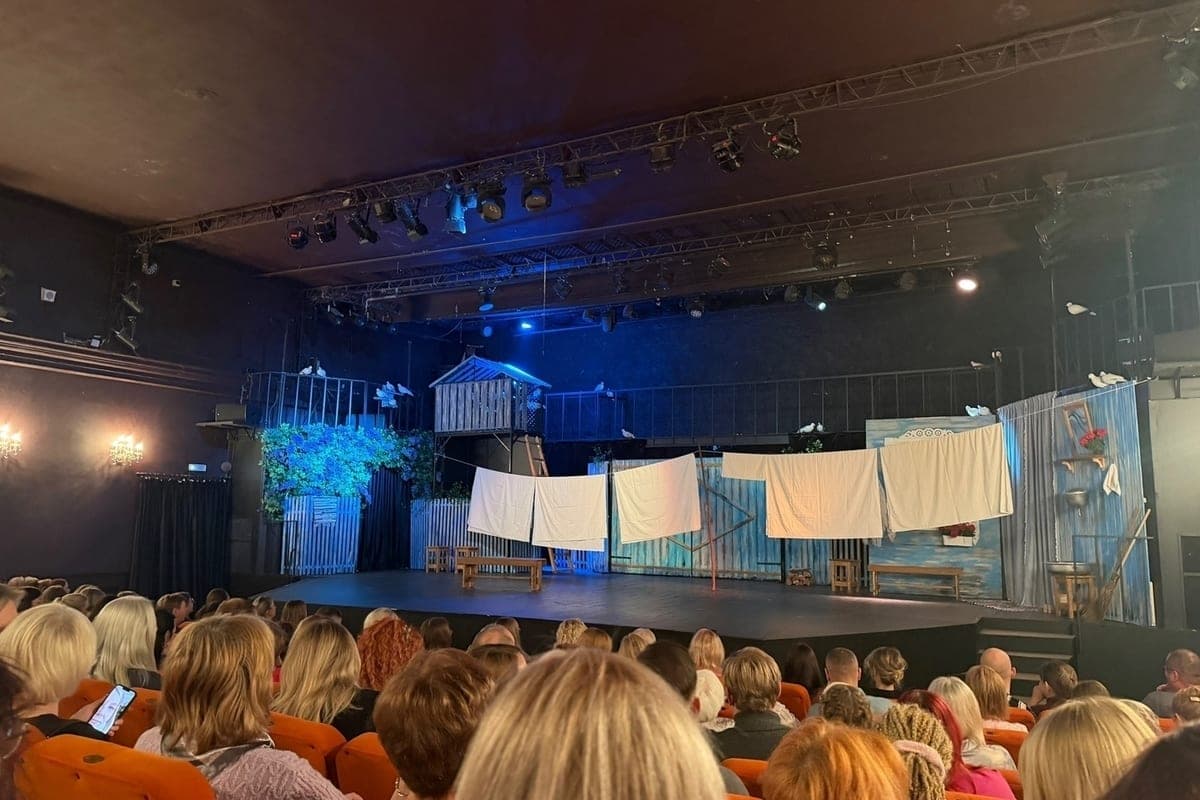
On the left side of the stage, the whole performance is orphaned hanging either lilac (which blooms strictly in May in the village courtyard), or grapes. At the same time, the plot takes six months.
The sea that Vasily dreams of, we never saw. No sound of seagulls, no hint of a resort atmosphere. The bar, where the hero was so eager, remained only in our memories of the film. There is nothing to say about Raisa Zakharovna.
Against the background of this artistic helplessness, the only strong link was Nadezhda Trapeznikova, who played Baba Shura. She drew all the attention from the inexpressive main actors. It had everything: beauty, humor, and real tragedy, and plasticity, and a deep understanding of the character.
It seemed that the director deliberately restrained her, fearing that the actress would “steal” the play. Perhaps Sanyushka was the only real person on the stage.
Theatre begins with...
What a cherry on this inedible cake. If the theater begins with a hanger, as Stanislavsky bequeathed, then the Chamber Theater has a deplorable situation. Wardrobes are rude, loudly discussing the audience right in the lobby, and polite requests to behave decently snap as if you came to their house for salt without an invitation. This is the first time I've seen it in theater.
What can we say in the end? The attempt failed. Thanks for trying, of course, but that's it. I'm going to watch Menshov's movie. At least the sea is real, and love is sincere.