Natalia Arinbasarova
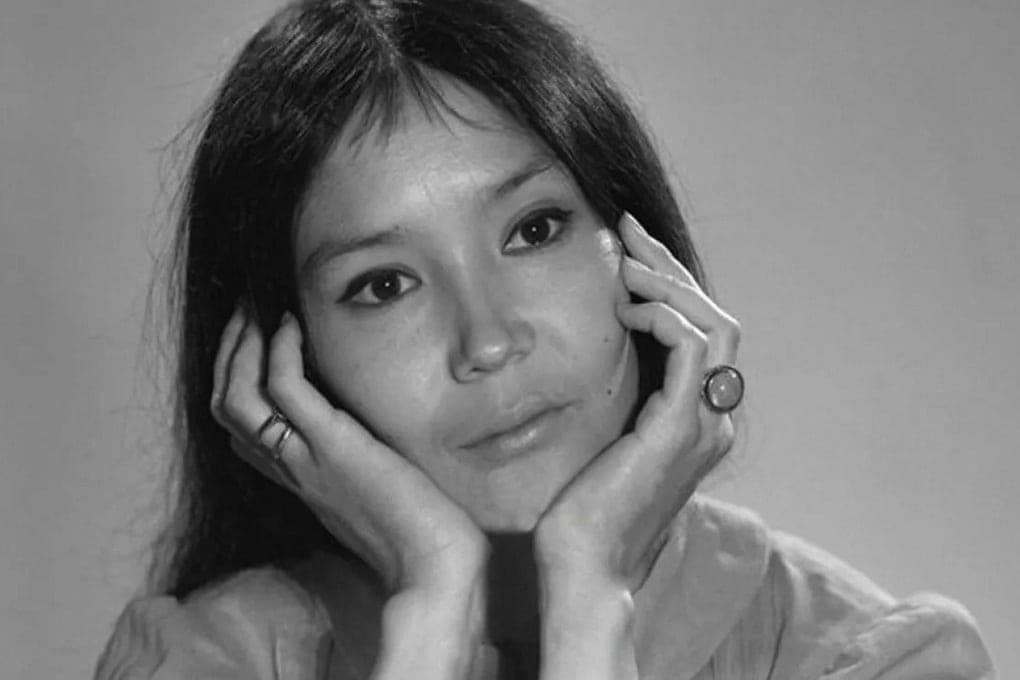
On September 24, the famous film actress, winner of the Volpi Cup, winner of the USSR State Prize Natalia Arinbasarova turned 80 years old
On creativity
- Natalia Utevlevna, how did you celebrate your 80th anniversary? How's your life going?
- This important date, 80 years, I celebrated at home, in our country estate. It was cordial, delicious and fun. In the yard we roasted kebabs, my Uzbek friends made pilaf, I baked pies. My relatives and close friends gathered, about 20 people. Congratulations came from officials, from the Union of Cinematographers of the Russian Federation, only from Kazakhstan neither from the Union of Cinematographers nor from the Ministry of Culture there were no telegrams.
It made me a little sad, it made me sad. Because I was recently invited to the Nomad Games in Kyrgyzstan, where I was simply carried in my arms, greeted with gifts, shouted: Our Altynai! Our Jamila! I was invited by Assol Moldokmatova, a very popular woman in the republic, a media person, a producer, a once popular TV presenter. She and I were at the Speaker of Parliament, in the meeting room there were photos of Chingiz Torekulovich, as well as my photo from the filming of Jamili. It was announced that I would be awarded the TURKSA medal. It was important for me to visit the place where my work began on the eve of the anniversary.
- Are you currently in the creative process?
I think there will be more roles, after all, I have two directors in my family. I am no longer applying for large roles, since I may not have enough strength, I am already afraid to go to the film expedition, so I refused offers several times.
I've been very busy the last week. VGIK hosted the International Festival of Student Films of the CIS countries "Ascent". I was invited to the jury, we looked at 50 works, discussed them and made our decision. Among them are very kind short films about family values, the relationship between parents and children
There were many Kazakh films from different film schools, there are very good ones. I ran to VGIK in the morning, like to study. The jury consisted of Valery Akhadov, my dear friend from Almaty Sergey Azimov, Mikhail Agranovich, Elena Yaremenko. It was especially pleasant for me that at the closing I was awarded a prize from VGIK for contribution to world cinema. Suddenly...
Until recently, I was on the jury of the East-West film festival in Orenburg, there were 10 films in the competition. As soon as I got off the plane, I immediately felt the native steppe air. Apparently, the gene memory worked, because my father was born in Aktobe region, it is 200 kilometers from Orenburg. The city is beautiful, with wide streets, with preserved buildings of the XIX century. We visited galleries and museums. I was amazed by the jasper room in the museum, it's amazingly beautiful! There is also a collection of Sarmat gold, products more than 2.5 thousand years old. And I was invited to a cruise on the Volga ship, where I had a creative meeting with the audience. During the cruise we also visited several cities.
In addition to film works, I have a concert that was invented by Vera Tariverdiyeva, the widow of composer Mikael Tariverdiyev. They were friends with Genghis Torekulovich. During the concert, I read fragments of Aitmatov’s prose, Tariverdiev’s organ music sounds. The premiere was held in Astana, concerts were also held in Japan, Kaliningrad. It's on YouTube.
Studying in Moscow
- When you, as a young ballerina, went to study in Moscow, did you feel that you would not return to Almaty?
By the will of fate I was born in Moscow. My father was an officer, a front-line soldier, he defended Moscow, Leningrad, fought near Rzhev, on the Sinyav Heights. During the war, he was enrolled in the Frunze Academy, as competent officers were needed. They met my mother during the war, and at the same time my two older brothers were born. I was born in 1946 in Moscow. In 1948, he and his family were sent to the Turkestan district, for two or three months we lived in different cities until he was sent to Turkmenistan. I spent my early childhood there. We played the soldiers' parade ground, mostly in war.
My mother always wanted to return to Moscow, but it was only in 1958. Dad was transferred to Alma-Ata, I entered the choreographic school, then we were sent to the school
study at the Moscow Academy of Classical Dance at the Bolshoi Theatre. We lived in a boarding school on full state support, the republic paid for us.
In our group were Ramazan Bapov, Raushan Bayseitova, Zarema Kucherbayeva and others, we participated in the performances of the Bolshoi Theatre. With Dusenbek Nakipov, we were prepared as a dance couple. The graduation number was the pas de des from the ballet "Fruitful precaution." Then Dusenbeck became a famous poet and writer.
I am so glad that I had such a high school. All my life, she has helped me to withstand heavy loads. My parents, three brothers and sisters stayed in Almaty, so I visited them. I’ve also been on Kazakhfilm every year. Almaty is my favorite city, Kazakhstan is my country, homeland.
People often ask me what I feel like. (The mother of the actress Maria Konstantinovna Kochenevskaya is Polish.) - Author's note. I feel like an Eastern woman, Asian, Kazakh. I really like the Kazakhs, they never wore a burqa, always had the right to vote in the family, the rod, dignity. And I always wanted to carry that within myself.
- You have an amazing biography. The debut role in the film brought fame, the prize of the Venice Film Festival Volpi Cup for best female role and the stamp in the passport of legal marriage. What was the most difficult part of this film? What moment do you most often think of when you think of it?
- It was very difficult, I couldn't do anything. Although in our ballet school acting was taught by the People's Artist of the Soviet Union Alexander Alexandrovich Klein. In the first study, he told me that I was very capable of dramatic art. I knew that my health would not withstand ballet loads, so I planned to enter a theater university in the future.
The filming of the film “The First Teacher”, directed by Andrei Sergeyevich Mikhalkov-Konchalovsky, took place high in the mountains, my heart was disturbed, I was swollen, and the director thought that I was eating something illegal, and scolded me. I wasn't even allowed to eat apples and tomatoes, just carrots. From the middle of filming, I already felt my heroine. I remember when they filmed the difficult scene of the wedding night, the director did not say anything to me, did not guide me. I played Altynai the way I felt.
Love
- You fell in love with the director?
Yeah. Andrei Sergeyevich is a very educated person. I was 17, he was 26. By then he had written several scripts, such as Andrey Rublev with Tarkovsky. He was 23 and Tarkovsky was 29. Imagine what a huge layer of Russian history and culture they had to study and raise. This includes the stories of icon painters, khans, princes. Andrey Sergeevich told me biblical stories, and in those days the Bible could not even have at home. Anyway, he educated me. We listened to music. Women love with their ears and men with their eyes. His personality became interesting to me.
The cameraman George Rerberg was from the famous Rerberg family, architects, his grandfather wrote the World History of Fine Arts. Production designer Mikhail Romadin was the son of a famous painter. Misha knew more about ballet than I did. I regretted that after filming we would separate and I would stop listening to these stories. But as soon as I was 18 years old, I was with Andron [Andrey Sergeyevich Mikhalkov-Konchalovsky]. We signed in Frunze in a small room of the local registry office.
- How was your acquaintance with Chingiz Aitmatov? How did he relate to the film adaptation of his works with your participation?
- It was very important to him who Altynai would play. He and the art board went to see my screen test. My mother and I were not allowed in this hall, we fidgeted on the street bench, worried. Then Andron came to us and said: “Well, Natalia, we approved you for the role of Altynai, but you need to lose weight, you can see your cheeks from the back.” Then he added, "Come on, I'll introduce you to Genghis Torekulovich." I saw a very beautiful tall man with luxurious hair. He looked at me as if he had penetrated my soul.
Chingiz Torekulovich followed the shooting, watched the material. When the Kyrgyz leadership did not accept the material, he went to Moscow to defend the film. First Secretary of the Communist Party of the Kyrgyz SSR Turdakun Usubaliyev did not accept him, he believed that the Kyrgyz people were shown incorrectly, although the people were filmed with a hidden camera. The chairman of the Goskino was his namesake Shershen Usubaliev. He liked the picture, he began to defend it, for which he paid his place, after which he was fired. In Moscow, the film was accepted, in 1966 we went to the Venice Film Festival. The film was received amazingly. First it was shown to the press, they wrote that it was red propaganda, and when the whole festival was shown, the hall exploded with applause. The picture was received so enthusiastically that Andrei Sergeyevich thought that she would be given the Golden Lion. But they gave the Volpi Cup for Best Actress, which was claimed by Jane Fonda, Ingrid Tulin, Julie Christie and me.
And Jamila was shot by Mosfilm, directed by Irina Ivanovna Poplavskaya, a very talented person. She was in love with Kyrgyzstan, filmed Manaschi, some ethnographic episodes in the film. Aitmatov liked him. The story “Jamil” is especially dear to him, he was not recognized for a long time. It was not until Louis Aragon translated it into French and wrote that it was the most beautiful love story that Chingiz Aitmatov was given the Lenin Prize. In the film, Aitmatov voiced the narrator (he reads the voiceover text on behalf of the adult Seit). If he didn't like the movie, he wouldn't have voiced it. The film was shot by the brilliant Kyrgyz cinematographer Kadyrzhan Kydyraliev, now everyone knows his son Hasan Kydyraliev, also a brilliant cinematographer. Jamila is one of my favorite heroines. If in the first picture I did not know anything and was a follower, then here I already worked on the role, studied at VGIK and worked more professionally.
Next to geniuses
- You've been surrounded by geniuses for years. Tell us about Sergey Gerasimov and Tamar Makarova.
- I think I have been incredibly lucky in life. First of all, I was born into a wonderful family. My parents had five children, raised us strictly, in the house reigned iron discipline, so that we all had time. There was an intention to finish school with a medal to go to study in Moscow. Then the ballet school, where I constantly saw great ballet artists, was the golden age of the Bolshoi Theatre. People’s Artists of the USSR came to our school, changed clothes in our locker rooms next to us, rehearsed next to us, sweated next to us. There is no star disease in ballet, in my opinion, there every day you need to prove your worth. The most important thing is work. Ulanova took our state exams, she gave me an A.
Before joining VGIK, I heard that Gerasimov is the greatest teacher, half of the Soviet filmmakers are pupils of Sergei Apollinarievich and Tamara Fedorovna. Getting to study with them was a great joy. They taught us not only our professions, but to be citizens of our country. We called for more performances and performances, because it is in the university that we can do whatever we want, and in film production we will only do what we are given. That's what happened in life. In student productions, I played Ophelia in Hamlet, Nastasia Filippovna in The Idiot, the Jewess in Brecht’s play The Jewish Wife. In the thesis performance "Red and Black" - Mrs. de Renal. When Sergey Apollinarievich decided to make the film “Red and Black”, he said to me: “Sorry, I can’t shoot you as Madame de Renal, because she is French.” They taught us good manners. Tamara Fedorovna told how to behave at the table, what devices are there, how to wear crinoline. She said that she and her husband, wherever they were, did not miss morning gymnastics to keep the whole day under control. Gerasimov once said, “I let you play everything except pornography and counter-revolution.” For each course, he made a film.
Our course was called the course of four Natashas: Belokhvostikova, Bondarchuk, Gvozdikova and me. There were eight girls in the course. For our course, he wrote a big script, "By the Lake." I remember how Tamara Fedorovna told me: "Sergei Apollinarievich wrote a role for you." Can you imagine how crazy I was? I stayed up all night. The next day I had to read the script, and from the first scenes I realized that the role of Lena Barmina was not for me. When it came to the scenes with the buryat Katya Olzoeva, who is also a ballerina, studying in Moscow, everything became clear. By the way, Sergey Apollinarievich came to us for rehearsals at the school, stared astonished when I began to throw legs, throw batmans. He is the only director in my life who has used my former profession as a ballerina.
Then Yermek Shinarbayev in the movie “Weak Heart” I played a former ballerina. For a long time we lived on Lake Baikal, it was hot, and the water temperature was seven degrees, but we bathed every day, and also found a place where a mountain river flows into the lake. It was five degrees, but we were swimming anyway. For two months we lived there: Valechka Telichkina, Vasily Shukshin, Natalia Belokhvostikova. Russian audiences know me for this small role.
Yermek Shinarbayev wanted my role to be characteristic, with humor. And the main happiness was when sometimes in the evenings he invited us to his large suite for dinner, which he cooked himself. Once in the woods I saw a stump overgrown with pits, dialed them into the hem and ran to the playground. Everyone rushed into the forest and collected buckets of three mushrooms. In the evening, I went to the director and offered to help clean them, but he did everything himself, saying: “I am myself, and you stand and watch.” At dinners, he read us poems, sang Cossack songs, treated us to sherry and told us about what Tamara Fedorovna was like in her youth. He said: The Russian land has never given birth to a more beautiful woman. But she was a terrible bully. We're walking down the street, suddenly she kicks the ass in front of the man. The man turns around and I have to fight him. Tamara claims that he looked at her in the wrong way. We quarrel with her, she takes one crew, I take another, and we don't talk.
Epochal film "Song of Manshuk"
- When the anniversaries of Majit Begalin are celebrated in Kazakhstan, they always talk about the film “The Song of Manshuk”, shot according to the script of Andrei Mikhalkov-Konchalovsky. They talk about a masterpiece, now they do not shoot about war.
- Artists in modern war films move, shoot like American actors. The Soviet soldiers moved differently, the people were different. Nikita Mikhalkov in his graduation film A Quiet Day at the End of the War very accurately portrayed the Russian soldier Nikonenko played. Balagur, stupid in life, but how he was in battle.
I studied at VGIK when Andrei Konchalovsky wrote the script “Songs about Manshuk”. He said that there are two Kazakhs - heroines of the Soviet Union. This is Aliya Moldagulova and Manshuk Mametova. He asked me who I wanted to play. I said I wanted to play a machine gunner more than a sniper. When I played Manshuk, I tried to make a collective image, to dedicate it to the entire generation of young guys who almost went to school to defend the Motherland. The film was shot by Gerasimov's student - front-line soldier, director Majit Sapargalievich Begalin, who lost his arm at the front. He knew Manshuk, fought near her. Majit Sapargalievich said that Mama Manshuk liked the picture, that I look like Manshuk. It's a shame we didn't get to know her.
When filming began, he wanted it to be real. I weighed 46 kilograms and my Maxim machine gun was 64. He had to be dragged uphill, unwrapped, and in addition there was patronage, uniforms. Physically, it was hard to withstand, to work in the smoke at the noise of explosions. I studied my machine gun, could assemble it, disassemble it, lubricate it, shoot it and other weapons. A pyrotechnic worked with me. I had to crawl platoonically. Begalin with one hand showed how to properly wrap the curtains so as not to rub his legs.
Filming took place in Belarus, where many war monuments, museums, tanks stand on pedestals. The feeling is that every centimeter of soldiers’ blood is drenched here, that people were burned alive here, that every fourth Belarusian died during the war. It all worked very hard on the inner feeling, on the creation of an image. In addition, my handbook was Fadeev’s Young Guard, which I read to find out what their strength was. When Manshuk's father was arrested, she was expelled from medical school. Her mother told her that she was not his own daughter, she was taken for upbringing. She can prove this and avoid the fate of the daughter of the enemy of the people, but the girl did not betray her adopted father. She said she would prove with her life that her father was a real communist. She died at the age of 22 defending the city of Nevel. This is my favorite role in my entire biography. I thought a lot about her and had to give it to the end. The partner was Nikita Mikhalkov, who played Lieutenant Yezhov.
- How did your front-line father react to "The Song of Manshuk"?
- My whole family went to the premiere at the Armand cinema. Relatives are always restrained in their assessments. Dad was a man of few words, he smiled, he was proud of me. In connection with this film, a live press conference was held in Moscow. Ten years later, when I received the State Prize for the film "Taste of Bread", I learned that I was nominated for it for the "Song of Manshuk", but the documents did not come from Almaty, and I was not even notified. It's always sad to think about it.
Became a stuntman at the age of 55
- In the summer, a retrospective of Satybaldy Narymbetov’s films took place, including the painting “Leyla’s Prayer”. What do you care about Katira's role in it?
- We met Satybalda in Moscow when he studied at the Higher Directorial and Script Courses at Danelia. He came to us at VGIK and home to visit. I did his work. I remember we showed Danelia one of our work, but he did not praise us, but criticized us. I thought I would have a friend who would film me. Nothing like that, he hasn't filmed me in 30 years. We were born in the Year of the Dog. He had a wonderful wife, Iztule, a fighter, she and I are from the same joose. At the Kinoshok Film Festival, he told me, ‘Listen, old woman, you’ve finally grown old, and now you’re my actress. I'm writing the script, and there's a role for you as Aunt Katira, Leila's aunt. She's a soldier, a Zakharushki truck driver. Likes to drink, sing, smoke. He wrote scene after scene and read it to me on the beach. I am very grateful to Narymbetov that he helped me, then an age actress, move from the roles of heroines to characteristic roles. It's very important to me.
I remember how my friend, director Leyla Aranysheva, after the premiere, said: “You just knocked me over with your aunt Katira.” No one expected me to play that role. I don't drive a car in my life, but I used to drive this truck, and at 55, I did the trick myself when a stalled car suddenly drove and dragged me down the steppe. At that moment I remembered the medieval execution, when a man was tied to a horse. We were waiting for the stuntman, he didn't come, and I offered to do it myself.
- In his film Mustafa Shokay, you played the mother of the main character played by Aziz Beishenaliev. Was it exciting to play with the son of his first partner on the set of Bolot Beishenaliev?
Aziz is charismatic, beautiful, tall, his eyes are deep. We had known each other before, and together we had a remembrance evening for Bolot Beishenaliev in Moscow. When he met, he rushed to meet me, hugged me like a son. And at the end of the evening he brought his son, who was nine months old, to the stage and asked me to hold him in his arms, to bless him. So we became friends.
- Tell us about your cooperation with the producer, the head of the film company "Tanaris" director Sergey Azimov.
- I love Sergei! He's a great storyteller. I graduated from VGIK in 1971, and in 1973 came to VGIK for the graduation performance of our Kazakh course. Then he came to me and introduced himself. Young, shy. I asked why he was Sergey. He replied, "Why are you Natasha?" Years later, he became an excellent director of Kazakhfilm, after which he created his film company Tanaris.
The film “Paradise for Mom” was shot by a wonderful Kyrgyz director Aktan Arym Kubat, the operator was Hasan Kydyraliev, the script was written by Iranian screenwriter, director Mohsen Mahmalbaf. It's a tough story. Living in Moscow, I see Central Asian migrant workers suffering. For some reason, the fate of these people always bothered me. Suddenly I am offered to play the mother of a guy who went to work in Russia and disappeared. She has a Russian daughter-in-law, played by Olga Landina, two grandchildren. To support the family, a young woman is engaged in prostitution. The father of the daughter-in-law is played by a wonderful actor Mikhail Zhigalov. It was like life. Actan struck me on the set of the funeral scene. The boys could not cry, he said something to them, said something, and then as he sobbed in his voice, his tears flowed. I saw it, screamed, wept, and the boys wept.
And the comedy "Jide, Unexpected Love" was filmed based on real events from the life of Sergei Asimov. I played a city old woman who came to the village to see her daughter, and there a local grandfather fell in love with her. He was played by Nurjuman Ikhtymbayev, and his friends - Gerard Depardieu and Bolat Kalymbetov. A bright, kind picture that gives old people hope for happiness. At the festival "Kinoshok" we received five prizes for it!
- You decorated the films of your children, detectives of your third husband Eldor Urazbayev. Tell me about him.
Eldor said of himself, “I’m not talented, I’m a craftsman.” I didn't think so. He is very professional and educated, a man of high culture, made interesting films "Look at both", "Inspector traffic police". But he didn't make any pictures specifically for me.
The Weiner brothers, based on the film “A Visit to the Minotaur”, told him: “Let’s rewrite the script so that Marina will be played by Natasha.” My character appears in one episode, but she gives a kind of seed to the whole film and tells the legend of the Minotaur, which lives in every person and devours him from the inside.
And in the Trans-Siberian Express I played Aizhan, originally it was a male role. Studio director Slambek Tauekel said, let’s rewrite this role, let there be a girl instead of a guy, and play her Arinbasarov. I was given the task that this image should reflect Chadyarov’s longing for his homeland, for love, for his wife. So I listened and I said, "OK, then make me a chiffon suit, and it'll give me a glittering and poetic look." It is important to me that everything is thought out. In the painting by Yermek Shinarbayev “Beauty in Mourning” I was given shoes on a flat sole, and I insisted that there be a heel.
Personally. n
Natalia Utevlevna, your marriages were official. Having star husbands, why didn't you change your maiden name?
- They were already famous, and I wanted to celebrate my father's name.
- One of the visits of Yegor Konchalovsky to Almaty took place on the eve of March 8. With him was Tolkalina's Love. I asked him what he usually gives his wife on March 8th. He replied that he did not like to give giant bouquets or perfumes, but could suddenly offer to fly to Paris or say: "Let's go buy you a fur coat." What memorable gifts did your children give you?
- They are generous, attentive, bring me gifts from abroad. Katya brings clothes. Three anniversaries in a row give me the most expensive phones at the time. They always remember me. My son is making full-length films and is currently writing the script. Daughter Ekaterina Dvigubskaya works on TV series, they often write a small role for me and say: “Mommy, you are a mascot for us.”.
- You have a very interesting life. Since birth, she is inextricably connected with the history and culture of the country, with iconic figures of the Soviet era and literally asks for a screen. Will your book “Moon Roads” ever be filmed?
- There have been occasional suggestions, but not everyone will like it.