“Ordinary fascism”: in the house-museum of Alexei Tolstoy told about the atrocities of the Nazis in the USSR
In the Gmirly department
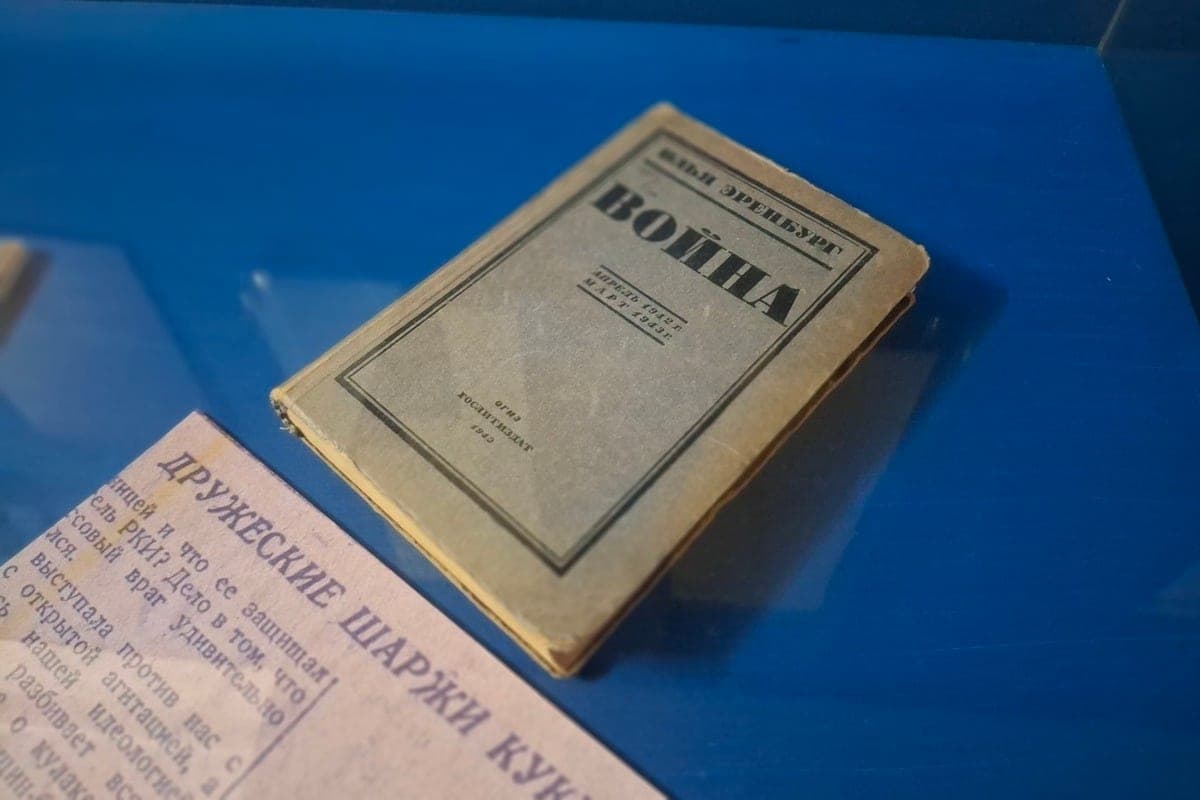
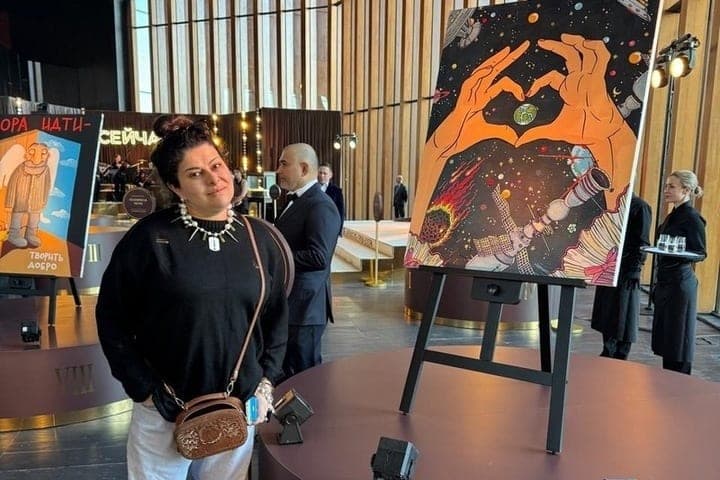
The organic part of the project “Badly Haired Gentleman” in the Paris cafe, housed in the museum-apartment of A.N. Tolstoy, was the memorial hall dedicated to the “Black Book”, in which, according to Ehrenburg, he “was not a witness, but only recorded” horrifying testimony about the atrocities of the Nazis in the Baltic States, the RSFSR, Soviet Ukraine, Belarus and Poland. Together with the paintings of Evgenia Kokoreva, embodying in colors the memory of the victims of the Holocaust, the creators of the exhibition placed on the walls quotes from the collection compiled by Ehrenburg with the participation of other writers. For example, the testimony of a prisoner of the death camp "Tremblink":
Inside the women's barracks is a hairdresser - naked women are cut under a typewriter, wigs are removed from old women. Strange psychological moment - this death haircut, according to the barbers, most convincing women that they were being taken to the bath. Girls, groping their heads, sometimes asked: "This is uneven, please cut your hair." Usually after the haircut, the women calmed down, almost everyone left the barracks with a piece of soap and a folded towel. Some young people cried, pitying their beautiful braids. Why did they cut women? To trick them? This hair was needed by Germany. It was raw materials. I asked a lot of people what the Germans were doing with that heap of hair taken from the heads of the living dead. All witnesses say that huge piles of black, gold, blond hair, curls, braids were disinfected, pressed into bags and sent to Germany. All witnesses confirmed that the hair was sent in bags to German addresses. How were they used? Cohn's affidavit states that the consumer of this hair was the Navy; the hair was used to stuff mattresses, technical devices, weaving ropes for submarines. Other witnesses show that the hair went for stuffing cushions of cavalry saddles
Or the testimony of a witness to the mass executions carried out by the Nazis in the deep beam of Zmievskaya near Rostov-on-Don. There, the occupiers forced civilians to disassemble “heaps of baby coats, dresses, men’s suits, all covered with blood”, and without stopping the fascist inhumans brought new victims of the genocide, who “were forced to strip naked, come to the edge of the ravine, lie down face down on those who had already been killed” to music sounding from the gramophone.
Note that the exhibition of the Goslitmuseum would be ideal in the year of the 80th anniversary of the Victory, because it reveals the universal meaning of the feat committed by our grandfathers and great-grandfathers and all the soldiers of the Anti-Hitler coalition. And it is very symbolic that it was Alexei Tolstoy, Konstantin Simonov and Ilya Ehrenburg who covered the Kharkiv trial of Nazi criminals in 1943. Because crime is inevitably followed by retribution.