Pavel Chukhrai turned 80 years old: trials before the thief and after
On October 14, the film director Pavel Chukhrai, who shot “The Thief”, “The Driver for Faith”, “Cage for Canaries”, “Cold Tango”, turned 80 years old
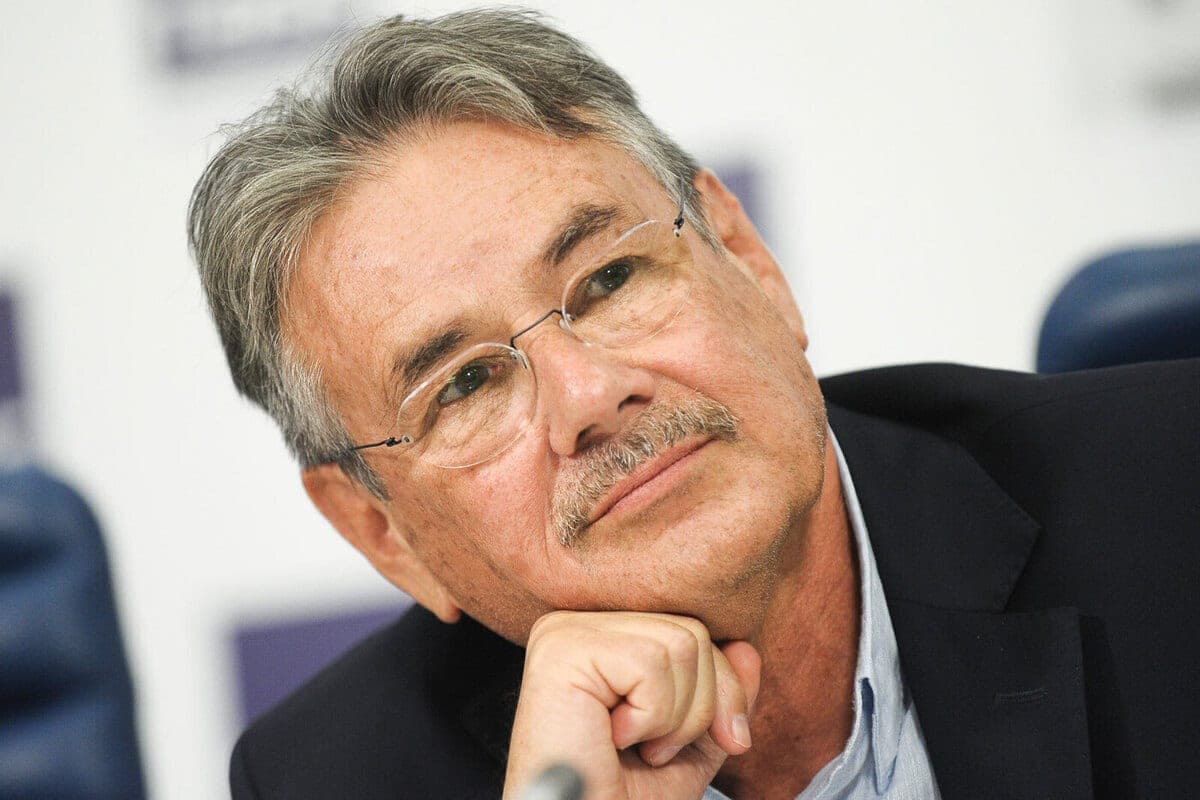
Pavel Chukhrai is an indisputable authority. At the first film festival “Mayak”, where he and Pavel Lungin were the only masters against the background of aspiring directors, young people always swarmed around them, eager for a serious expert assessment of their debut works. And the classics had an honest conversation with her on the street, in the lobby of the cinema, everywhere. It was always interesting and valuable.
What has happened in recent years in the life of Pavel Chukhray? He worked on the film “Sparrow Field” according to his old script, written ten years before filming, about secret experiments in the USSR in the late 40s – early 50s. No one's seen the painting yet.
Previous “Cold Tango” based on the novel by Efraim Sevela “Sell Your Mother” Chukhrai shot in 2017, with Julia Peresild in the title role and with the participation of Lithuanian colleagues. The film is about how the political system divides, but one must always remain human.
That year, at the closing of the Stalker festival, the classic of Russian cinema Marlen Khutsiev, handing Chukhrai an award from the directors' guild for Cold Tango, called his 70-year-old colleague Pavlik. “I was a friend of your father's. Your work is as good as his films. Pavlik made wonderful paintings with penetration into the human character, said the master and remembered a funny story about their joint trip to the GDR, where they walked in the same costumes, looking for sets of a famous brand. Chukhrai was surprised: “I never carried sets, but I remember that we went in the same jackets and we were mistaken for KGB officers.”.
Pavel Chukhrai is the son of Grigory Chukhray, the director of “The Ballad of a Soldier”, a front-line soldier who passed Stalingrad. For so many years he dreamed of making a film about the Battle of Stalingrad, but this opportunity was not given to him. The elder Chukhrai went down in history with the fact that, despite pressure from above, he refused to give the award at the Moscow International Film Festival to a mediocre production drama shot in the USSR. He preferred Fellini's Eight and a Half.
His son is just as principled. Four years ago, he wrote an open letter to members of the Russian Oscar Commission, which he headed after the death of Vladimir Menshov. He did this after he learned from the media that the leadership of the Russian Film Academy, established on the initiative of Mikhalkov, refused to nominate a domestic film for the Oscars. This, in my opinion, was an illegal decision made through the head of the Oscars commission. Not only have members of our independent organization not been consulted, we have not even been notified of such a decision. It's offensive and illegal. I want to inform you that in protest, I am resigning from my duties as chairman and withdrawing from this organization. With respect to all of you, perhaps, except for a couple of people, I wish the best in our difficult time. It was a strong move in the spirit of Menshov, who also had to make sharp and emotional actions in this post.
Just imagine, 15 takes
Pavel Chukhrai, who has been familiar with cinema since childhood, starting with the A. Dovzhenko Kyiv Film Studio, where his father worked, went through all stages of film production, from the bottom. In 1969 he graduated from the camera department of VGIK, where he studied in the studio of Boris Volchek. Only then Chukhrai entered the directorial faculty, and Igor Talankin became his master. The directorial debut of “You Sometimes Remember” with Nikolai Kryuchkov in the title role took place at the age of 30.
His most famous and titled film “The Thief” in 1998 was nominated for “Oscar” and “Golden Globe”, the Spanish award “Goya”, and before that was noted at the Venice Film Festival. Despite the world triumph and the successful release of “The Thief” in the United States, Chukhray’s new film “Driver for Faith” was released only seven years later. The film was shot intermittently due to funding problems. During the forced pauses, Chukhrai continued to work, writing scripts. In 2002, he participated in Steven Spielberg’s project “The Interrupted Silence” about the Holocaust along with outstanding directors – Andrzej Wajda, Janos Sas, Marzel Lozinski.
In the biography of Pavel Chukhray there are failed complex paintings, not always convenient. Until he made a film about the Tehran Conference of 1943, where the leaders of the United States, Britain and the Soviet Union were able to come to a compromise, despite their differences, in order to save humanity. Shooting was planned in late 2018 - early 2019.
It has always been difficult for him, because he is a principled and demanding person, which is becoming increasingly obvious against the background of hasty and inconclusive works of modern times. In an interview with "MK" actor "Workshop of Peter Fomenko" Tagir Rakhimov, who worked with our best directors, said: "I starred in Pavel Chukhrai in "Sparrow Field", played a janitor who knows who and when arrested, who needs to change the castle, where the residents left." There was a time when I was ready to leave the show. And now I think what a director Chukhrai is! We're used to the crazy rhythm, and he shoots fifteen takes. I was mad at myself, I thought I was so stupid. Just imagine, 15 takes! I want everyone to go to hell.”.
The thief in the United States appreciated even taxi drivers
The cameraman Vladimir Klimov shot with Chukhrai “The Thief”, “Russian Game”, “Sparrow Field”, worked on his unfinished paintings. We talked about what it was like to be together with him.
- The recent “Sparrow Field” is a post-war story, says Vladimir Klimov. We filmed in Moscow and the suburbs, where the events take place. It turned out a quality picture with good acting work.
Pavel Chukhrai is a major director, a representative of the cinema of great style. Not many. When we shot The Thief, our American colleagues, including our former compatriots in Los Angeles, offered us to shoot an American film with the same composition as in Thief. A producer arrived from the United States, and we went with him to Crimea and Sochi, watched nature, in general, prepared. The schedule was supposed to be tough, had to shoot several scenes a day. I just made an American movie and knew what was going on. But the project eventually fell through. The history of stopped paintings between me and Chukhrai is big.
- Did you go with The Thief to the Oscars?
- Unfortunately, no. I was filming American cinema in Tallinn. I know Thief was very popular in the United States. When I came to America after the Oscars to finish the picture, the taxi driver on the way began to ask who I was and where I came from. When he heard I was filming The Thief, he was impressed. In Los Angeles, the nominated paintings are well known even by taxi drivers. They're all movie fans. It was a pleasure to hear the movie in a taxi.
- More than once I heard from representatives of various film shops that it is not easy to work with Chukhrai, because he is very demanding.
- He is one of the most difficult directors. We are both Libra horoscope, so our decisions fluctuate back and forth.
- Because of doubt?
Yeah. Pavlik is always looking for an exact solution. He's subject to doubt as a creative person. He demands quality from himself and others, sometimes excessively, which is rare today.
- Tagir Rakhimov told about 15 takes at the "Sparrow Field".
- If the director believes that this will achieve results, then this is his right. In my experience, anything more than three takes is meaningless if it’s about acting and not technical.
- You made a movie together about a hydrogen bomb test, but production was suspended. And then came the “Trial” of Alexander Kott, at the world premiere of which in Tokyo happened to be present.
- Cott made a good picture, it's just a different one. This is a light version of what we're up to. We came to Kazakhstan and did a great job. The scenery and props were ready. We could have had a blockbuster of a universal scale, but there were financial difficulties.
We started several large-scale paintings together. Sometimes it was such a difficult job that I thought I would survive at all. Chuhrai had a lot of plans, had a serious, tough and honest script, and we flew with him to Israel for a choice of nature, but bah — again stop. It would be a deafening picture.
- When you decide to work with Chukhrai, what becomes decisive?
- I always know how difficult this will be. One thief was worth a lot. It was not an easy picture in production. In the '90s, our cinema collapsed. First we filmed nature, and then came to the pavilion of the empty Mosfilm, where we were the only ones. Even in the neighboring pavilion was filmed “Strawberry”. I was well aware that Pasha is not easy, but it is better to work with a difficult and doubtful director, but with a director. And he's certainly a director.
I did not immediately start working with Pasha at the “Russian game” according to Gogol, recommended him Andrei Zhegalov, but half the picture still removed, finished it. We had such difficult pirouettes.
- You call him Pavlik as touchingly as Marlene Khutsiev once did.
- Many people call him Pavlik, but I often call him Pasha. I've known him since I was a teenager. From the age of 16 I worked at the educational film studio of VGIK as an illuminator, most of all with the course of Boris Volchek, where Chukhrai studied. He had me as an illuminator. I remember everyone - Pasha, Yuru Nevsky, Elika Karavaeva. And he entered the next course of Volchek.