Protected by the Bluebird
The State Academic Russian Theater for Children and Youth named after Natalia Sats has opened its doors again
november 7, 1945 – the first performance. november 7, 2026 – new breath
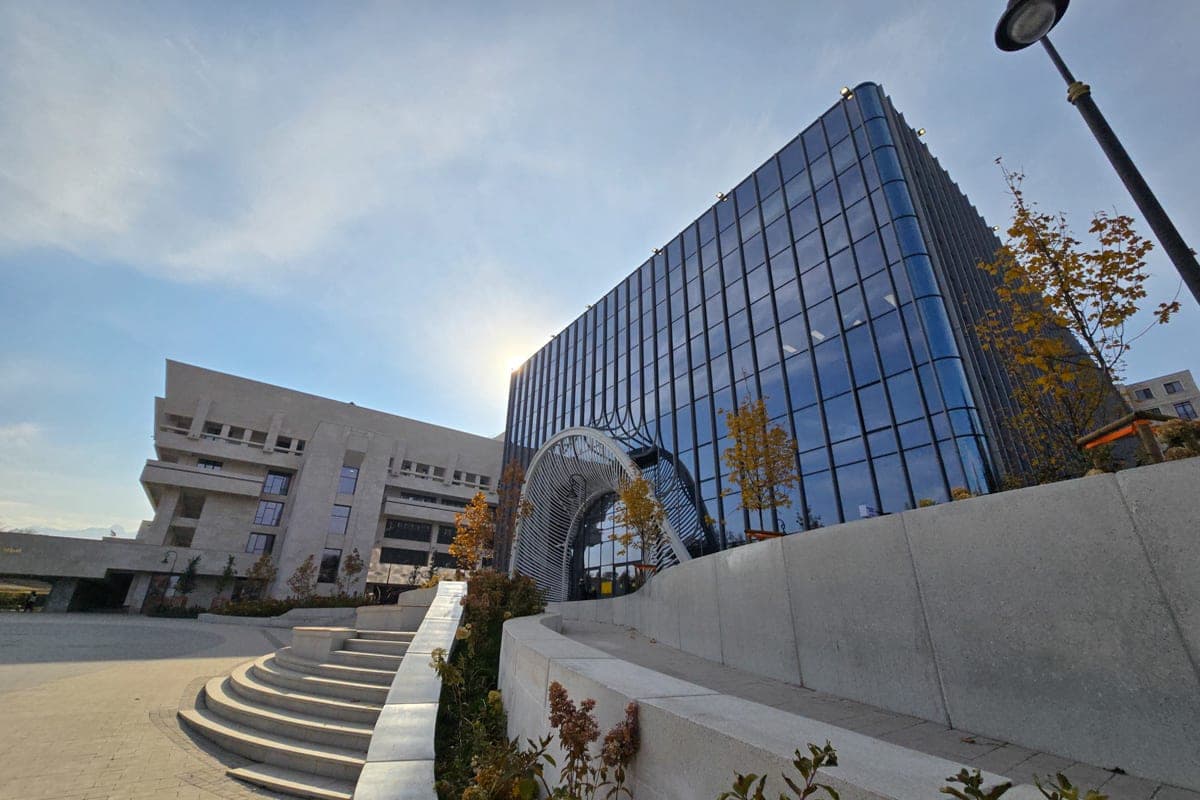
Natalia Sats Theatre is one of the oldest in Kazakhstan, founded in 1944 on the initiative of the outstanding theater figure Natalia Ilyinichna Sats. This is the first state children's theater of the country, located in Almaty.
The first performance took place here on November 7, 1945. In 1995, the theater was awarded the name of its founder and the honorary title “Academic” for its contribution to the development of theatrical art of Kazakhstan. Over the years, dozens of works were staged on its stage, and outstanding figures of culture and art participated in the development of the theater.
Since 2000, the theater is located in a separate building - the former Palace of Culture of the Almaty Cotton Plant. The building is distinguished by expressive architecture, mosaic high reliefs and historical atmosphere. It opened in 1981 and was designed by female architects A. Petrova, Z. Mustafina and G. Dzhakipova. The building is a historical monument that has preserved its authentic atmosphere. Its facade and interiors are decorated with monumental mosaic high reliefs and, as many believed, made by Vladimir Tverdokhlebov. But it turned out that there are two more authors – Yuri Funcorineo and Alexander Tatarinov.
After the restoration, the theater opened on November 7 with a gala concert "SATS". Return home”.
Names opened on the mosaic
Almaty residents were worried that after the reconstruction of the building, historical reliefs on the facade and inside the theater would disappear or be damaged. But all of them were cleaned to their original state and put in order. And on the facade on the left side, if you look at the main entrance to the theater, the names of the authors - Tverdokhlebov, Funkorineo, Tatarinov - suddenly and very clearly appeared.
Moreover, Yuri Funcorineo, at his venerable age (85 years old), was always near the restorers, advising them on each issue. Thus, all works on cleaning and restoration of high reliefs on the facade and in the interiors of the building were carried out under his sensitive and professional guidance.
– The mosaic in the interiors was created by monumental artists Yuri Funcorineo and Vladimir Tverdokhlebov. It focuses on the role of women in society as mothers and workers. This is part of our historical memory, and we consider it important to preserve it for future generations, said Tatiana Karamysheva, head of the literary and dramatic part of the theater. During the restoration work, the mosaic was carefully washed and cleaned, preserving it in its original form. Artist Yuri Funcorineo personally participated in the process. He came to the theater, discussed the upcoming updates and showed exactly what work should be done and in what areas. The special symbolism of this story is given by the fact that the late wife of the artist once worked as an artist in our theater. It turns out that a lot here is amazingly intertwined and combined.
It is worth noting that the authors of unique mosaic panels in the foyer and between the floors of the building emphasized the Kazakh symbols in their works. If you look closely, then in almost every plot and on the fragments of clothing of images you can see the famous Kazakh ornaments.
Scope of reconstruction
The building has become much more spacious, functional and comfortable. Its renovated infrastructure now includes a large and two small rehearsal rooms, a ballet class, production workshops, warehouses, as well as other spaces necessary for the full operation of the theater.
The scale of transformations is also reflected in the figures: before the reconstruction, the total area of the building was about 9000 square meters, then after the completion of work, including the construction of a new facility, it increased almost threefold to 25,000 square meters.
Thus, the theater returned to the renovated house, where conditions were created not only for showing performances, but also for a full-fledged creative and production process - from the first rehearsals to the birth of new stage productions.
At the same time, the historical foyer of the theater, having preserved its originality, became brighter and more comfortable.
A large auditorium has also been transformed.
- Previously, the hall seemed dark, cold. Now the space has become more modern and cozy for the audience. The reconstruction affected not only the interior, but also engineering networks, sound, lighting and stage equipment. Today, the stage is equipped with advanced technologies that allow to embody the most complex and modern theater projects, says Diaz Adambekov, Deputy Head of the Theater Marketing Department. Together with the balcony, the hall now has 744 seats instead of the previous 782. The reduction in the number of seats is dictated by the desire for comfort: new chairs have become much more spacious and convenient. Changes also affected the balcony, which was almost never used before, because the building was not designed as a theater. The railings closed the view of the scene, especially for children, and the landing itself raised safety questions. For this reason, tickets to the balcony were not sold and young spectators were not brought there. Now the space is completely rethought and equipped with modern requirements.
Next to the historic building opened a new building of the theater. Here is a chamber stage named after Boris Preobrazhensky, a legendary director, honored figure of Kazakhstan and Russia, who led the theater from 1986 to 2005.
The new space is made in the format of Black Box - a universal stage platform designed for almost 260 spectators. Its main feature is transformable architecture: the configuration of the stage and the audience seats can be changed depending on the artistic plan of the production. This flexibility opens up ample opportunities for directors to experiment and allows each time to create a special atmosphere of interaction between actors and the public.
Interestingly, the new auditorium was created by analogy with the Great Stage of the ARTiSHOK Theatre, but it is more roomy and modernized. In this space, you can change the configuration of the whole room. The former small stage of the theater accommodated only 52 seats and was static.
The new building of the theater has a large and two small rehearsal halls, as well as a ballet class. These spaces create all the necessary conditions for the preparation of performances and professional work of artists on the embodiment of stage plans.
A special place in the foyer of the new building is occupied by Baby Hall - a space where the youngest spectators will take their first steps into the world of theatrical art, opening it through vivid impressions and first meetings with the stage.
Another new space, the Book Hall, is designed for reading, cultural encounters and meaningful communication.
The opportunities for children’s theater studio Sats ComUnity have also expanded significantly.
In addition, the new building housed art and production workshops necessary for the creative and staging activities of the theater, whereas earlier, for example, designers had to prepare three-dimensional scenery in the foyer of the theater.
All new spaces form a multifaceted environment in which the theater becomes not only a meeting place with the performance, but also a platform for creativity, education, professional development and communication.
After the reconstruction, the theater intends to develop as a modern art center, or SAC, providing a creative platform for experiments, bold ideas and the implementation of various cultural projects.
Thus, the renovated theater goes beyond the traditional, becoming a living cultural space, open to dialogue, cooperation and closer interaction with residents and guests of the city.
And this is not all about the new at the Natalia Sats Theater. For example, near the new building, magnificent landscape zones are broken and many decorative trees are planted. There was also another scene - open air (in the form of an amphitheater). It will open up new opportunities for creative experiments and just a pleasant pastime near the theater. The transformed theatre is designed to function as a cultural institution on the outside.
Blue bird
Symbolically, in the new building of the theater in the foyer in front of the entrance, a glowing feather of the Blue Bird appeared as the main decoration. All employees on the lapels of jackets can also replace the brooch in the form of a blue wing. There's an explanation. For the production dedicated to the 120th anniversary of the founder of the first children’s theater in the world, in Russia and Kazakhstan “Sats. Chronicle of one rehearsal”, the director Galina Pyanova raised a lot of archival materials. According to them, it turned out that the father of Natalia Sats gave her his protection, writing music to the fairy tale of Maeterlinka “Blue Bird”. In our edition we wrote about this earlier: “The bird of happiness led Natalia, supported her spirit in difficult situations and difficult times. That is why we saw the Blue Bird on stage in the performance that took place all the time – it quietly flew from one image to another, appeared in dolls on high poles, circled over the heads of the audience.
This performance is included in the repertoire of the theater, and the Blue Bird accompanies its history. In many ways, it continues beautifully right now.