The magic of fabric and thread
Personal exhibition of Gulmira Sadykova “The needle draws – dolls come to life” opened in Almaty in the National Central Museum of the Republic of Kazakhstan
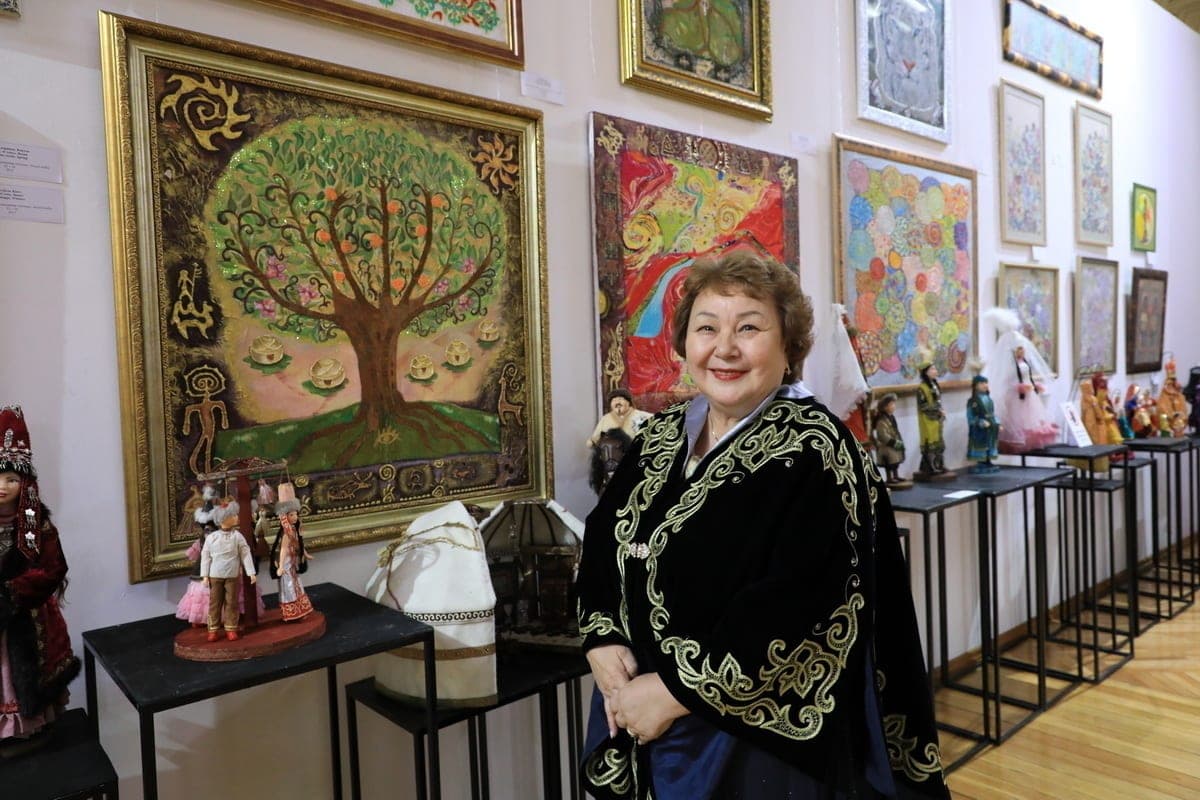
The exposition reveals the art of creating dolls as a special kind of artistic creativity, where each thread becomes a stroke, each flap of fabric is a part of the image, and painstaking handwork gives textile characters individuality, character and their own history.
Gulmira Sadykova is a master of decorative and applied arts, researcher and innovator, boldly expanding the boundaries of traditional craft and creating her own artistic language. In her hands, an ordinary needle turns into a brush, a thread into a subtle tool of self-expression, and each stitch becomes a living touch to the world of feelings and images.
The work of this master can be called “painting threads” – an amazing dialogue between the heritage of decorative and applied arts and modern artistic vision.
In the release about the exhibition, it is written that a special place in the creative process of Gulmira Sadykova is occupied by the technique of free surface, which allows you to work with stitches like a picturesque stroke. The direction, length and density of stitches, their location and mutual overlap form the rhythm of the composition, create a sense of movement, emphasize the contours and help convey the finest nuances of the image. Like an artist working with a brush, the master builds color relationships, achieves smooth transitions from one shade to another, combines light and saturated tones, creates depth and expressiveness of images. Strands of different colors, intertwined and layered on the surface of the fabric, form a complex palette in which the color is revealed not only visually, but also through the material texture.
The title of the exhibition “The Needle Draws – Dolls Come to Life” highlights the unusual nature of this artistic process, in which familiar materials reveal new aesthetic qualities. The needle becomes an extension of the artist’s hand, the thread is an instrument for creating an image, and the fabric is the basis for the implementation of the plan. Through a combination of color, line, texture and rhythm, Gulmira Sadykova demonstrates that embroidery is able to go beyond the traditional notion of craft and exist on an equal footing with other forms of fine art. Her works invite the viewer to take a new look at textiles, to see in it not only the skill of execution, but also the pictorial expressiveness, author’s handwriting and a special way of artistic understanding of the world.
Dolls occupy a special place in this world, and each of them has its own character, mood and history. For the artist, dolls became not only objects of her private collection, but images with their own special aesthetics. In the exhibition space, they seem to find a second life, entering into a dialogue with embroidered works. That is, the viewer sees dolls against the background of textiles, and so connect two worlds – the world created by the needle, and the world of dolls, which complement the collection of Gulmira.
The work of Gulmira Sadykova is a dialogue between cultural heritage and modern artistic thinking. For many years, the artist has been working in the technique of ironing, revealing its expressive possibilities and demonstrating that traditional craft can exist in the space of actual art. Rooted in the centuries-old textile culture of the nomadic people, embroidery in her works acquires a new content. What used to be a part of everyday life and female needlework becomes an independent form of artistic creativity. Through the combination of fabric, threads, beads and a variety of decorative details, the master creates complex visual compositions in which color relations, relief and texture play a special role. Each work is the result of a thoughtful and lengthy process that requires a fine sense of material, precision and patience. Turning to traditional techniques, Gulmira Sadykova not only preserves them, but also fills them with new meaning, thanks to which her work finds a response among connoisseurs of decorative and applied art.
The exhibition “The Needle Draws – The Doll Comes to Life” presents more than 80 embroidered works and exhibits from the collection of interior dolls. This exhibition is an invitation to see beauty in detail, to feel the poetry of manual labor and to discover art in which threads connect not only colors and forms, but also times, traditions and human hearts.
The exposition can be viewed until November 2 in the third hall of the National Museum of Kazakhstan.