
Reuters told about the disappearance of “trade superweapons” of China
Chinese shipping data platform LOGINK abruptly ceased operations in 2024, Reuters learned. Two years earlier, the U.S. had accused the company of trying to "get full control of the arteries of world trade."
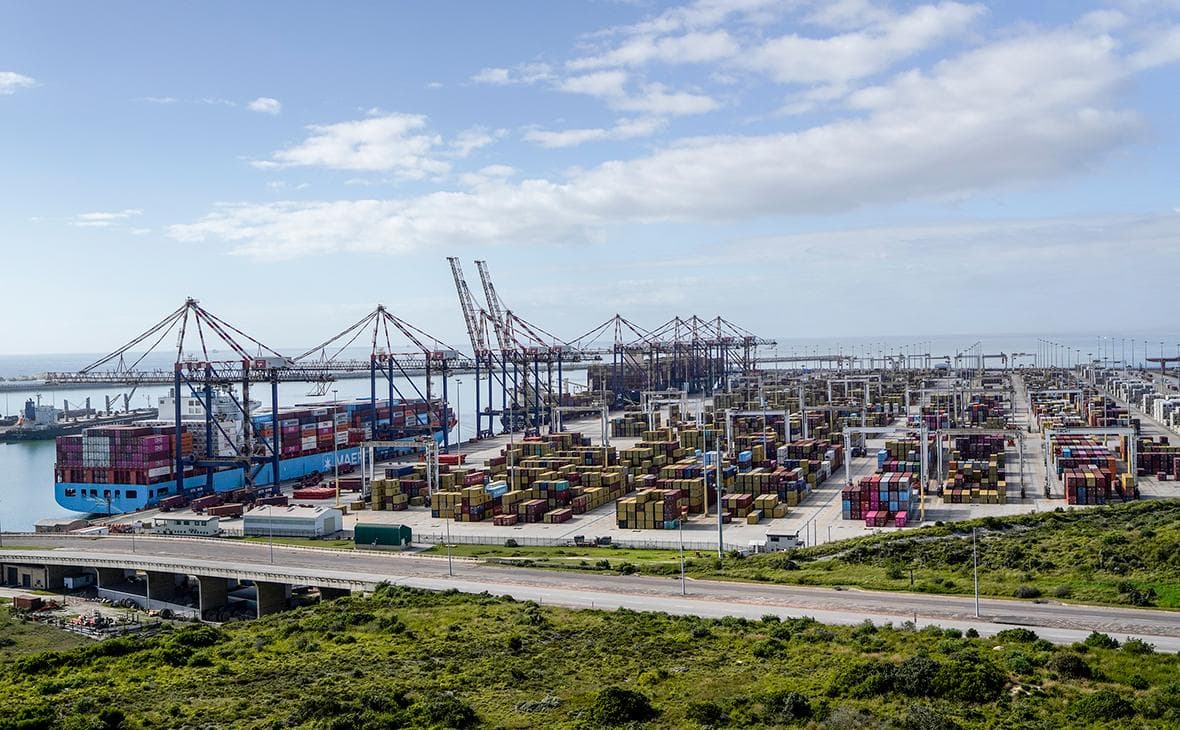
China’s shipping data platform LOGINK, which the U.S. called a “trade superweapon,” has shut down. This is reported by Reuters.
The National Transport and Logistics Public Information Platform, or LOGINK, was launched in the 2000s. It was originally a government project in China’s Zhejiang province to improve freight coordination by combining data from ports, trucks and suppliers into a single search platform. Later, control of LOGINK was transferred to the Ministry of Transport of China. At that time, the priority of the platform was international expansion.
In 2010, LOGINK was integrated with the national logistics platforms of Japan and South Korea, later the company entered into an agreement with a similar Hong Kong service. In 2015, the Ministry of Transport of China presented its system to the UN Commission as a “single portal related to global logistics information systems”. By the end of the decade, the company was exploring opportunities for cooperation with European ports.
In 2022, LOGINK joined an international data exchange project that brings together platform operators to exchange information on cargo and customs duties in ports. At the same time, it began to be actively criticized by American politicians. A number of Republican lawmakers signed an open letter urging then-President Joe Biden to take action against the platform. They argued that LOGINK's unchecked expansion could allow the Chinese Communist Party to "gain total control over the arteries of world trade.".
Later, in 2023, the US Congress passed a law prohibiting the Pentagon from entering into contracts with organizations associated with LOGINK. The document also instructed officials to discourage allies and partners from using the platform.
A year later, LOGINK withdrew from the International Association of Port Societies (IPCSA), having stopped paying membership fees. IPCSA head Inga Morton confirmed to the agency that the company is no longer a member and said the international data-sharing project is "suspended and inactive." Around the same time, the company’s website stopped working.
China’s cooperation with South Korea and Japan has also failed. Participants from the three countries have held regular meetings since the service's launch, but China abruptly canceled the event, scheduled for March 2024, and no meetings have been held since. Subsequently, Japan’s access to LOGINK data was suddenly terminated, a representative of the Japanese Ministry of Transport said.
Officials in Seoul and Tokyo, who collaborated with LOGINK, said the extent of the data sharing was more limited than some in Washington feared. The Ministry of Oceans and Fisheries of South Korea and the Ministry of Transport of Japan said that only data on the arrival and departure times of ships, as well as on the loading and unloading of goods, without details about the contents, were provided.
LOGINK failed to achieve success in the European market. Ana Rita Rosa, spokeswoman for the Port Authority of Sinis, Portugal’s largest port, told Reuters that a memorandum of understanding signed in 2017 with the company on data sharing had not led to any meaningful results.
As stated in the developer of the digital system of the Dutch port of Rotterdam Portbase, the memorandum of understanding concluded in 2019 with LOGINK did not move beyond preliminary discussions. The source said that Portbase’s refusal to cooperate with the Chinese platform was influenced by requests from the Dutch government in early 2022.
Both Rosa and Portbase declined to respond to questions about whether U.S. diplomatic pressure influenced their decision to end their relationship with LOGINK.
According to Reuters, at home LOGINK faced legal proceedings. According to the Chinese platform Qichacha, since January 2024, the company has filed at least 39 lawsuits totaling about $ 1.3 million. Some were related to labor disputes, others - with unpaid utilities.
According to Reuters correspondents who visited the LOGINK operations center in Wenzhou, there were no signs of activity in the building: the lights were turned off in the offices, the reception room was empty, computer cables were torn out. LOGINK did not respond to requests from agencies, and China's Ministry of Transport declined to respond to questions from Reuters.
Earlier, the Financial Times (FT) wrote that the current rivalry between the United States and China for global trade, technological and geopolitical influence resembles the “Great Game” – the struggle of the British and Russian empires for influence in Asia in the nineteenth century. Rana Forouhar, the newspaper’s global economic columnist, noted that it is difficult to determine the winner of such a rivalry, since the United States has financial and technological power, and China has production capabilities, supply chains, transport infrastructure and positions in clean energy technologies. According to her, the outcome may depend on the decisions of India, Japan, Canada, Turkey, the Gulf countries, Northern Europe, ASEAN and the European Union.