
Economist “Sbera” announced the approach of the public sector to the limit size
The growth of the public sector in the economy has “borders that are better not to cross”, says the head of the CMI “Sbera” Alexander Isakov. The border is in the range of 30-40%, and Russia is close to it
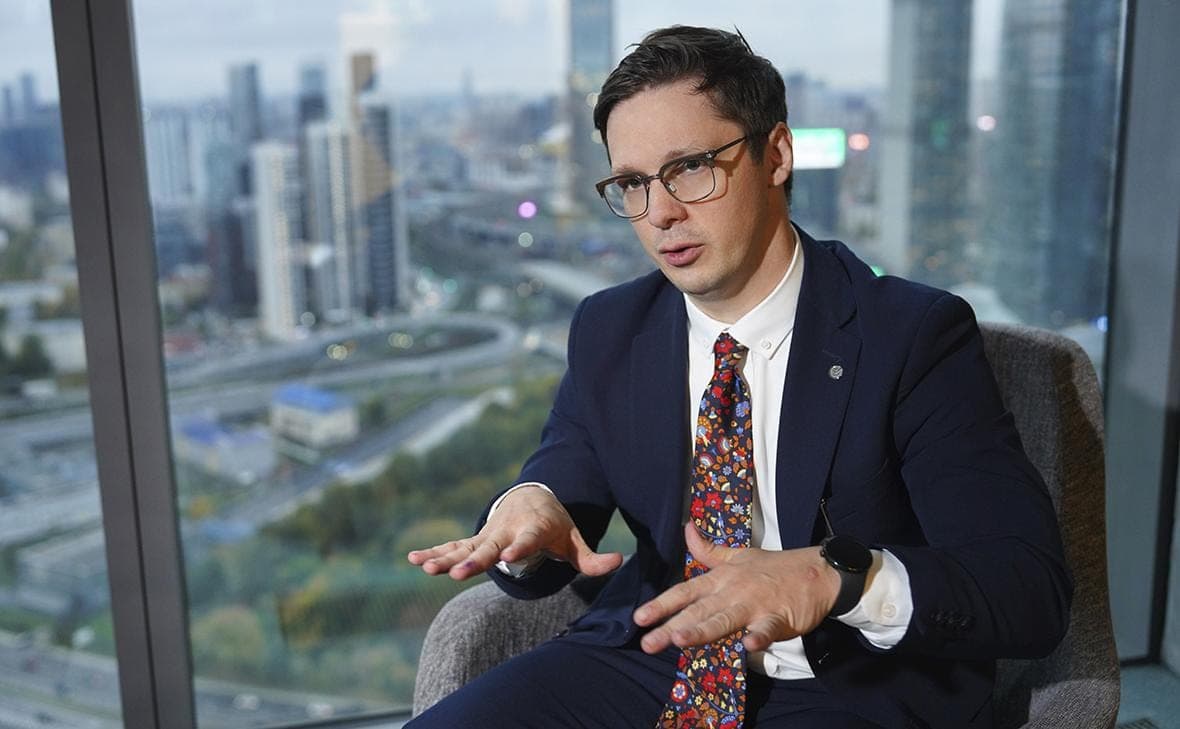
The growth of the size of the public sector has boundaries that it is better not to cross if the goal is high and sustainable growth. This opinion in an interview with RBC was expressed by the head of the Center for Macroeconomic Research (CMI) “Sbera” – chief economist of VEB.RF Alexander Isakov.
According to him, international experience does not give a clear meaning for the maximum size of public sector spending due to differences in social and budget systems and levels of state ownership. But with high confidence, we can say that this limit is in the range of 30-40%, said Isakov.
Read the full text of the interview with Isakov in the RBC subscription on the morning of October 15.
Today, Russia’s consolidated budget is equivalent to 39% of GDP – an increase of about 6 percentage points to 32-33% of GDP in 2018-2019. In this sense, both international comparisons and their own experience of state policy suggest that Russia is approaching the upper limit of the size of the public sector, compatible with high sustainable growth rates, has not yet crossed it.
This line should not be crossed, Isakov warned. “Behind it are the risks that the additional burden will create challenges for sustainable business growth and its investments, which for the budget are the basis of the revenue base,” he believes.
By the end of 2026, investments in fixed assets will decrease by 5.4%, and in 2027 a symbolic growth of 0.2% will be recorded, the Ministry of Economic Development predicts. GDP, according to the forecast of the Ministry, will grow by 0.6% this year and by 1.4% next year. The volume of expenditures of the budget system (federal budget, regional budgets and budgets of extrabudgetary state funds) for 2027 is projected at 38% of GDP, follows from the materials of the Ministry of Finance.
However, if you compare the economic effect of uncertainty in terms of tax conditions and the actual level of tax, the former will be more expensive, says Isakov. “Taxes are first approximation neutral to aggregate demand: the government collects 1% of GDP to invest and spend 1% of GDP.” Uncertainty and macroeconomic risk, on the contrary, force investment to be postponed, reduce demand and thereby reduce the potential tax base for the government.
Businesses can adapt to different levels of tax burden, but for long-term planning and development, investors must have certainty about the rules and parameters of the tax system. A similar idea earlier in an interview with RBC expressed the President of “Norilsk Nickel” Vladimir Potanin, saying that “let there be a tougher load, but it will be stable for some period of time.”.
