
Gref predicted five trends of the platform economy for ten years
The head of Sbera gave five theses of the development of the platform economy, in which he talks about the agent economy, the “invisible” bank of the future, the interoperability of AI agents and a radical change in the business model of marketplaces
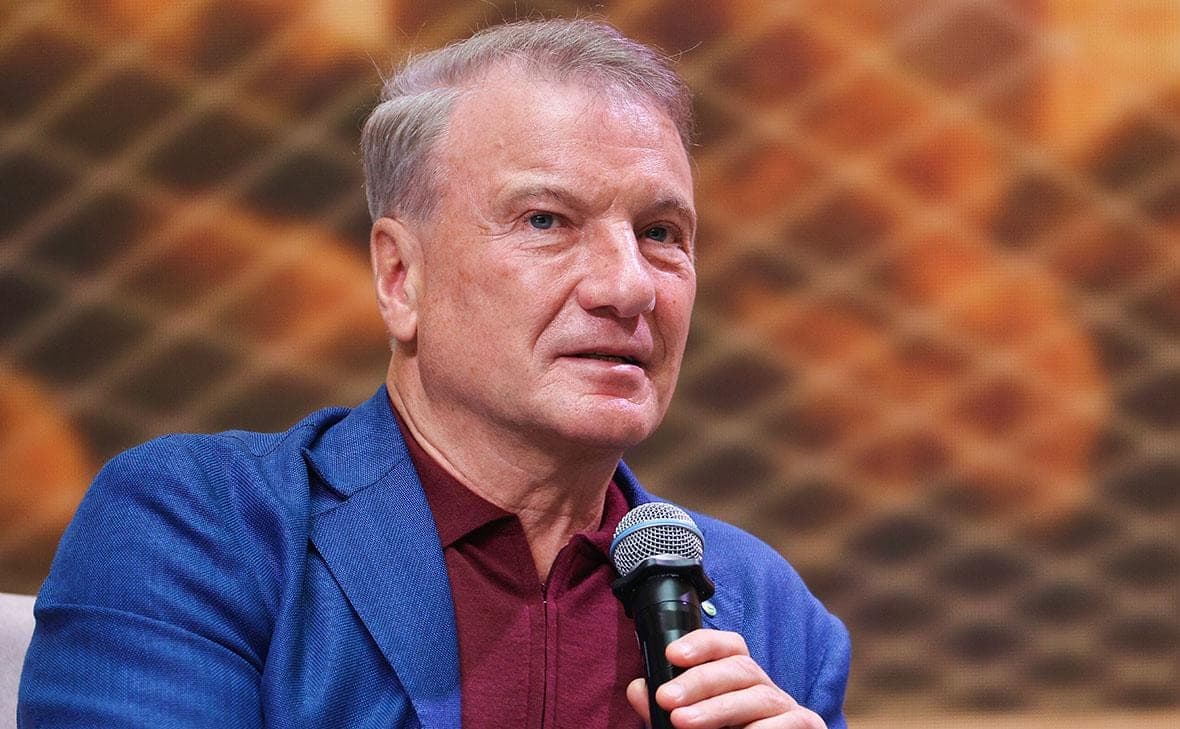
The head of Sberbank German Gref gave five theses of the development of the platform economy of the future. He said this at the plenary session of the Day of platform economy in the National center “Russia”, the correspondent of RBC.
The first thesis concerns agent economy, which, according to Gref, “kills interfaces, and the interface is the main weapon of the platform.”.
“Today, a platform is a screen: tape, storefronts, search bars are all algorithms that can hold a person’s attention.” All this is killed by AI agents who are not interested in windows or scrolling through tapes and are able to perform actions in seconds. Platforms built around human attention will lose out to platforms that are built on machine-readable interface quality.
The second thesis is related to the bank of the future, which will be invisible. “It is built into the main array of services and at the time of decision-making, not an initiative application. And today, banking applications are also a platform with a screen, the head of Sbera said. He sees a "fundamental shift" in the bank moving away from being a place where customers come and "embedded in the process of making a deal with agents." “Banks that are going to be better APIs for money, not better apps for people, are going to be a very big shift in that part,” Gref said.
The third thesis concerns the monopoly of platforms, which, in his opinion, will destroy the interoperability of AI agents. "Right now, banks and marketplaces are fighting this by shutting down access to data, but the network effect that any platform has is more sellers, more buyers, that's access to audiences," he said. The banker noted that such a system works as long as people are tied to interfaces. The agent is not tied to the interface and can simultaneously access dozens of marketplaces and directly to manufacturers – this will break the monopoly. “A new layer of so-called agent aggregators and protocols for interaction between agents will emerge. And of course, sooner or later the state will build a system of interoperability of agents, Gref explained.
In the fourth thesis, the head of Sberbank pointed to a radical change in the business model of marketplaces. In his opinion, the intermediary model with commissions of 15-25% from the seller or performer will leave. “The only fee will be the result. The platform can be a “merchant” of accuracy, trust, professionalism and speed of solving human problems and absolute personalization of any service or product. Therefore, there will be an inversion of power: today the power of platforms will turn into the power of the consumer, the power of man.
And finally, according to Gref, the competition to platforms will not be other platforms, and personal agents of users, talking about the fifth thesis. The most unexpected competitor for all platforms is, of course, an AI agent on the human side. Each person will have his smart assistant, who knows his preferences, knows his spending capabilities, budget, history and goals, and he will either recommend or complete the end-to-end deal.
In June, Gref predicted the era of “agent economy”. “We are on the threshold of the so-called agent economy, when agents begin to autonomously solve those tasks that were characteristic only for people,” he said.
At the same time, in October, the head of Sber compared artificial intelligence with a child, since AI models are trained only on the arrays of data that a person “gives” him. Although AI is “faster, doesn’t miss anything and can quickly draw conclusions,” it doesn’t address other human functions such as emotional intelligence and feelings. Artificial intelligence will become truly “adult” only when it can independently draw conclusions and comprehend the fundamental laws of nature.
