
Nabiullina spoke at a plenary session in the state Duma. Main statements
The head of the Bank of Russia Elvira Nabiullina presented the main directions of the unified state monetary policy at the plenary session in the state Duma
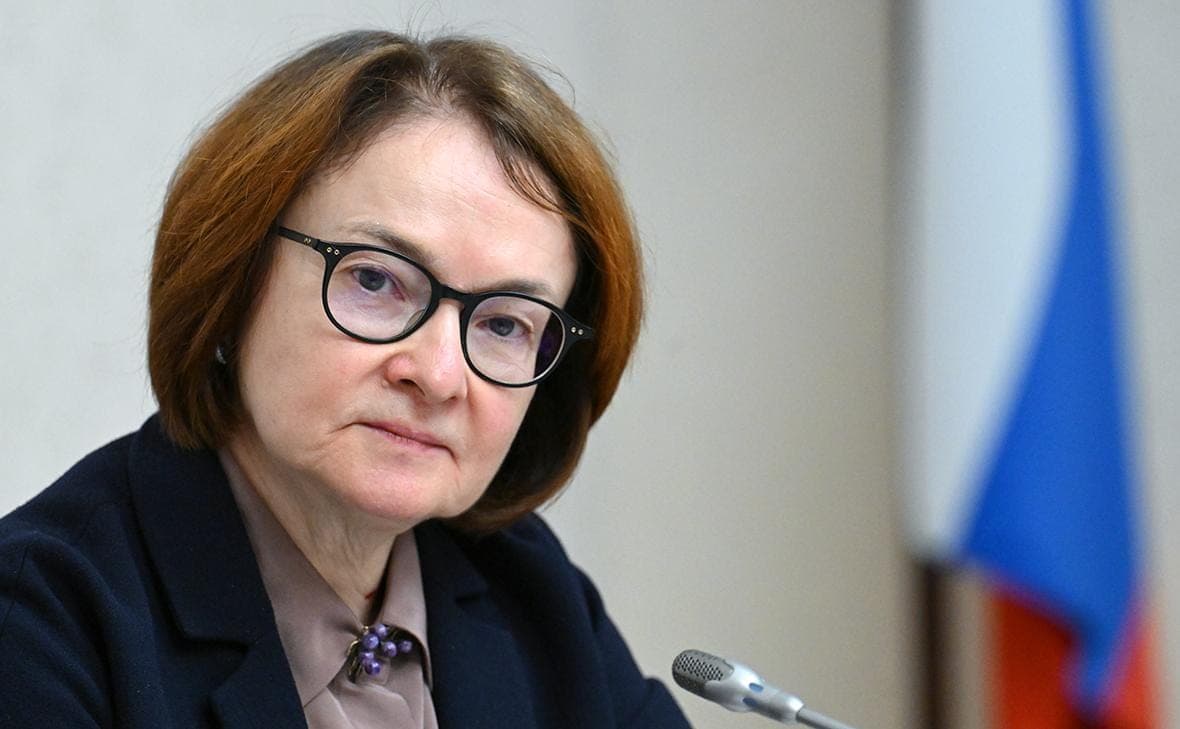
The document of the Bank of Russia on the main directions of the unified state monetary policy shows how the Central Bank intends to “ensure the protection of the ruble and price stability”, said at the beginning of her speech, the Chairman of the Central Bank Elvira Nabiullina. However, she noted that the circumstances in which the regulator solves this task “remain difficult”, but this “does not make it less important” for the welfare of citizens and sustainable growth of the economy.
The role of the key rate in the fight against price growth
The Bank of Russia cannot “one key rate” eliminate the root causes that affect production opportunities and costs, but can minimize the consequences so that they “do not develop into galloping inflation,” Nabiullina said. “So that all the difficulties are not transferred to consumers in the form of constant growth, high price increases. To prevent the acceleration of prices is our common task, she noted and added that the key rate also affects the volume of credit and through it on demand.
About the state of the Russian economy
If you look at the “solid figures”, the situation by industry is different, but in general, in the second half of the year the economy went on an upward trajectory, said the head of the Central Bank. According to her, the regulator expects GDP growth by the end of 2026 within 1%. This is despite the loss of production capacity in certain industries as a result of attacks. If not for this factor, economic growth this year, of course, would be higher, she said.
Economic growth supports machine building, including through the defense industry, the growth of income and consumption of citizens, and, as a result, the growth of retail trade, as well as the growth of “many industries that are focused on domestic demand.”.
Assisting businesses in protecting facilities
Deputies raised the question of how the Central Bank can help to protect objects from attacks, because it requires significant investment. “We have softened banking regulation so that banks are interested in issuing loans to protect production and infrastructure from attacks,” Nabiullina said.
Investments
Investment activity in the last two quarters has been growing after a low point in the first quarter, and the Central Bank expects that next year investment will grow “not only in trillions, but also in physical volumes.”.
In particular, due to the fact that the profit of the real sector ... remains significant. In total, across all industries, this profit amounted to 25 trillion rubles over the past 12 months - this is 10% less than last year, but still more than enough to invest in expanding production, Nabiullina said, but added that "the picture is very different by industry."
On business loans
The business additionally attracts about 1 trillion rubles of financing from banks per month, and the increase is evenly distributed among borrowers from different industries. “One trillion, together with two trillion dollars of profit per month, is a serious resource,” Nabiullina said.
According to her, in the corporate portfolio of banks, about three-quarters of loans that “have urgency” are issued for more than a year. In addition, loans for more than three years, which can serve as investment, increased by 49 trillion rubles, or 56%. However, in these five years, labor productivity in the economy increased by only 5%.
“Apparently, the question is not only and not so much in the availability of financing, so much in how they are distributed, in who and how to support, so that financing is directed to those who are growing production,” the head of the Central Bank said.
Additional benefits
In recent years, financing at subsidized preferential rates has increased: according to the Central Bank, the volume of such loans at preferential rates has approached 19 trillion rubles, which is 14% more than all ruble loans of the economy. At the same time, the “big piece” is a mortgage, that is, subsidizing housing construction through increased demand. However, preferential lending to companies has increased significantly over the past five years.
“In our opinion, to multiply beyond concessional lending programs is a dead end. And from the point of view of the burden on the budget, and because we want affordable market rates for everyone, not just for a select few who have access to concessional loans, said Nabiullina.
According to her, the large volume of concessional loans is one of the reasons for the high key rate, which is “forced to more restrain” the non-concessional market part of credit activity. Nabiullina said that those billions that are involved “in the form of various kinds of subsidies” should be “more focused” on productivity growth.
The mortgage
The increase in mortgages over the past 12 months is 2.5 trillion rubles, which is more than last year. In addition, the volume of issuance over the past 12 months amounted to 5.4 trillion rubles, which is also more than in the previous two years. Moreover, the share of market mortgages in issuances doubled compared to last year. However, according to Nabiullina, citizens need “not affordable mortgage, but affordable housing”, which depends not only on the interest rate, but also on the price per square meter.
“Once again, preferential programs have given mortgage recipients an extremely affordable value, but this benefit has been largely, if not all, eaten up by rising prices.” And those who were not entitled to preferential programs, they simply faced a drop in the availability of housing for themselves. And after the rejection of untargeted preferential mortgage housing prices are not growing so rapidly, — said the head of the Central Bank.
In her opinion, the path to an affordable market mortgage “lies through low inflation,” and preferential mortgages should be “strictly targeted.”.
About inflation
The slowdown in price growth in 2026 continued until May inclusive, taking into account the surge from the increase in VAT, tariffs, and scrap collection. The Central Bank could continue to reduce the key rate, but in the summer “the situation was complicated”, said Nabiullina. “Alas, in the summer the situation became more complicated, gasoline became more expensive. This has led to an acceleration in prices for a wide range of goods and services. And the second factor that we took into account is that the government postponed the return to a deficit-free budget until a later date. The connection here is direct: additional money comes to the economy through two main channels – through a bank loan and through the budget.
According to the head of the Central Bank, if through the budget channel “more money comes”, then through the loan “should come less” so that the money supply “does not overtake the ability of the economy” to produce goods and services. Given the new circumstances, the Bank of Russia was forced to act more cautiously and slow down the reduction of the key rate.
“When we are called upon to reduce it radically, we expect that interest rates on loans will automatically go down. This is true if inflation is low, inflation expectations are low, if there is confidence that inflation will remain low for a long time. If there is neither one nor the other, just as now, the result is likely to be the opposite: short loans, perhaps, will fall in price after the key rate, but prices will immediately rise, and long-term loans will first rise in price, and then may disappear altogether, Nabiullina explained.
On economic growth
Economic growth continues to be constrained by a shortage of personnel, and labor productivity growth remains low. Against this background, there is now a flow of personnel from one industry to another, where these personnel are more in demand, which, according to Nabiullina, is one of the main channels for increasing productivity.
“Low unemployment rates indicate that workers who leave some enterprises find work in other enterprises. And not to interfere with this flow is, in my opinion, a task to maintain the structural restructuring of the economy and increase labor productivity in the economy as a whole, the head of the Central Bank said.
The ruble exchange rate
The position of the Central Bank is that the ruble exchange rate should be determined not by the needs of selected industries, but by export-import flows, the attractiveness of the ruble for savings, Nabiullina said. She stressed that only in this case the currency channel "works as a mechanism that strengthens the economy.".
Of course, everyone would like the ruble to fluctuate within narrower limits. By the way, given all our circumstances, all the sanctions, our current range of fluctuations does not seem excessive. But how to make the course more stable? There is a general rule - the lower the inflation, the, other things being equal, the more stable the rate, the head of the Central Bank said.
The Bank of Russia expects to come to the inflation target of four percent next year, according to the baseline forecast, and to the neutral range of 7.5-8.5% in 2029. However, a very important condition for this is the gradual reduction of the wage deficit, said Nabiullina. “This, as a result, opens up opportunities to increase lending without risks to accelerate price growth. And it is no coincidence that the reduction of the key rate to a neutral level occurs in our forecast simultaneously with the final return of the budget to a balanced state.
Level of key rate
The key rate has been high for three years and will remain high "for some time," Nabiullina said. She said she was "absolutely confident" that it was justified in terms of the interests of the economy, citizens and business.
“This is a painful period, but we have no choice. First of all, because our common goal is to increase the welfare of citizens. The government does its part and the central bank does its part. And a moderate, predictable price increase is just our contribution to the welfare of citizens, the head of the Central Bank said.
Only a country with low inflation can count on moderate rates, a stable currency and sufficient investment in its future.
