
Will the law be adopted to prohibit the indication of stores “prices for 100 g”: how else fool buyers
The fight against the tricks of retail chains designed to “easy” mislead the buyer in order to persuade him to buy, by the authorities is gaining momentum
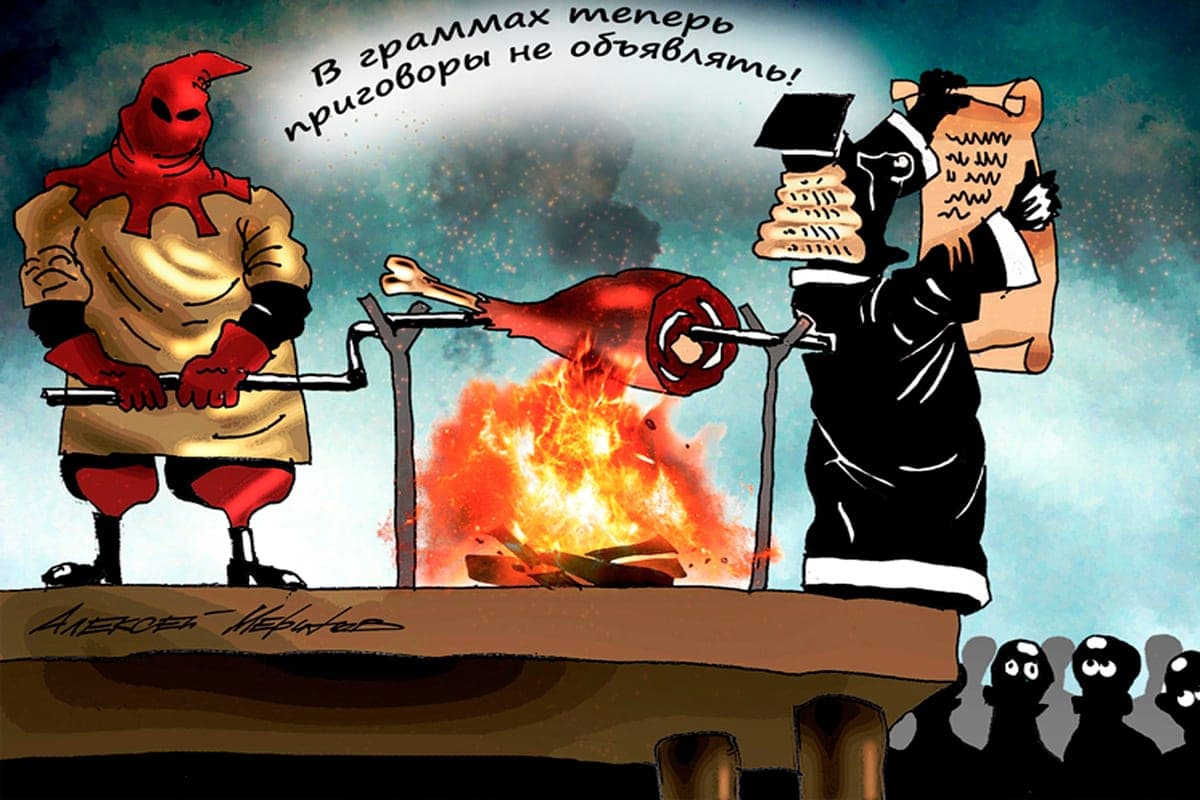
Marketing services of chain supermarkets do not lag behind independent sellers and, along with them, have also long used various tricks how to force a buyer to purchase goods. After all, revenue directly depends on this. At the same time, as MK found out from experts, the indication of the price tag for 100 g is not a fraud in the literal sense of the word. And it is your fault - carefully study the price tag.
We have seen this move in supermarkets. For example, on the price tag of cookies, the amount of 49.99 rubles is indicated, and very tiny letters from above are printed “100 g” (that is, 49.99 rubles refers to 100 g). You might think that the entire package costs 49.99 rubles. We bring the pack to the price reading device in the trading room, and the price of 150 rubles pops up on the scoreboard, not 49.99 rubles. - Correct, because it has 300 g!
In the state Duma, meanwhile, as reported by TASS, developed a bill to combat this phenomenon. They want to force stores to indicate on price tags the full cost of packaging products, not just the price for 100 g.
About this initiative in his official channel told the Deputy of the state Duma Leonid Slutsky. In his opinion - and no one will argue with this! - the buyer must know the full price of the goods to the cash register! As he reasonably noted, a person choosing products in the store, calculates his expenses, and at the checkout it turns out that you need to pay much more. Moreover, we add from ourselves that few people notice suddenly “increased” price at the checkout! Most do not look at the check and bring the goods home, happily unaware of its true price. The saddest thing is that this trick is designed for pensioners.
Therefore, deputies want to oblige shops to indicate on the price tag the full cost of packaging the product. The price per 100 grams or other unit of measurement can be left, but only as additional information - it should not replace the total amount. The bill proposes to amend article 10 of the law “On protection of consumer rights”.
However, as Svetlana Ilyashenko, associate professor of the Department of International Commerce and Logistics of RANEPA, emphasized in an interview with MK, attempts to legislatively change the requirements for the registration of price tags are not being made for the first time.
“In 2023 and 2024, the State Duma has already introduced bills providing for the mandatory indication of the price per unit of measurement of goods, for example, per kilogram or liter,” she says. This would allow buyers to compare the cost of products in packages of different weight and volume. However, both bills were rejected. It is now proposed to resolve another situation where, instead of the cost of the entire package, the buyer is indicated only the price per 100 grams.”.
According to her, in some cases, the cost of 100 grams of goods stands out on the price tag in large print, while the price for the “unit of measurement” (baton of sausages, a pack of cookies, sweets) is indicated much smaller. The buyer first of all pays attention to a large figure and may mistakenly perceive it as the cost of the entire package.
“From the point of view of marketing, this way of representing prices can be considered as a kind of price framing,” explains the economist. This is a well-known technique based on the fact that the form of presentation of information affects its perception. In itself, it is not a fraud. However, if the design of the price tag gives the buyer an incorrect idea of the amount to be paid, the question arises of misleading the consumer.”.
At the same time, specifying the price per 100 grams in itself is quite justified. For weight products, this is a familiar way to determine the cost, and when comparing products of different packaging, such information is even useful. The problem, as Svetlana Ilyashenko emphasized, arises when the goods are sold exclusively in whole packaging, and the buyer is informed only of the cost of its part. To purchase specified on the price tag 100 grams in this case, he can not.
It cannot be said that the controlling authorities do not fight this phenomenon. For example, in March 2026, the Office of Rospotrebnadzor for the Altai Republic announced a warning to Agrotorg LLC after an appeal from one consumer about indicating the price for 100 grams of fixed weight goods. In September, Rospotrebnadzor separately explained that the price tag of a piece of goods with a fixed mass should indicate the price per unit of goods regardless of its weight.
That is, in other words, the legal grounds for imposing requirements for the registration of such price tags already exist. Article 10 of the Consumer Protection Act obliges the seller to provide the necessary and reliable information about the product, including its price. Paragraph 3 of the Rules for the Sale of Goods, approved by the Decree of the Government of the Russian Federation of May 30, 2026 No. 657, provides for an indication of the price per unit of goods or per unit of its measurement. “But it is the wording “or” that leaves space for ambiguous interpretation,” our interlocutor noted. A new legislative initiative is aimed at a clearer delineation of these situations.
According to the economist, the buyer should see both prices: the full cost of packaging and the price per kilogram or liter. The first allows you to immediately understand how much you will have to pay, the second – to compare the offers of different manufacturers. This is especially true when on the same shelf are the same products weighing 800, 900, and 1000 grams.
And in general, cunning "games" with numbers on price tags in the expectation of simple-minded buyers, as already mentioned, shops practice a lot. From the same series, for example, this technique: a large font indicates the price: "Caviar from squash" - 119.99 rubles, and finely at the top: "without a card 142.99 rubles." Discount cards are now available to most buyers, but not 100%. Such a technique as confusing price tags is also widespread. This is when a lot of price tags are attached to the freezer, and it is not clear which frozen product belongs to which. Obviously, if a person has a lot of time, then he will try to find his price tag. Moreover, the “ambush” is that the name of a product can be the same: “Frozen fish”, but the manufacturer is different and the prices are also different. Well, and so on.
Head of the Moscow Society for Consumer Protection Anton Nedzvetsky, in turn, in a conversation with MK, expressed the opinion that to correct the situation, retail chains need to come to uniform and understandable standards of information about discounts and promotions. In the meantime, the expert advises to read price tags literally “with a magnifying glass”; then take a paper check from the cashier and compare the prices of goods printed in it with the price tags on the windows and shelves on which you took the goods. After all, the transition to the electronic format of checks led to the fact that many buyers stopped looking at them altogether. You should not lose vigilance, otherwise you will spend more than you expected. It's good for the slick sellers.
