
Overtaking inflation: contributions for capital repairs rise in price regardless of utility
Analyzing the dynamics of utility tariffs, social networks drew attention to a formally independent, but important part of our payments: fees for major repairs
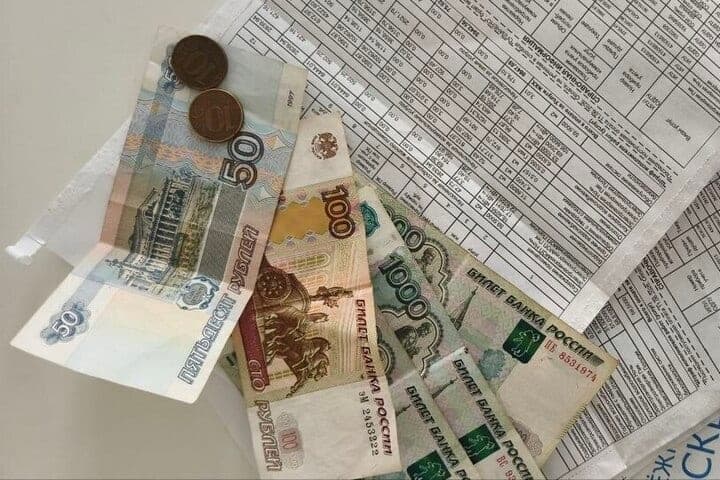
On average, from July 2025 to July 2026, tariffs for overhauls increased by 15.5% (with official annual inflation of 6%). In different regions, prices vary in different ways: this is a consequence of the fact that the system of collecting contributions for overhaul is implemented not at the federal, but at the regional levels. Therefore, by the way, the indexation of these tariffs, as well as rates for housing maintenance, are not synchronized with the rest of the “communal” – that is, tariffs for electricity, gas, water and heat supply.
On average, in the Central Federal District (CFD), the fee rate for major repairs is 15.35 r per meter (for the year the price increased by 17.3%). The minimum amount of contributions is in the Tver region, 6.03 rubles per square meter (though not for all types of apartments - what is below).
In different regions, tariffs are raised in different ways: somewhere, as in the Ivanovo region, there has been no increase since 2024 (but then, two years ago, the fee increased immediately significantly). Somewhere rates “jumped” this year (in Vladimir – by 38.6%, in Yaroslavl – by 37.6%). And somewhere index slowly but steadily (as in the Kostroma region, where tariffs this year grew by a modest 5%).
Interestingly, the principle of charging fees for capital repairs varies from region to region: in some subjects the rate is tied to the types of houses, in others it is differentiated. With a "flat" tariff live, in addition to Moscow, Yaroslavl,
Smolensk, Ivanovo, Kostroma, Ryazan, Kursk, Lipetsk, Moscow and Orel regions. Only 10 regions out of 18. In 6 subjects, the tariff varies depending on the availability of the elevator (with an elevator, of course, more expensive): this is how the fees for capital repairs are formed in Belgorod, Bryansk, Vladimir, Tambov, Voronezh, Kaluga.
Finally, in the Tver region, there are three tariffs: for unsatisfactory houses (those with toilets on the street - there are such two- and even three-story buildings), "with an elevator" and "without an elevator." And in Tula – the maximum differentiation: to the Tver three categories is added a separate (increased) rate for monument houses.
Let’s return, however, to Moscow: monthly the average citizen pays about 1600 rubles for the upcoming overhaul of his house. Maybe not so much, but not so much to just spit on the money. Therefore, as tariffs increase, interest in how the overhaul system is arranged also grows.
“Everyone who was interested in the topic of capital repairs knows that the money of apartment owners can be sent along one of two trajectories,” Natalia S., the long-term chairman of the board of one of the Moscow housing and communal services, where the overhaul under the city program took place in the early 2020s, told MK. By default, the money is collected in the “common boiler” of the regional capital repair fund, from where it is spent on repairing houses according to the calendar schedule. That is, this year for houses that are being repaired now, next year for houses next year, and so on. But there is another possibility: by the decision of the general meeting of owners, you can choose a dedicated account on which money is collected for our house.
Both methods have advantages and disadvantages, the MK interlocutor noted. “The general boiler does not allow us to control how much money is collected for repairs, and spend them strictly on our house,” the chairman said. But at the same time, you can let everything go by itself and not worry about whether there are enough funds for work according to your own plan. A dedicated account gives more control, but this control should be used: this method is suitable for HOA, cooperatives, where there are constantly involved in the affairs of the house qualified people.
In any case, in the production of the overhaul itself, the owners of the house have several opportunities to manage the process: the general meeting of owners, according to the Housing Code, discusses the list of works on the eve (usually a year before) of the repair, and also chooses representatives who will be included in the commission for the acceptance of work. But all these levers of influence rest on the OSS, the general meeting of owners, the MK interlocutor emphasizes. If the house fails to hold a meeting, if there is no initiative group, everything is decided without residents: the list of works and acceptance in this case is carried out without the participation of owners.
In other words, to participate in the disposal of the accumulated contributions will only be able to residents of those houses where the communication of owners with each other and are productive OSS. In other cases, the only thing that residents can do is check whether they do not include benefits for contributions to overhaul. In Moscow, for example, large families can reduce contributions by 30%, pensioners over 70 years old can by 50%, and single pensioners over 80, like Heroes of the Soviet Union, Russia and Heroes of Labor, do not pay this contribution at all.
