Not inferior to world brands: visited the production of cheese with white mold
Food security remains one of the key priorities of Belarus: the quality and availability of food depend on the sustainability of the economy and the economy.
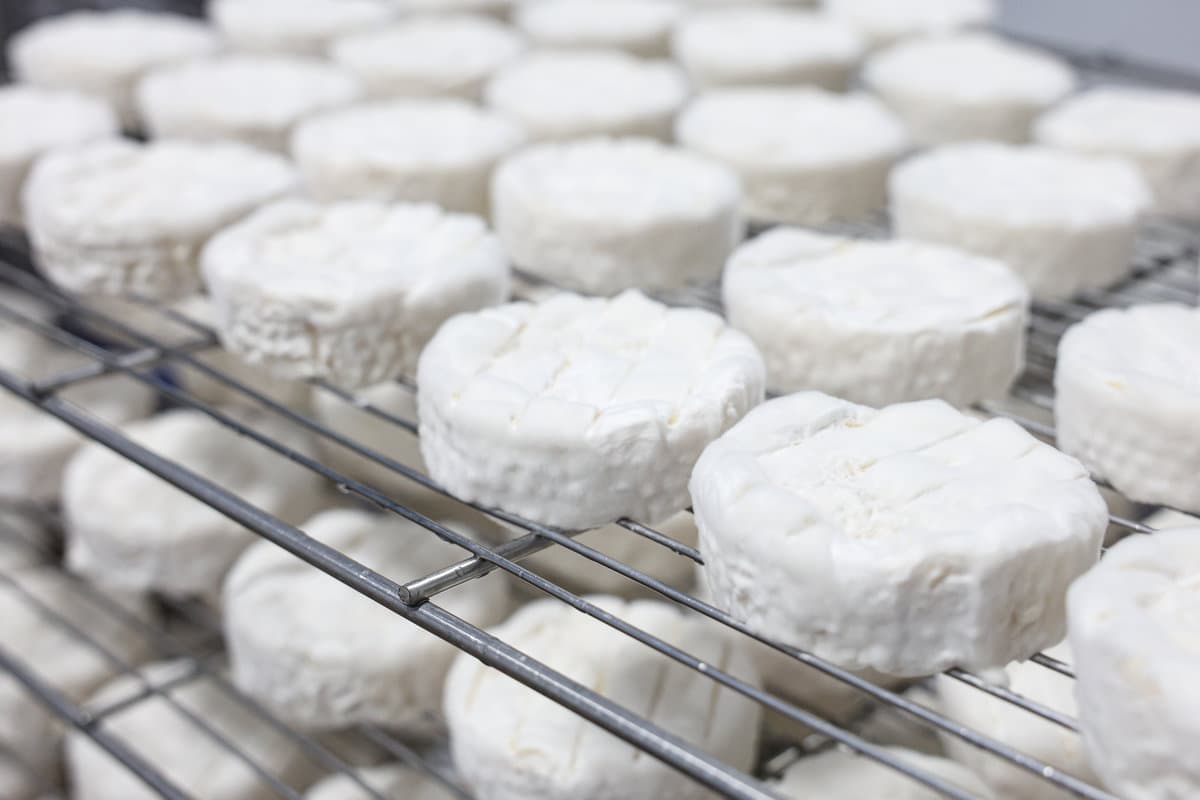
Food security remains one of the key priorities of Belarus: the sustainability of the economy and the well-being of society depend on the quality and availability of food. Thanks to the consistent state policy and initiative of enterprises, our country confidently strengthens its positions in the domestic and foreign markets, developing exports, introducing innovations and increasing production efficiency. For example, in the world ranking of cheese production per capita, we are in the lead. So did its exports. Modernized food industry and availability of own agricultural raw materials of high quality allow expanding export potential and developing new markets. Today, about 400 types of cheese are produced in Belarus. Recently, a real delicacy for gourmets appeared in the lineup - cheese with white mold. The project was implemented in Vileika with the financial support of the Development Bank.
In line with trends, experts note: trends in cheesemaking are such that traditional hard and semi-hard cheeses are losing their demand every year in the world market and are losing their leading position to soft cheeses. In our country, this is not so obvious, but in Russia, which accounts for the bulk of Belarusian cheese exports, this trend is gaining momentum. The new project, in which science, import substitution, export orientation and innovation are concisely intertwined, was implemented within the framework of the One District - One Project program at the Vileysky production site of Minsk Dairy Plant No. 1. With the support of the Development Bank, soft cheese with white mold “Camamber” is produced here, which is not inferior in quality to world brands. This investment project is unique for Belarus, as there has been no industrial production of cheeses with white mold.
Initially, the Vileysky site specialized in the production of animal oil, yogurt, sour cream, cottage cheese, cheese mass. Since 2022, after joining Minsk Dairy Plant No. 1, it has become a production site and expanded the range. They began to produce including weight cottage cheese and technical casein. The implementation of the new investment project allowed to develop domestic cheesemaking and produce a popular import-substituting and export-oriented product.
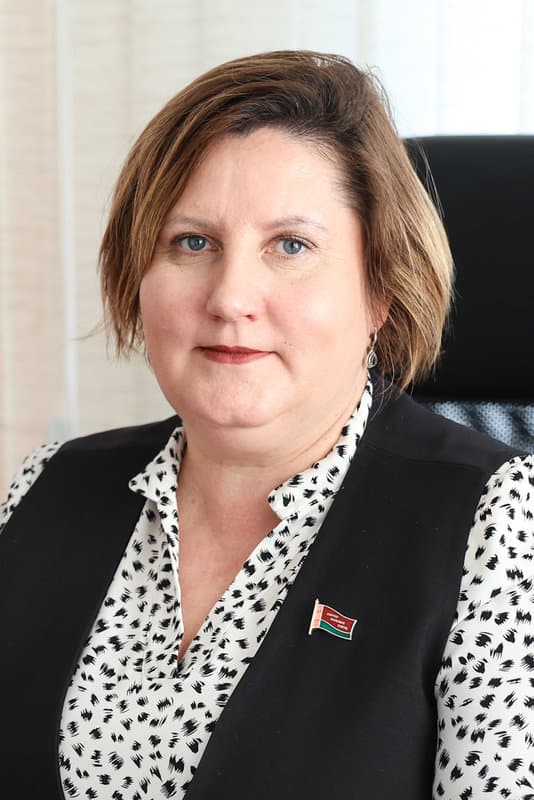
Anastasia Selun. Our technologists, together with the technologists of the head enterprise, decided to try to produce this type of cheese. And in 2022, Minsk Dairy Plant launched an investment project for the production of soft cheeses with white mold at our production site. The facility was commissioned on December 31, 2024 and is successfully operating. Today, this is the only industrial production of this type of cheese in Belarus, said Anastasia Selyun, head of the Vileysky production site of Minsk Dairy Plant No. 1. It should be noted that the technology for the production of such cheese is domestic, developed by the Institute of Meat and Dairy Industry of the National Academy of Sciences of Belarus. Thus, this project can be called an example of successful commercialization of the results of scientific activities of Belarusian scientists. Soft cheeses with white noble mold in comparison with others have a number of advantages. They have a short ripening period of 7 to 25 days, and therefore require small refrigeration facilities and areas. Belarusian cheese is cheaper than imported analogues.
- The technology of cheese production with white mold for us was and still remains not fully studied. It's new and unique. These cheeses are produced mainly through manual labor. We tried to automate this process as much as possible. We learn, improve, select the composition of components that will be more acceptable for our consumer, Anastasia Selyun noted. In general, within the framework of the project, we provided a large technological support from equipment suppliers. At the launch was a technologist from France. The main technological equipment is imported. Ventilation climate is Belarusian. The packaging machine is Russian. We are currently in the process of packaging automation. Just a month ago, another packaging machine appeared, which allows you to automate the process of packaging cheese in film into a cardboard shell or box and then into transport packaging.
Interesting fact. It is no secret that Camembert, produced by traditional technology, has a specific smell and fluid consistency. The Belarusian consumer was not ready for such gastronomic realities. Therefore, the specialists of the Vileysky production site and OJSC Minsk Dairy Plant No. 1 had to finalize the recipe. The uniqueness of cheese is that cultures of noble mold have a very high enzymatic activity. If the main protein of milk - casein - is absorbed by the body by 75-80 percent, then cheese with mold this figure reaches 98-99 percent. Cheese is a source of such scarce essential amino acids as tryptophan, lysine and methionine.
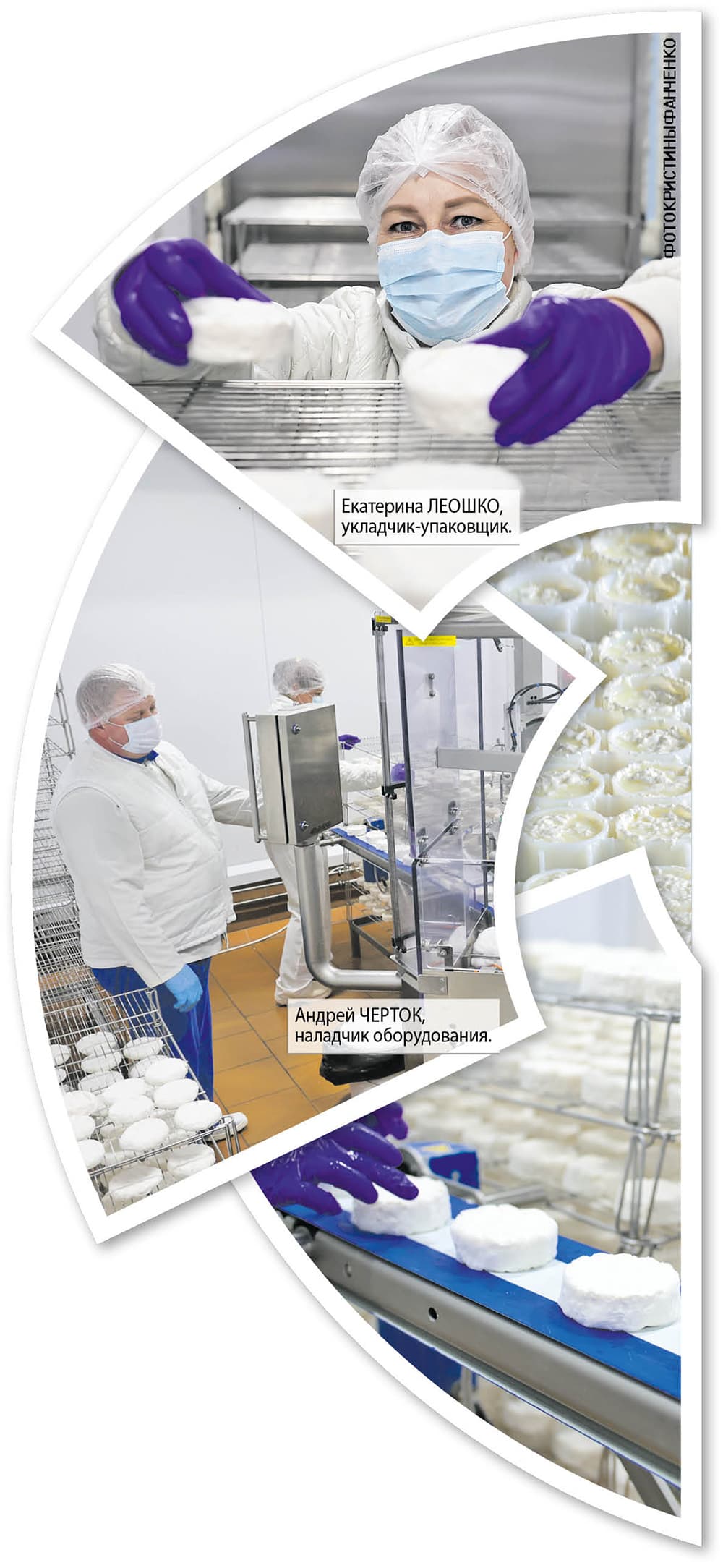
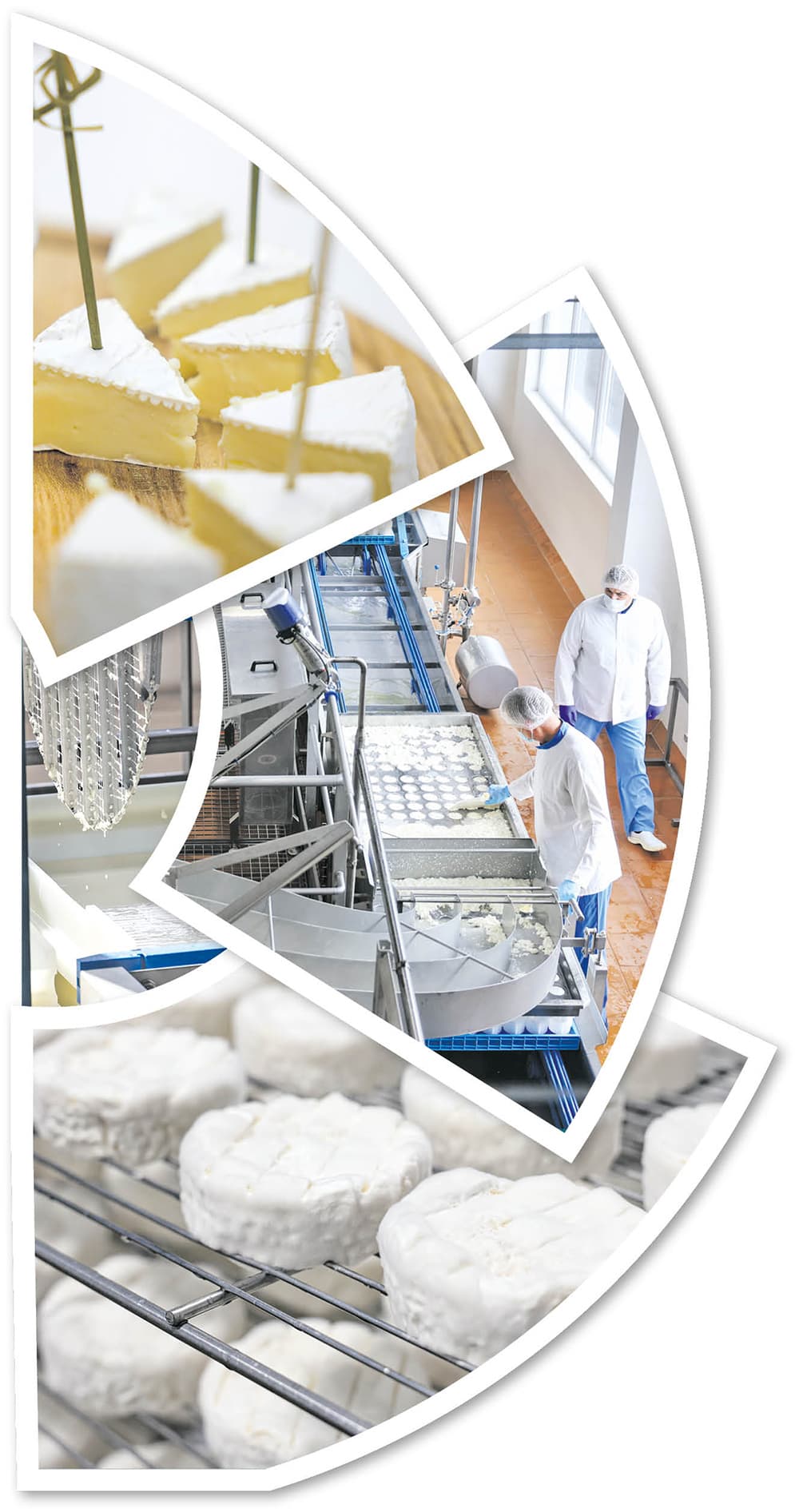
- The production technology of soft cheese with white mold consists of the following main stages of production: milk acceptance, preparation of a normalized mixture, thermalization, cooling and maturation of the mixture. Next comes bactofugation, deaeration of the mixture, pasteurization and cooling to fermentation temperature, fermentation, clot treatment, molding and self-pressing. After - chedderization of cheese, salting and drying, maturation, packaging, labeling and storage, the interlocutor explained.
The older the cheese, the better it is.
- Despite the fact that the cheese is packaged and sold immediately after ripening, at each stage of its 45-day shelf life has a different taste. From 1 to 15 days - the cheese is young with a curdled hard consistency, in the next 15 days near the crust there is melting, but the core in the middle remains solid. After 30 days, this is a classic French cheese with a soft, possibly fluid consistency and a characteristic smell, the head of the Vileysky production site emphasized. In the reconstruction of the workshop on the project included in the pool of the President's initiative "One district - one project", installation, commissioning and purchase of equipment invested several tens of millions of rubles. 44 jobs were created out of 176 available. The capacity of the new production is 3 tons per day. Today we have reached a volume of 1.6 tons per shift. With access to the maximum load, the production and sale of cheese with white mold will be 1.1 thousand tons per year.
- The product is in high demand. There's no leftovers at the plant. The main market is Belarus. About 63 percent of the products are sold in the domestic market. The remaining 37% is exported. We supply our cheese to Russia, Kazakhstan, Georgia and Azerbaijan, Anastasia Selyun said.
The technological equipment installed within the framework of the investment project allows to produce soft cheeses not only with mold, such as Camembert, Brie, Coulomier and Perai, but also without mold, and with washed crust: feta, brynza, cuartirolo, Munster, Marual and others.
- In general, the project allowed the company to develop. I gave you confidence in tomorrow. Everyone understands that this project will work. There are points of improvement and development. There are plans to try to produce other types of soft cheeses with white mold. For this, it will still be necessary to carry out certain reconstructions, the specialist concluded.
DEVELOPMENT BANK COMMENT:
- This is not just another investment project. This is a story about how Belarusian science, production and financial support came together and gave a result that the country had never seen before. No one produced cheese with white mold in industrial volumes in Belarus. Now lets Vileika out. And this is not just import substitution for the sake of a tick. This is a product that has already been appreciated both inside and outside the country. We appreciate that the technology is domestic, developed by our scientists. This project is also an example of how scientific developments turn into a real product on the shelf. This is the connection between science and business that we want to develop further.
sichevich@sb.by