
We watched how thousands of tons of beets are turned into sugar at the Slutsk sugar refinery
At the beet point of the plant, one after another, cars come, bringing tons of root crop from the fields. Nearby unload raw materials received by rail. Then the beets ...
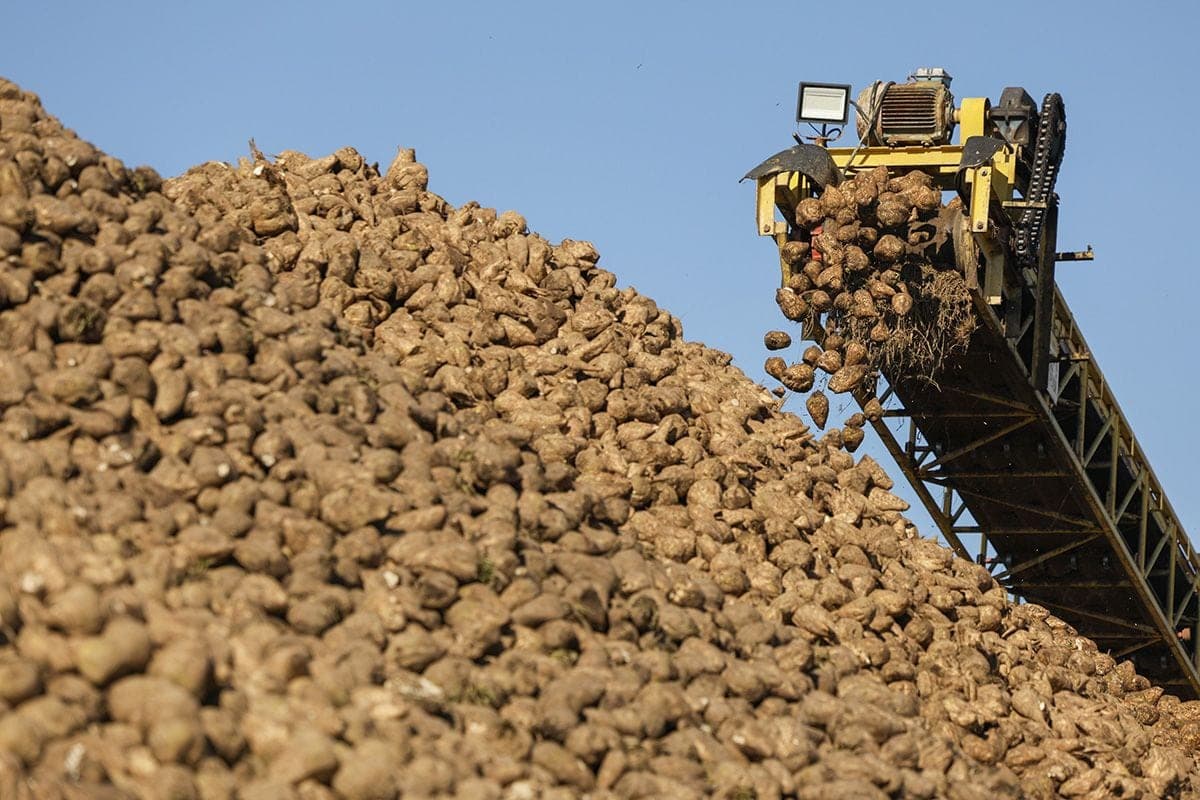
At the beet point of the plant, one after another, cars come, bringing tons of root crop from the fields. Nearby unload raw materials received by rail. Then the beets are washed, cut, juice is extracted from it, cleaned, evaporated, boiled, centrifuged and dried. After about 16-17 hours from what was in the back of the truck, the finished sugar is obtained. Correspondent "R" went to JSC "Slutsk Sugar and Finish Plant" to see the magic of this transformation.
Agricultural organizations apply for the export of beets according to the schedule. After that, our agronomic inspectors send the necessary transport there, says Andrei Ivanov, Deputy General Director for Raw Materials.

On average, the enterprise receives 12-14,000 tons of beets per day. About 70 percent of raw materials are delivered by car, mainly beets from the Minsk region. From more remote regions, much of the raw material comes by rail.
Beets, which were brought by cars, are unloaded on kagat fields, from where some of the raw materials are immediately sent to production, and some are laid for storage. With railway cars, everything is arranged differently: beets are immediately unloaded and sent directly to the plant.
For production, it is important not only to bring raw materials on time, but also to keep them before processing.

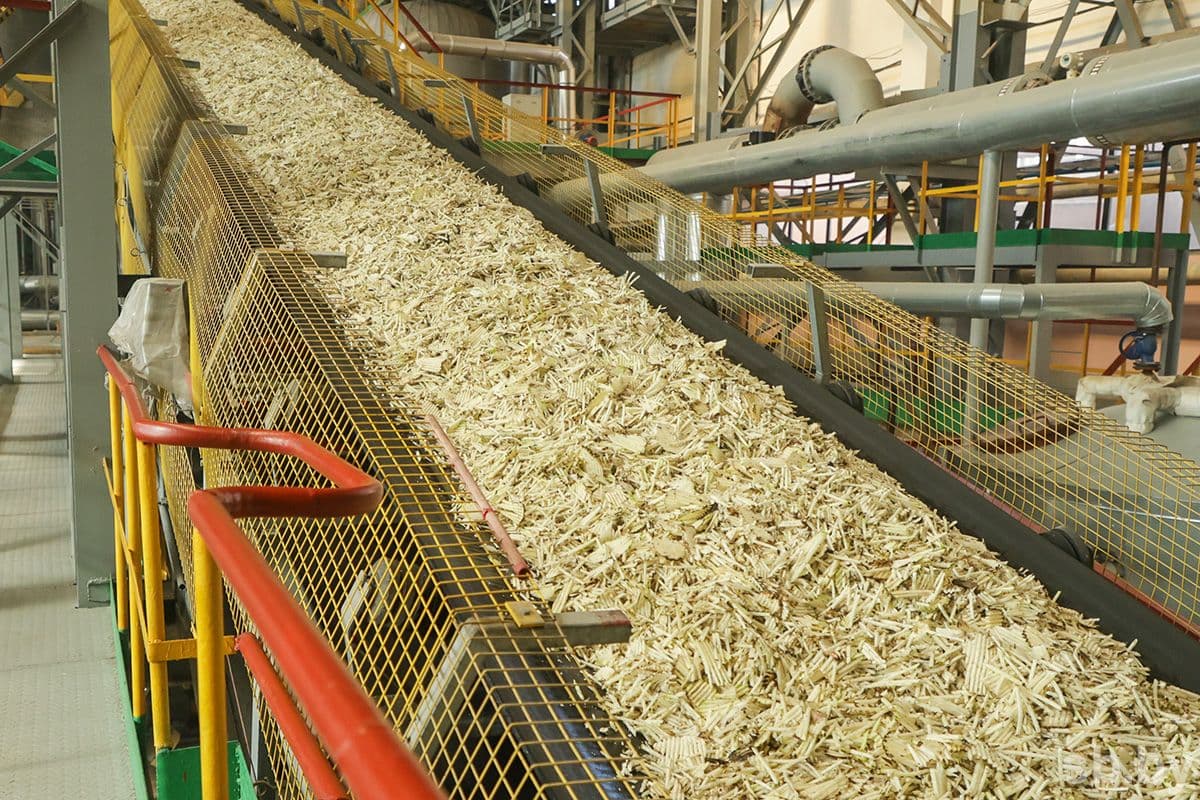
Raw materials should be quickly included in the technological chain. And the first stop along the way is the washroom. Beets come there from kagat fields through the hydrotray. The flow of water simultaneously moves the root vegetables and helps clear them of sand, grass and stones. After washing, the beets go to the beets. The clearly debugged mechanism of the beet cutter cuts the root vegetable into shavings: the knives are installed with displacement, so the cut is of a characteristic shape. The operation itself is automated, but man controls the equipment.
The adjuster of beet cutting equipment Vladislav Ganenko shows how this site is arranged. Knives need to be removed, transferred to a special cart, then install the cassette for automatic disassembly. There the bolts unwind themselves, after which the knives are sent for automatic sharpening.
- At the beginning of the working day, we completely change the cassettes on the beets because the knives wear out over time. Then we wash everything, process it, collect it back. And then we are already monitoring the equipment, Vladislav enters the course of the case.
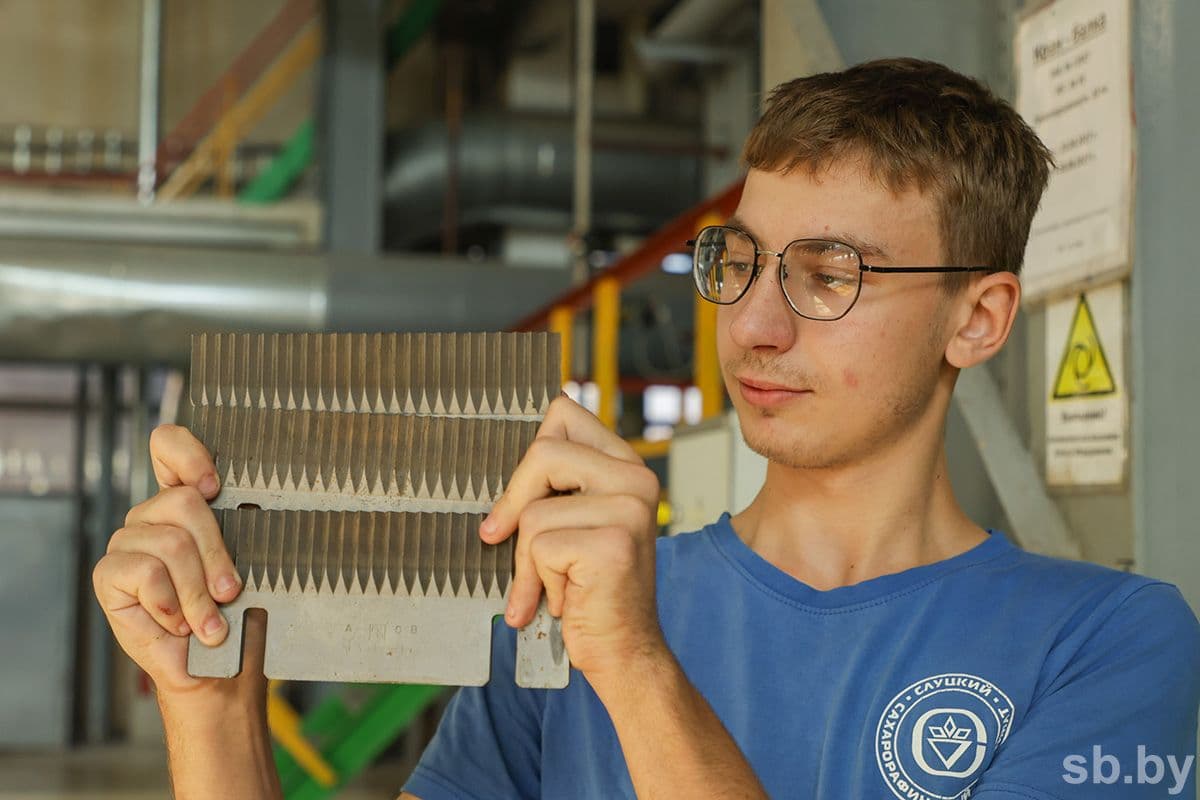
He has been working at the company for about a year. The profession was offered to master here.
- My father, grandfather and other relatives on my father’s side work here. We can say that we have a whole family history, the adjuster smiles.
His father is engaged in molasses spilling, his grandfather works in the repair and construction site. Vladislav is still mastering the profession, but already knows that there are surprises in production.
- It happens that out of three working cuts, one remains. Then you have to clean the equipment and make sure that everything works again, he says.
Meanwhile, the beet chips are already going further. In the diffusion apparatus, juice is extracted from it - the main raw material for the next part of the process.

In the laboratory, this is particularly clear. Its specialists take samples and check whether the process corresponds to the specified technological regime.
In the initial stages of production, lime is added to the juice. It binds impurities, after which the formed sediment is separated during filtration. To do this, a system of 32 filter frames is used: the purified juice passes through the fabric and is removed further, and the solid fraction remains on the filter. From it in the future, defecation is obtained, which is used in agriculture as a fertilizer to reduce the acidity of soils. Tests are taken in the laboratory approximately every hour.
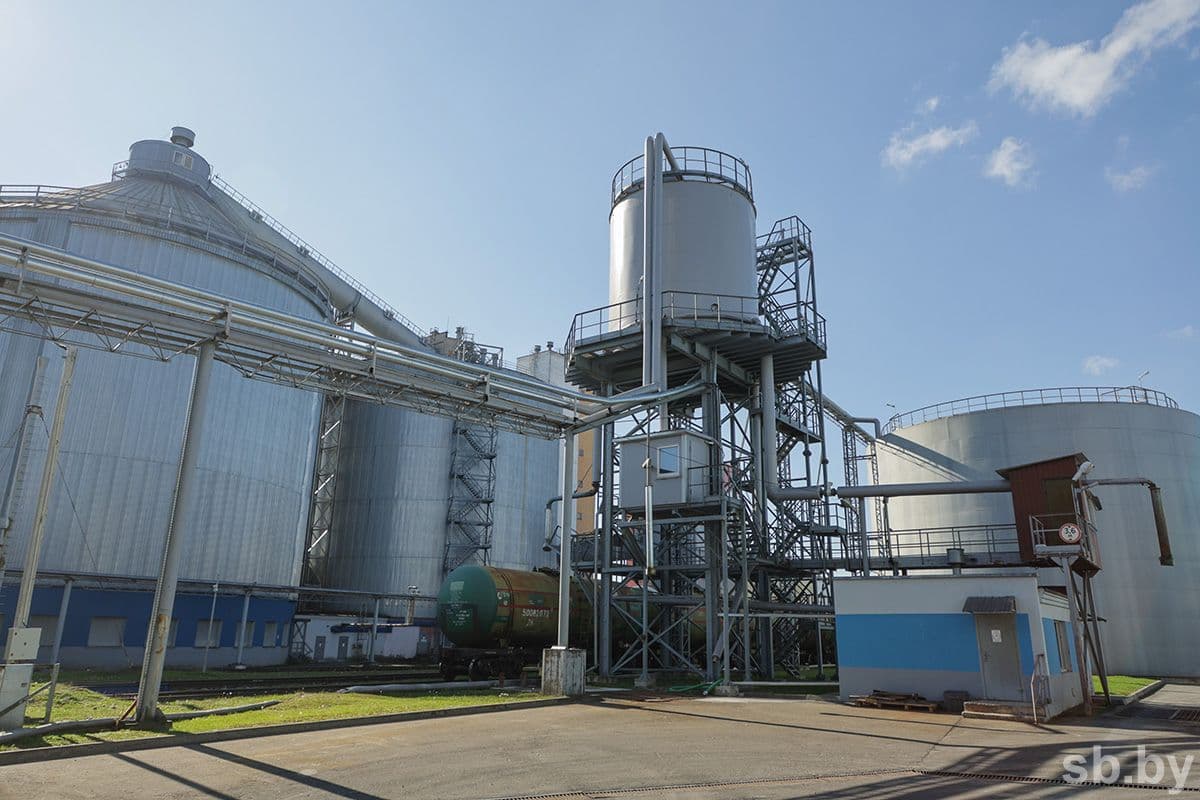
After cleaning, the juice is sent to the evaporation compartment. Here, water is gradually removed from it, and the dry matter content increases from 17 to 80 percent. That's how you get concentrated syrup.
For what is happening in different areas, experts observe from the control center. On the screens you can see the washing of beets, diffusion apparatus, the movement of pulp, the work of juice cleaning, filters and evaporation station. Separately, the level of beets in the bunker above the beets is displayed. Its capacity is up to 500 tons.
At one of the workplaces – engineer ASUP Elena Morotskaya. More than 20 years in the profession. Its task is to connect different areas of production.
- There are radios at the main technology stations. I'm told they're serving cars or putting tanks. Somewhere you need a locksmith, electrician or other specialist. I take the information and direct the right person. A lot of things are done at the touch of a button. You press the stop and the equipment stops, explains Elena Morotskaya.

Automation at the plant has developed gradually over the years. Today, they strive to minimize manual labor and leave it only where it is impossible to replace a person. From the evaporation compartment, the syrup is sent to where the transformation of liquid raw materials into sugar begins. At the final stage, boiling in vacuum devices receive utfel - a mass consisting of sugar and intercrystal solution. For sugar to crystallize, cooking alone is not enough.
- We need a seed, a base for crystals. At first they are small, then gradually grow to 0.7 mm. After further cooking, the crystals reach the desired size. Next, centrifuges, where the intercrystal solution is separated from the sugar. It turns out white sugar, while still wet, so drying and packaging follow, explains chief technologist Andrei Strom.

But the technology chain doesn’t end there. The intercrystal solution after the first and second stages still contains sugar, so it is again used in production. After the third stage of cooking, molasses remains. It is used in the production of alcohol and yeast. The company notes that three stages are enough to maximize the extraction of sugar.
- At the beginning of the sugar beet processing season, it takes about a day to start. To fill the equipment and get the first sugar, you need about 10 thousand tons of beets, says Andrei Strom.
The plant has the opportunity to continue production after the end of the beet campaign. Part of the syrup is not processed immediately into sugar, but is accumulated in special containers in order to use it in the future. The last section of our route - the shop of finished products. After drying, the sugar enters the packaging. The master of the workshop of finished products Alexey Korzun has been working at the enterprise for almost 20 years. He came here as an equipment adjuster after graduating from Slutsk State College. And when in 2013 opened a new packaging factory, retrained and moved to work here.
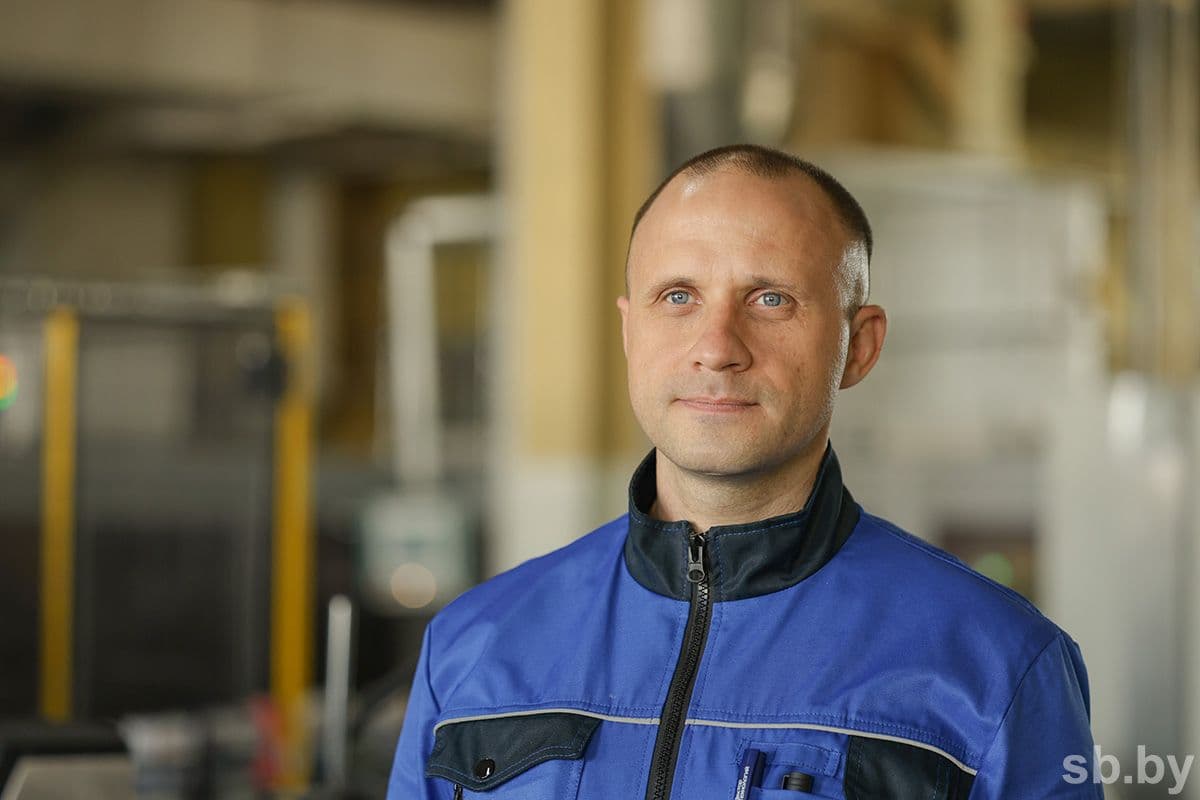
Today, packaging and packaging looks very different. Man controls the line, and automatic systems do the basic work. The operator pays special attention to two things - the quality of the packaging and the weight of the product. Weighing and rejection occur automatically, but the operator additionally conducts control checks on stationary scales.
One line is able to package 130 tons of sugar per day for one kilogram. There is a group pack of 10 kilograms. In addition, the company produces lump sugar - in a special form-matrix.
The finished product is sent to the site where it is laid by robotic manipulators. The company operates three such robots - one for each line. There is also a separate line for packaging and packaging products in polypropylene containers with a capacity of 500 to 1000 kilograms.

On September 10, 2026, the company has produced an eight millionth ton of sugar since it opened in 1965. Today, the plant occupies more than 30% of the sugar market of Belarus.
stepanchuk@sb.by
