Blow the plan on uncertainty. Forecast is not a prediction, but a justification of public policy
Unfortunately, the world economy today is ruled by various uncertainties. Many of them are caused not by fundamental factors, but by political factors.

Unfortunately, the world economy today is ruled by various uncertainties. Many of them are caused not by fundamental factors, but by political decisions: sanctions, conflicts, trade wars, fighting. And these sudden movements, in turn, in some cases become a reaction to the frightening unknown. Predicting and planning has always been a difficult and thankless task. Is it even more worth doing today? Or not to be distracted by future assessments, but to focus on the present and deal with operational issues as they arise and arrive? Experts spoke about this during a panel discussion at the XXVII International Scientific Conference “Problems of Forecasting and State Regulation of Socio-Economic Development”, organized by the Research Economic Institute (RIEI) of the Ministry of Economy.

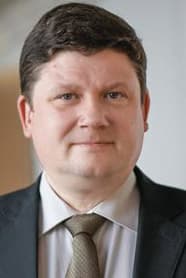
Alexander Shirov. Paradoxically, post-Soviet economies are in some ways even better off in crisis situations than in periods of relative calm. The paradox was explained by the director of the Institute of National Economic Forecasting of the Russian Academy of Sciences Alexander Shirov. Unlike global cataclysms, both the Belarusian and Russian economies experienced a series of local periods of severe economic turbulence. They have been happening relatively regularly since the late 1980s, when the reforms of the perestroika era did not quite produce the results expected of them. And then came the collapse of the Union and a series of other adverse events. According to Alexander Shirov, our countries have developed broad anti-crisis competencies.
- We have learned to overcome any crisis, the expert is convinced. But we are not doing well to grow sustainably in the medium and long term.
Sustainable development requires a strategic vision. Paradoxically, it is all the more necessary the more chaotic the world is.
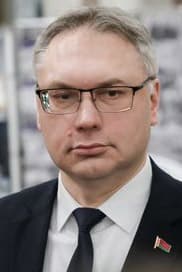
Vasily Gursky. “The grandmaster plans the game sometimes several dozen moves ahead,” explains Vasily Gursky, chief scientist of the National Academy of Sciences. He plans his actions, although he cannot fully know how the enemy will behave. This grandmaster is different from just a good chess player. Planning is a form of orderliness that responds to the challenges of uncertainty. But planning qualitatively, taking into account all the opportunities and risks is a difficult task.
Vasily Gursky is convinced that strategic plans should focus not so much on specific figures as on determining the goals and tasks that the country needs to solve.
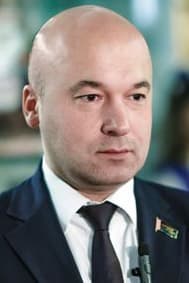
Roman Brodov. Chairman of the Standing Committee of the Council of the Republic of the National Assembly on Economy, Budget and Finance Roman Brodov also agrees with him. He believes that it is not necessary to approach medium- and long-term forecasting and planning from the point of view of a dry economy. In his opinion, this is not effective. But the same five-year programmes of social and economic development are needed. But they should be perceived not as step-by-step instructions, but as a guiding document.
- It is not specific figures and institutional ties that are important, notes Roman Brodov. Signals that regulators give to the market are important. Five-year programs of socio-economic development are therapeutic. Set vectors, orientations of movement. This is one of the tools to reduce general anxiety, as key, priority areas are identified. Objectives define means
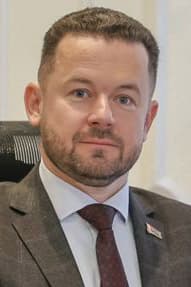
Andrey Kartun. “It is necessary to set global goals, to which we will go regardless of external factors,” said Deputy Chairman of the Board of the National Bank Andrei Kartun. It is important that economic agents believe in this goal.
In this thesis lies a deep philosophical question: what is the primary study of the future or its formation? Undoubtedly, Belarus looks rather modest in the global economy. And whether we like it or not, we will have to take into account global trends and tracks. On the other hand, there are many, almost infinite scenarios that we can implement within the framework of the national economy without looking at import trends. For example, a strong-willed political decision was made to build the Belarusian nuclear power plant. Today, the global energy market is developing in a more dramatic way than was possible then, 20 years ago. However, it was obvious that the need for electricity generation would increase. Both in the world and in Belarus. In any case, the BelNPP would have fired. In the same way, we must shape our future and move towards it on various issues: how necessary is the penetration of digitalization, taking into account our desire to give our personal data to the external contour, or how we see transport on Belarusian roads in one or two decades. It will be exclusively electric cars or there will be a place for other engines. In what framework will be distributed drones and automated transport systems. And so on and so forth. Not fully, but not to a small extent, the future depends on our desires and efforts.
- It is necessary not only to look at technological trends, but also to assess their economy, said Alexander Shirov. It is realistic to look at the cost of implementing the technology, the availability of sufficient resources and other criteria. And then there will be an effect.

First of all, it is necessary to use the reserves that Belarus and Russia have in a wide range of industries: mechanical engineering, energy, vehicle production and many others. In these areas, we can implement innovative projects that can pay off perfectly within the framework of the market of the Union State and the Eurasian Economic Union. These products will have good export potential.
- It is necessary to really look at the possibilities of national economies, Alexander Shirov urges. We need to promote systemic, large-scale projects in areas where we have competencies. And with the right organization, they can have a big impact. Diversification of foreign economic activity, in my opinion, implies not changes in the structure of external supplies, but the principles of presence in foreign markets.
Alexander Shirov gives an example. Africa is now one of the most promising regions in terms of growth. For per capita energy supply to reach the level of China (not the highest in the world), an additional 10 million barrels of oil-equivalent energy resources are needed daily. Today, Russia exports 4-5 million barrels of oil per day. The expert is convinced that the demand for both energy and hydrocarbons will be high in the near future. Therefore, the development of extractive industries, providing their technologies, power engineering, equipment for energy transmission, appropriate infrastructure is guaranteed promising. And most importantly, we have some scientific and engineering groundwork in these areas. Undoubtedly, the technological landscape of the world is changing rapidly, and any changes in the landscape can dramatically affect the efficiency of certain businesses and even industries. Platform solutions in retail and services have reshaped some markets in a significant way. Marketplaces and digital platforms have rapidly strengthened, but the financial and economic indicators of traditional shopping centers and retailers have deteriorated. It is difficult to predict fully the movement of technological progress and its impact on socio-economic processes. Or almost impossible. But this is no reason to abandon innovative projects.
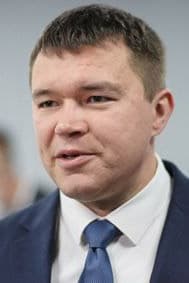
Dmitry Yaroshevich. Deputy Chairman of the Board of the Development Bank Dmitry Yaroshevich states: high risks are not a reason for refusing financing. He acknowledges that technological shifts can have a significant impact on the return on investment.
- First of all, we assess the ability of enterprise managers to make effective decisions under conditions of uncertainty, he explains. We should not be afraid of risks, but look for tools to level them. We adhere to these principles when evaluating projects. The result is that we do not have bad loans in our portfolio that are not serviced.
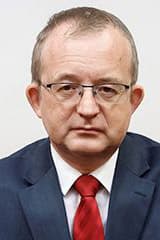
Sergei Dubkov. Chairman of the Board of CJSC BSB Bank Sergey Dubkov is also convinced that the key issue will be the level of training and the use of human capital and potential. He notes that the average turnover in the economy is 18 per cent. In his opinion, that's a lot. But in some industries, such as retail, this figure reaches 35 percent! The expert warns: in the coming years, the share of buzzers in the labor market will be about a third. Young people live in different paradigms than the older generation. They have a demand for self-realization, they have a developed sense of justice, they demand that the employer fulfill their promises. And it is necessary not just to listen to this, but to adapt, to transform jobs for a new labor market. Zumers will not adapt to the needs of the business, they will just leave and look for a worthy employer in their understanding.
Alexander Shirov and his colleagues conducted calculations. It turned out that the demographic problem, despite its acuteness, is not the most significant for the economy. With the existing potential of labor resources, the Russian economy can grow up to 4% per year.
- There are no problems with personnel, Dmitry Yaroshevich sums up. There is a question about the effectiveness of their use.
In short, uncertainties, risks and other challenges are not insurmountable. Another issue is that both thinking and management systems need to be re-examined. And remember, civilization was often an unstable structure. There have been periods of relative calm and predictability, but they have not been very short-lived in world history. Whether uncertainty is normal for humanity is a philosophical question. Humanity has developed under the most difficult conditions. Undoubtedly, after decades of globalization, the dominance of universal rules in the global economy, modern reality seems stressful. But it is not unique from a historical point of view.

Photo from the archive of the Security Council, Yegor Yermalitsky, Ilya Shvedko, from open Internet sources.