How to recognize Lyme disease and protect yourself after a tick bite, says an infectious disease doctor
In Belarus, the season of tick activity continues, which can cause a dangerous disease - Lyme borreliosis (Lyme disease). ...
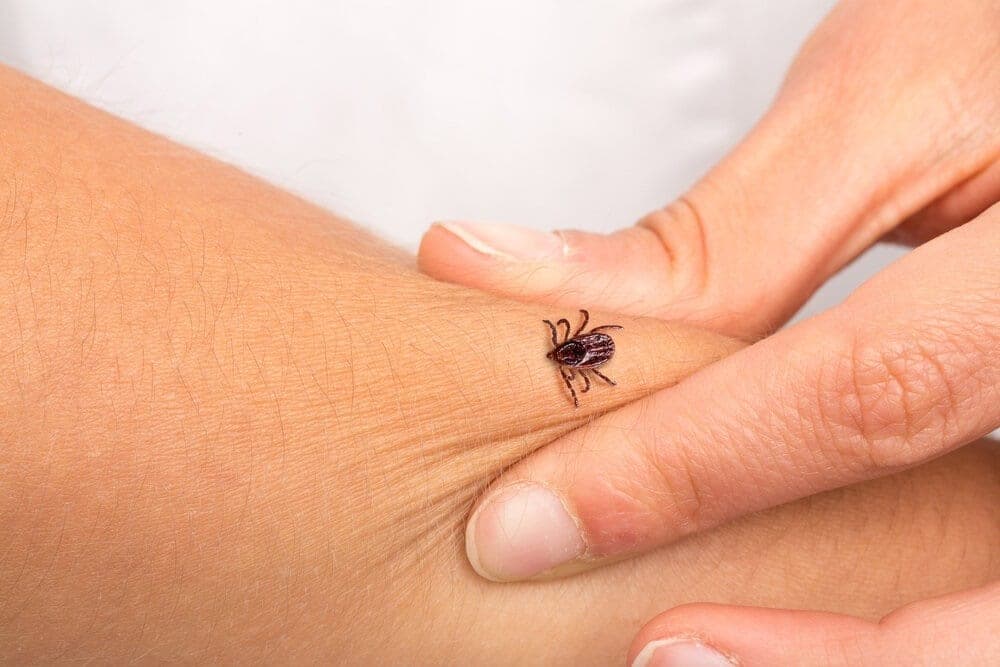
In Belarus, the season of tick activity continues, which can cause a dangerous disease - Lyme borreliosis (Lyme disease). This was told to journalists on September 9 by an infectious disease doctor of the City Clinical Infectious Hospital Tatiana Klennitskaya, the correspondent of the Minsk-Novosti agency reports.
According to the expert, the main vector of infection in our republic is the forest ixodic tick (Ixodes ricinus). The pathogen bacterium enters the human skin along with the saliva of the parasite at the time of suction. However, the disease does not develop immediately.
“Bacteria need time to accumulate in the skin in sufficient quantities,” said T. Klennitskaya. This process usually takes about 72 hours. Only after this period can the first clinical signs of lime borreliosis appear.
The infectious disease specialist explained that the main and most recognizable symptom of the initial stage of the disease is a specific spot on the skin - migratory erythema.
- We are faced with a variety of forms and shades of this manifestation: from pale pink to bright red with a bluish tint, explained T. Klennitskaya. A characteristic feature of erythema is its constant and gradual growth. Over time, the spot can increase to 15, 20 and even 30 cm in diameter, and in its center the skin often turns pale, forming a kind of ring. The insidiousness of Lyme disease is that subjectively this spot most often does not manifest itself in any way. A person does not feel itching, burning, or pain. The spot is noticed visually, and this often lulls the vigilance of patients.
The expert said that the first stage of the disease usually occurs within one month after contact with the tick. Without timely contact with specialists and a course of antibacterial therapy, the spot can disappear over time on its own. However, this does not mean recovery. In this case, the risk of infection in the second stage is high, which can develop between one and six months after the bite.
- The bacterium begins to spread throughout the body, warned T. Klennitskaya. - Joints, nervous and cardiovascular systems, as well as other areas of the skin are affected.
According to the infectious disease specialist, the second stage of Lyme disease is characterized by the following:
- 1.the appearance of several similar growing spots in any place on the body (not only where the tick was sucked);
- 2.severe pain in the joints (arthritis);
- 3.unusually severe headaches that are not stopped by conventional analgesics and anti-inflammatory drugs.
- To prevent the development of infection, adults need to consult a doctor within 72 hours after suction of a tick to prescribe antibacterial therapy, in particular, doxycycline, the expert added. With each subsequent bite, such prevention should be carried out again - as prescribed by a doctor.