Compression knitwear - salvation or danger? The vascular surgeon responded
Compression knitwear is not a universal remedy for all vascular problems, but a medical tool that, if used incorrectly, can harm. ...
Compression knitwear is not a universal remedy for all vascular problems, but a medical tool that, if used incorrectly, can harm. Vascular surgeon Ruben Tadevosyan explained in which pathologies it is necessary to use compression knitwear, and in which it is categorically contraindicated, what are the approaches for arterial, venous and lymphatic diseases and why elastic bandages and incomplete compression of the limbs often harm than help, writes sb.by.
- In vascular surgery, compression knitwear is used for arterial pathology (diseases of blood vessels that carry blood to organs and systems), venous (diseases of blood vessels that take blood from organs and systems and carry it to the heart) and lymphatic - lymphostasis and lymphodema (the lymphatic system does not work well and edema of the limb occurs), the doctor noted. In arterial pathology, that is, diseases such as atherosclerosis, poor blood flow to the organ or system, in the limb, compression knitwear can not be used. It can lead to trophic disorders such as ulcers. If there are problems with blood flow, for example, atherosclerotic plaques up to 50 percent appeared, but there are no significant narrowings, then compression knitwear can be used, but according to the doctor's recommendations. And only after restoring full blood flow in the limb, you can use compression knitwear.
Ruben Tadevosyan explained in more detail:
- For example, there was a problem in the leg in the right amount of blood was not received. The patient underwent surgery, blood flow was restored, and on the recommendation of doctors, you can wear compression knitwear, because there is already a full blood flow of the arterial in the lower limb.

- We divide it into the prevention of thromboembolic complications and the treatment of deep vein thrombosis. In the prevention of thromboembolic complications, for example, a person suffers from varicose veins, and may have to fly in an airplane or surgery, then in order not to get thrombosis against the background of varicose veins and prevent the risks of thrombosis, compression knitwear of the first or second class of compression is used. Important: if the patient has varicose veins and needs prevention, there is a problem with arterial circulation to the limb (that is, blood does not enter the leg enough and there is varicose veins), then in such a situation compression knitwear can not be used, because it carries the risk of ulcer formation. Prevention of thromboembolic complications should be carried out differently - by taking anticoagulants. But here you need to get the advice of a doctor.
The specialist detailed the treatment:
- If you have phlebothrombosis (deep vein thrombosis), compression knitwear is a very important part of treatment. It plays as important a role as therapy itself. You can't ignore her. It uses the second, third class compression. With lymphostasis or lymphodema (swelling against the background of a violation of the lymphatic system), flat-viscous compression knitwear is used. This mating allows you to directly improve lymph flow. Therefore, compression from the second class and above is used here. In this case, compression knitwear is often sewn for patients individually.
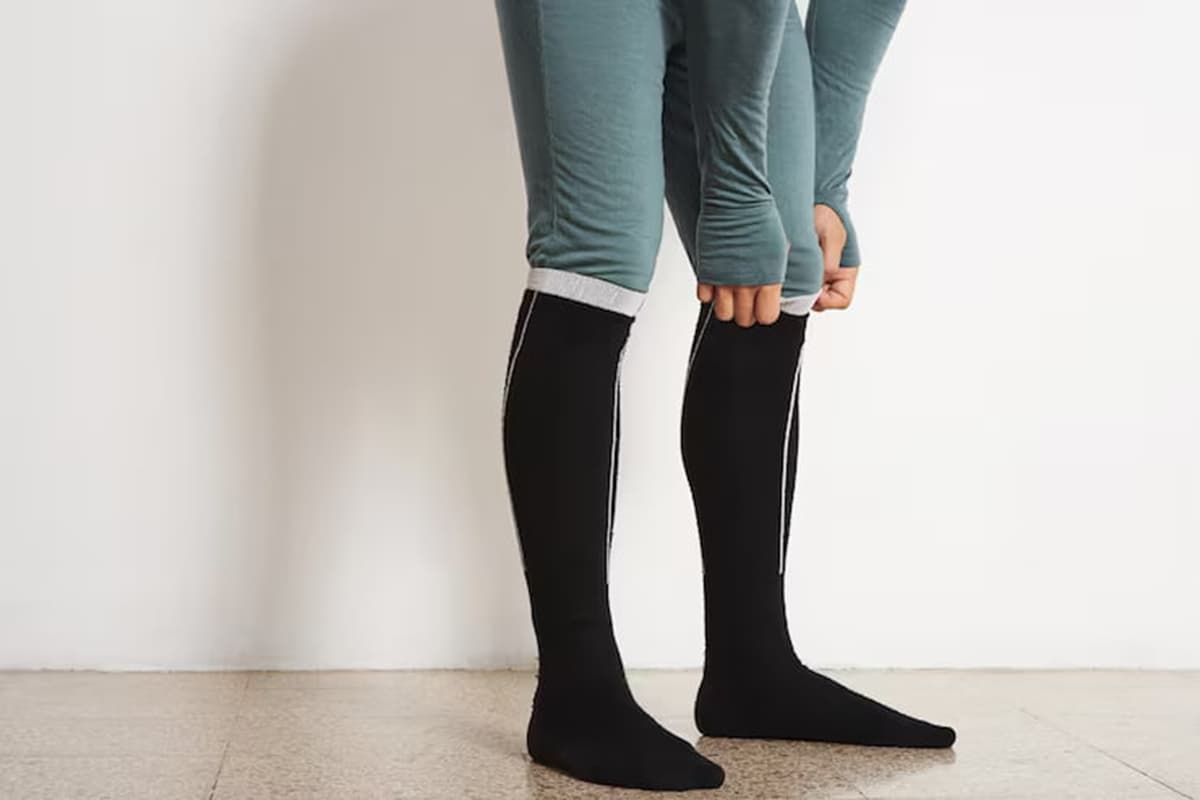
1. You cannot use elastic bandages. Even people who have undergone special training and know how to apply elastic bandages cannot ideally create the necessary level of compression on the entire limb, on every inch of it. That's impossible. Therefore, elastic bandages not only often do not prevent thrombosis, but can themselves provoke thrombosis in the venous or arterial system.
2. Very often patients perform incorrect compression. Almost always compression should be carried out on the entire limb. If you create a compression, for example, to the knee, and it is necessary on the femo-hittle segment, then it is impossible to achieve the desired effect. Therefore, the level of compression should be determined with the doctor and not violated. Most often, compression is needed for the entire limb.
3. When using compression knitwear, there should be no severe discomfort in the limb. If your fingers are numb, you feel pain in the limb, then you need to remove compression knitwear, choosing a comfortable one. Moderate discomfort may be, but severe should not be tolerated. Otherwise, it can lead to complications in the blood circulation of the limbs. How to properly check the vessels, explained the surgeon
Safe statin intake. How to protect blood vessels without side effects for the body Photo magnific and Pexels.