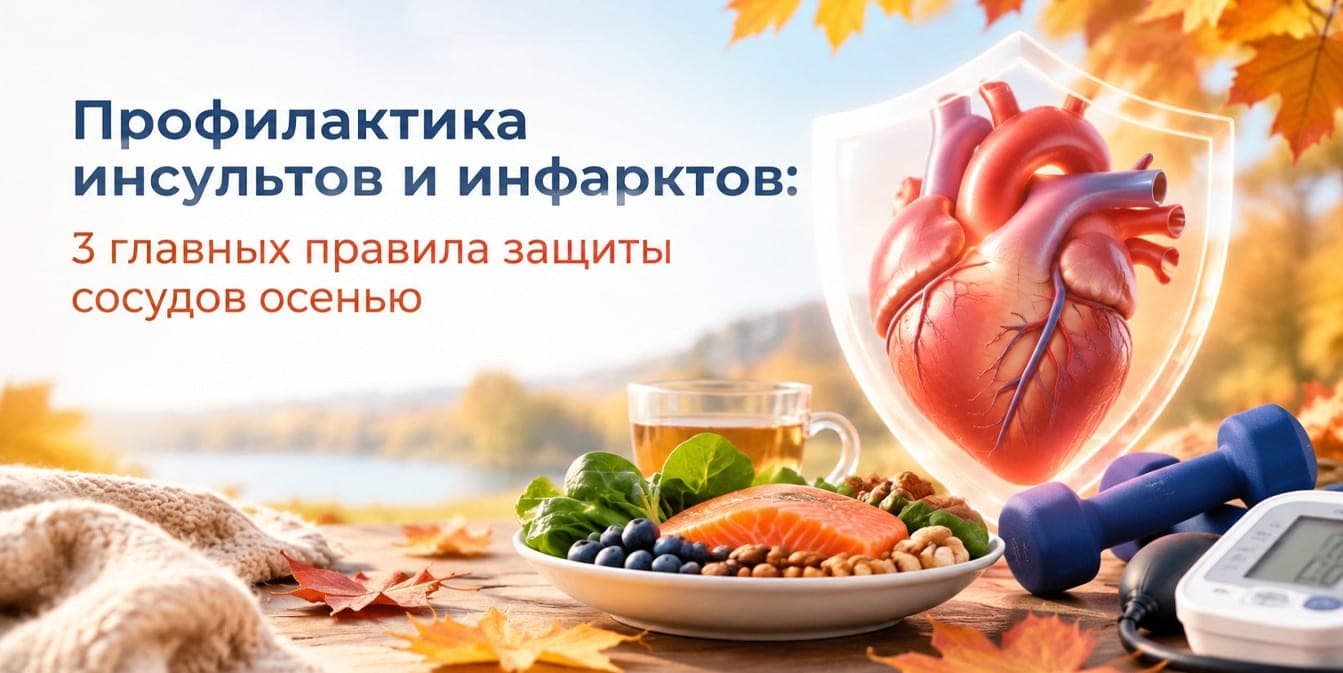
Prevention of strokes and heart attacks: 3 main rules for vascular protection in autumn
How to protect the heart and blood vessels during cold and bad weather season? The three main rules of cardiologists for the prevention of heart attacks and strokes in the fall: pressure control, dietary rules and activity level.
With the onset of autumn, the load on the cardiovascular system traditionally increases. Sharp changes in atmospheric pressure, prolonged rains, shortening of daylight and cooling make the body adapt to new conditions. For vessels, this period becomes a real test: due to the cold, they narrow reflexively, which can provoke jumps in blood pressure and increase the risk of blood clots.
According to medical statistics, it is in the autumn-winter period that a surge of cardiovascular disasters is recorded. Cardiologists emphasize that up to 80% of heart attacks and strokes can be prevented with timely preventive measures.
To protect your heart and blood vessels during cold and bad weather season, you must strictly adhere to three main rules.
Rule 1. Control of blood pressure and blood indicators
In autumn, due to weather conditions, even healthy people may experience pressure fluctuations, and for hypertensive patients this period is especially dangerous. High pressure gradually damages the inner wall of the arteries, contributing to the development of atherosclerosis.
- 1.BP monitoring: Measure your blood pressure in the morning and evening. Remember that hypertension is often asymptomatic. If the indicators consistently exceed 140/90 mm Hg, you should consult a doctor.
- 2.Cholesterol and glucose control: High levels of “bad” cholesterol (LDL) directly lead to the formation of plaques in the vessels, and increased sugar destroys their walls from the inside. Take a basic biochemical blood test and a lipid profile.
- 3.Regular therapy: If a specialist has already prescribed you antihypertensive drugs or statins, in any case do not stop taking them yourself and do not change the dosage, even if you feel great.
Rule 2. Correction of diet and drinking regime
With cooling, a person’s diet often changes towards heavier, fatty foods, and the amount of pure water consumed decreases. This leads to blood clotting and additional load on the myocardium.
- 1.Salt restriction: Reduce your salt intake to 5 grams per day (about one teaspoon). Excess sodium retains fluid in the body, causing vascular spasm and increased pressure. Eliminate hidden salt: semi-finished products, sausages, chips and fast food.
- 2.Antioxidants and fiber: Include in the daily menu seasonal vegetables and fruits, greens, whole grains and low-fat fish rich in omega-3 fatty acids.
- 3.Clean water: Maintain an adequate drinking regimen. Replace excess coffee and strong tea, which can cause tachycardia, with warm clean water or herbal decoctions.
Rule 3. Reasonable physical activity and avoidance of intoxication
The decrease in daylight is not a reason to switch to a sedentary lifestyle. Hypodynamia worsens vascular tone and promotes weight gain, which is a serious risk factor.
- 1.Daily traffic: Try to devote moderate physical activity (for example, brisk walking, swimming, light gymnastics) at least 30 minutes a day. This strengthens the heart muscle and improves blood microcirculation.
- 2.Smoking cessation: Nicotine causes instant vascular spasm, reduces their elasticity and increases the risk of thrombosis several times. Quitting smoking is one of the most effective steps to longevity, which reduces the risk of vascular disasters in the first months.
- 3.Alcohol restriction: Alcoholic drinks disrupt the heart rhythm and can provoke a sharp hypertensive crisis.
Expert opinion: why with the arrival of autumn the pressure becomes unstable
With the onset of the autumn season, many people begin to notice sharp jumps in blood pressure. About what non-obvious habits and external factors cause malfunctions in the cardiovascular system, explained in detail cardiologist and nutritionist Olga Perfileva.
The Hidden Threat: Traffic Deficit
One of the key behavioral reasons for the deterioration of health, the expert called a sharp decrease in motor activity after the end of summer. With the arrival of cold and rain, people curtail long walks and switch to a homely, mostly sedentary lifestyle.
“Without movement, hemodynamics changes, and the vessels lose adaptability,” warns Olga Perfileva.
How to fight: The doctor recommends making up for the lack of walking at home. A good solution would be to use compact folding treadmills. Just 40 minutes of quiet walking while watching a movie or listening to a lecture will help keep the vessels in good shape.
Climate swings
In addition to the lifestyle, the autumn weather itself beats the body: a drop in air temperature, fluctuations in atmospheric pressure and changes in the geomagnetic background. Due to rapid temperature changes, blood vessels simply do not have time to rebuild in time, which leads to a gradual increase in tonometer indicators.
Hazards of extreme heat
The cardiologist separately turned to hypertensive patients and urged them to be extremely careful when visiting a bath or fascination with contrasting procedures. A sharp transition from a hot steam room to an ice font creates a huge load that can provoke reflex cardiac arrest or start atrial fibrillation.
Such thermal training is useful only for young people, whose vascular walls still retain high natural elasticity. Everyone else in the autumn should avoid excessive loads and carefully monitor their pressure.
Autumn is a great time to strengthen your body. Pass a scheduled check-up with a therapist or cardiologist, monitor your health and do not ignore the alarming signals of the body.
See also:
Catch a vaib in autumn: how Zumeram (and not only) to survive in the season of grayness and not to fall into depression
Diet for gastritis and stomach ulcer in autumn: how to avoid the traditional seasonal exacerbation of gastrointestinal diseases
Autumn coolness and weather sensitivity: how to survive sharp weather changes in Belarus without a headache