
Why Africa is Diverging, and Where a New Ocean May Come
The Earth's crust under Turkana has thinned almost three times. Geologists explained to RBC why it is important, whether East Africa can eventually separate from the continent and when the rift will be the ocean
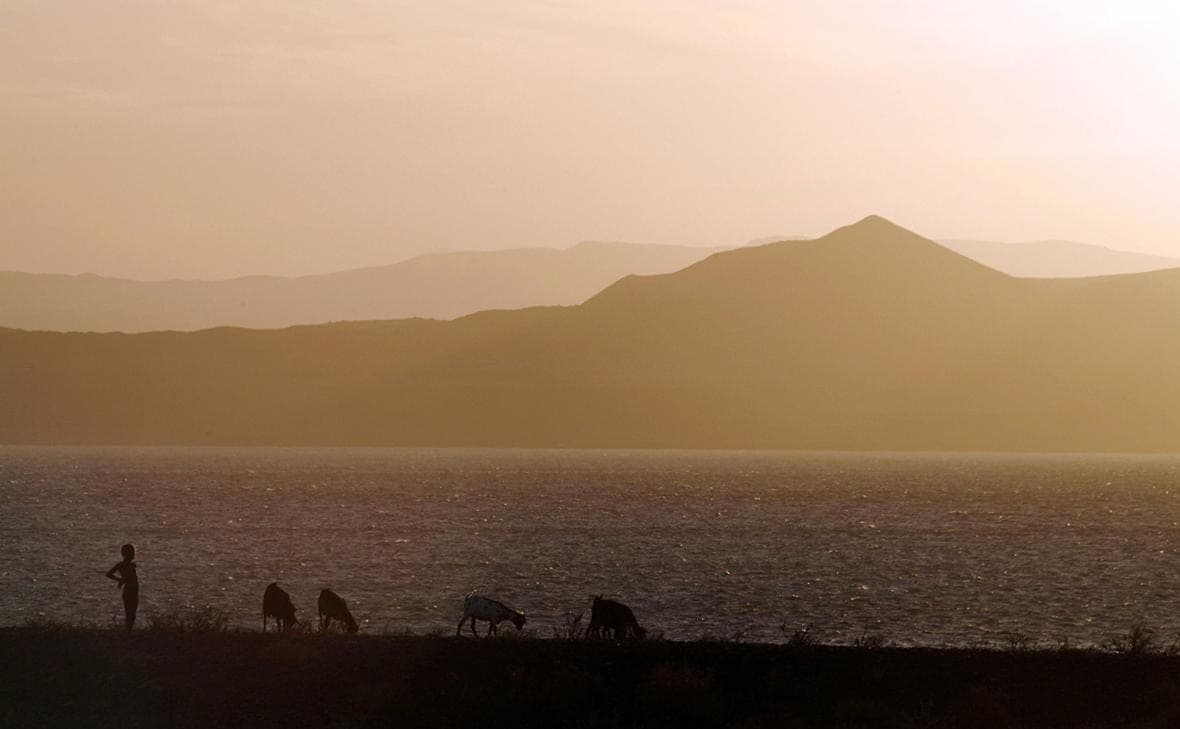
The Earth’s crust near Lake Turkana in northern Kenya has thinned to about 13 km and moved into a stage that is considered one of the key stages on the path to a possible division of the continent. This conclusion was reached by an international group of geologists in a study published in Nature.
What's Happening to Africa Now
The Turkana Rift is located in Kenya, in the area of the lake of the same name, and is part of the East African Rift System. Here the earth's crust is stretched, which is accompanied by faults, earthquakes and volcanism, told RBC Deputy Director of the Institute of Physics of the Earth RAS for scientific work, doctor of geological and mineralogical sciences, Professor Roman Veselovsky.
At the edges of the rift, the thickness of the crust exceeds 35 km, and in the central part is reduced to about 12.7 km. According to Veselovsky, this is very small for the continental crust.
This thinning means that the stretch is now concentrated in a relatively narrow area. This stage geologists call “cervical thinning”. According to the authors of the study, Turkana passed to him about 4 million years ago. The average speed of stretching on individual faults during this time was approximately 1.2 and 0.55 mm per year.
Head of the Department of Geocryology of the Faculty of Geology of Moscow State University Anatoly Brushkov added that the East African Rift System is one of the largest structures of this type on Earth. This is not one crack, but a long system of faults. Its northern part is located near the border of the African and Arabian lithospheric plates.
How an ocean can appear at the fault site
Associate Professor of the Department of Geophysics of St Petersburg University Alexander Butorin connects the formation of the rift with the stretching of the African plate under the action of tectonic forces.
Gradually, the plate will thin, and eventually a new ocean will emerge in place of the rift, he said. A similar process in the past led to the formation of the Atlantic Ocean. A modern example of the continental rift Butorin calls the area of Lake Baikal.
Veselovsky describes a possible sequence: first, the continental crust stretches and thins, then the deformation concentrates in a narrow zone, after which the formation of the oceanic crust and a new oceanic basin can begin. Turkana is now at the stage of local thinning.
Brushkov explained that when stretching parts of the earth's crust diverge, and the substance from the mantle rises higher. With the further development of the process, the continental crust can be replaced by the oceanic, which consists mainly of denser basalt rocks. Similar processes occur in modern oceanic rift zones, including the Atlantic and Iceland.
When Africa Can Divide
Experts emphasize that we are not talking about the coming years or centuries, but about millions of years.
“It is important not to see what is happening here as a sudden split in Africa. We are talking about a long geological process of stretching the continental crust, Veselovsky said.
According to him, the study of Turkana shows an important stage in the development of the rift, but does not allow to give a date for the possible division of Africa. We are talking about the geological time scale - millions of years.
Butorin also estimates the further development of the process in millions of years. Brushkov notes that the speed of expansion in East Africa is much lower than in the mid-ocean ridges: there the movement is measured in centimeters per year, while here it is about an order of magnitude less. Therefore, it cannot be said that Africa is now rapidly splitting into two separate continents.
Can the split stop
According to Brushkov, tectonic processes develop very slowly, and data for an accurate forecast for millions of years ahead is not enough.
“There are no guarantees here,” he said. Theoretically, the movement can continue, but the rift system can stop the development.
Veselovsky also notes that in geological history, the so-called failed rifts are known - stretch zones that did not reach the stage of ocean formation. Therefore, the thinning stage reached by Turkana does not mean that the ocean will necessarily appear here.
At the same time, Turkana is markedly different from most other modern continental rifts. According to Veselovsky, usually the thickness of the crust in such zones remains above 20-25 km, while in the central part of Turkana it has already decreased to about 13 km.


